Skip to content

BEAUTY / SKINCARE

WINTER SKINCARE AFTER 40: WHAT YOU ACTUALLY NEED — AND WHAT YOU DON’T

Your skincare routine is not a full-time job.

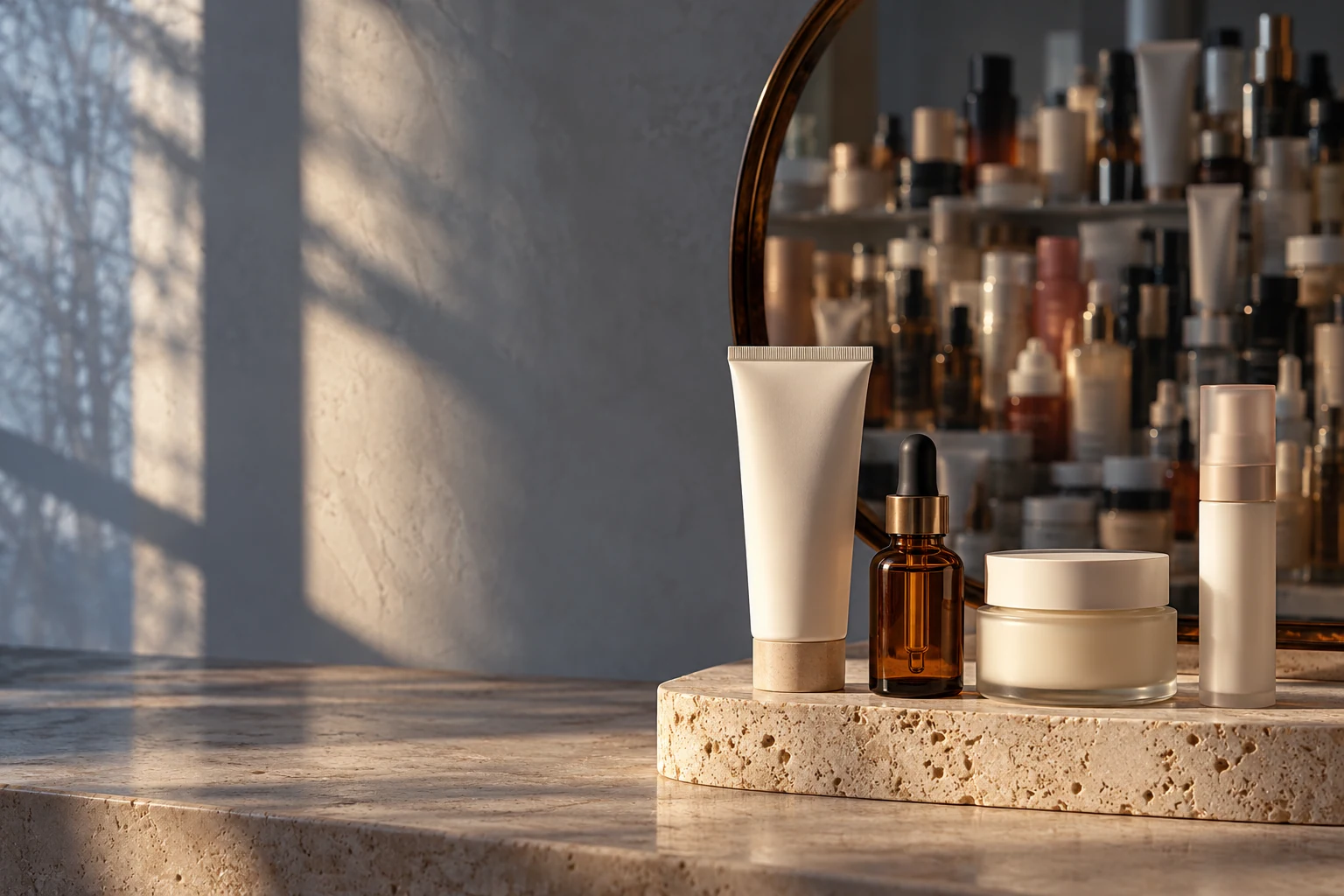
Four essential skincare products beside a curved mirror reflecting an overcrowded beauty shelf

About 20 min read

There is a particular kind of video that begins with a silk headband and ends, 47 minutes later, with skin shining beneath so many layers that it seems almost lacquered.

The bottles arrive one after another: cleansing balm, face wash, mist, toner, essence, eye patches, antioxidant, peptide serum, treatment serum, eye cream, moisturiser, face oil, lip mask and SPF. Somewhere in the middle, a red-light mask appears. The routine looks beautifully organised, deeply soothing and entirely impossible to fit between the alarm and leaving the house.

This is where skincare has become confusing. The products themselves are not necessarily pointless. Many of them can be useful, and some are genuinely excellent. The problem is that social media often presents an entire bathroom cabinet as one daily routine.

It is usually nothing of the sort.

A modern skincare collection works more like a wardrobe. You may own evening clothes, a raincoat and a swimsuit, but you do not put them all on every morning. In the same way, an exfoliating acid, a winter balm, a retinoid and a hydrating mask can all have a place without ever meeting on your face at the same time.

The question is no longer whether three products are enough or ten are better. It is which steps deserve a daily place, which belong to certain evenings and which are simply pleasurable extras.

THE SHELF IS NOT THE ROUTINE.

The famous ten-step Korean routine is a useful example. Its categories—oil cleanser, water-based cleanser, exfoliator, toner, essence, serum, sheet mask, eye cream, moisturiser and sunscreen—are often repeated online as though they form a twice-daily checklist.

They do not. Dermatologist Dr Y. Claire Chang recently explained to Harper’s Bazaar that one of the greatest misconceptions about K-beauty is the belief that all ten steps must be completed every morning and evening. The system is flexible. A mask belongs to one moment, an exfoliator to another, and double cleansing makes sense when there is makeup or persistent sunscreen to remove. [1]

This distinction disappears easily on camera. A long routine creates movement, texture and more products to discuss. It also creates more opportunities for affiliate links, discount codes and brand partnerships. None of this automatically makes the advice dishonest. It does mean that a routine video is also a piece of content—and sometimes a shop window.

Mature-skin creator Angie of HotandFlashy, for example, openly discloses affiliate links in her detailed winter routine. Her cabinet includes cleansers, hypochlorous spray, vitamin C, lactic acid, CoQ10, ceramides, sunscreen, peptides, toner, tretinoin or retinal and several home devices. It is a large and carefully considered collection. It is not a prescription for every woman over 40. [2]

The most useful idea to take from these routines is not the number of bottles. It is the way experienced users rotate them.

THE UPDATE: Think in days and weeks, not in one enormous morning.

None of the products in this story is sponsored. They are included as alternatives, not as a routine to buy in full.

A MORNING ROUTINE NEEDS A CLEAR END POINT.

Morning skincare has two main jobs: support the skin and protect it from the day ahead. Everything else should be able to explain why it is there.

For some skin, a splash of water is enough in the morning. Oilier skin or anyone who enjoys a clean start may prefer a gentle cleanser. What follows depends on the concern: an antioxidant serum for environmental protection and uneven tone, or a hydrating essence when winter air makes skin feel tight. A moisturiser can come next if the sunscreen alone is not comfortable enough.

Sunscreen is the final skincare step. It needs an even, generous application, rather than a thin ceremonial layer squeezed between several more products.

That gives a realistic morning shape:

Rinse or cleanse → one useful serum or essence → moisturiser if needed → SPF.

An eye cream can fit between serum and moisturiser. It may offer a better texture under concealer, help with temporary puffiness or make a dry eye area more comfortable. It is not compulsory simply because a birthday has passed. If an ordinary fragrance-free moisturiser works around your eyes without irritation, a second jar may not change very much.

Vitamin C is more persuasive as a separate step. Dermatologists regularly place an antioxidant serum in a well-designed morning routine, particularly when pigmentation and visible sun damage are concerns. But even here, more is not automatically more. A vitamin C serum does not need a second brightening serum, three antioxidant boosters and an exfoliating toner sitting beneath it every morning.

Vogue’s current guide to mature skincare presents cleanser, essence, serum, eye cream, moisturiser and SPF as available categories. Yet the dermatologist quoted in the same article reduces the priorities to sunscreen, retinoid, gentle cleansing, moisturiser and vitamin C. The editorial shelf is expansive; the medical hierarchy is much shorter. [3]

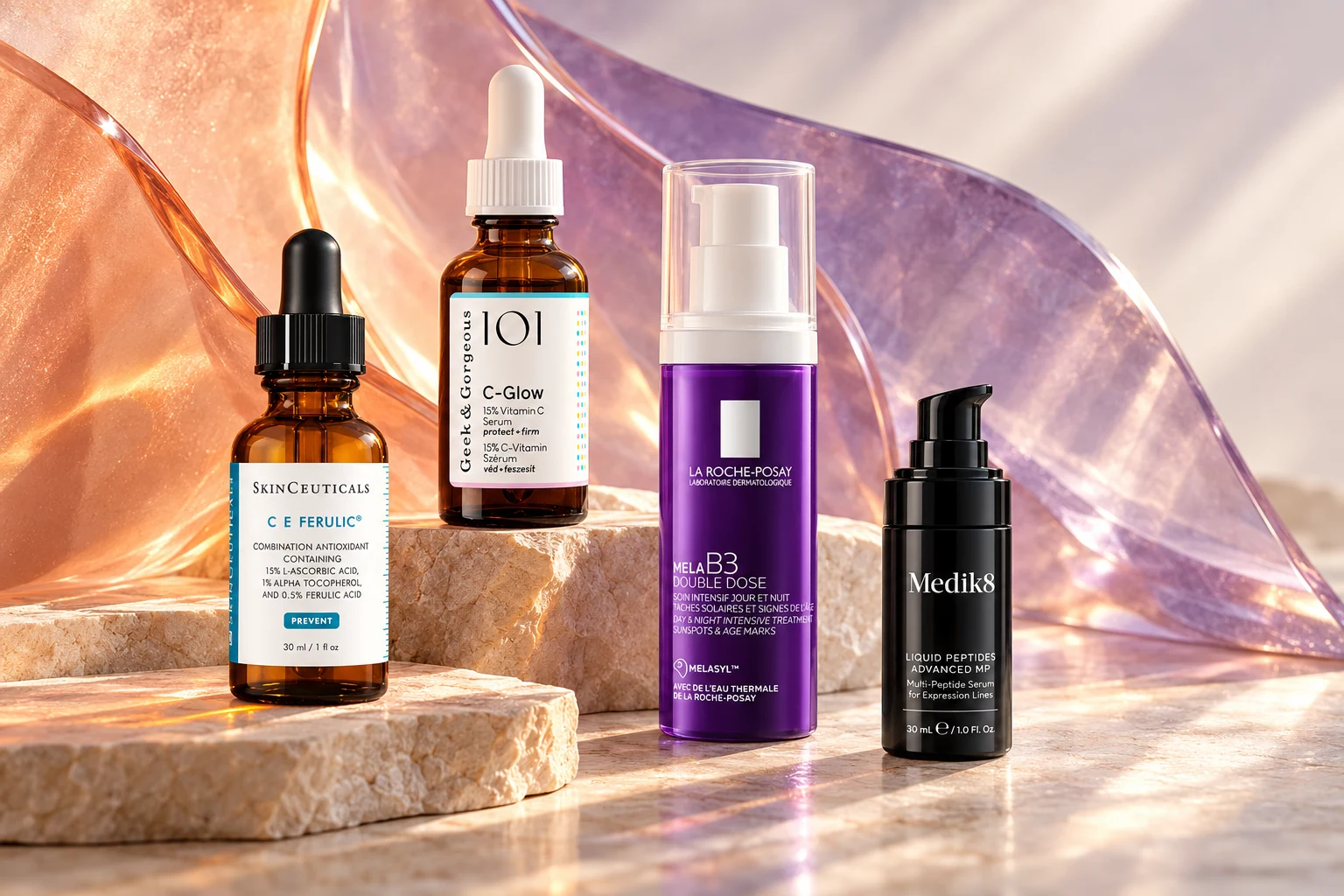
THE MORNING SERUM EDIT

Four vitamin C, pigmentation and peptide serums arranged in a warm editorial still life
ONE STRATEGIC SERUM — NOT FOUR LAYERS.

Choose one strategic serum—if your skin needs one.

  • SkinCeuticals C E Ferulic is the recognisable luxury reference: 15% L-ascorbic acid with vitamin E and ferulic acid in a formula with unusually substantial supporting research. It is also very expensive, and not the only credible route to a vitamin C serum.
  • Geek & Gorgeous C-Glow is the insider alternative: the same headline concentration of L-ascorbic acid, plus vitamin E and ferulic acid, at a radically lower price. The compromise is maintenance—it is made in fresh batches and belongs in the refrigerator after opening.
  • La Roche-Posay Mela B3 Double Dose is the more targeted choice for visible pigmentation rather than a universal morning serum. Its combination of Melasyl, niacinamide, glycerin and Proxylane also won an Allure Best of Beauty award in 2026. [11]
  • Medik8 Liquid Peptides Advanced MP is a gentler premium option for someone more interested in peptides than acids. The formula is sophisticated; the brand’s independent clinical test is encouraging but small, with 34 participants. [12]

THE SUNSCREEN EDIT

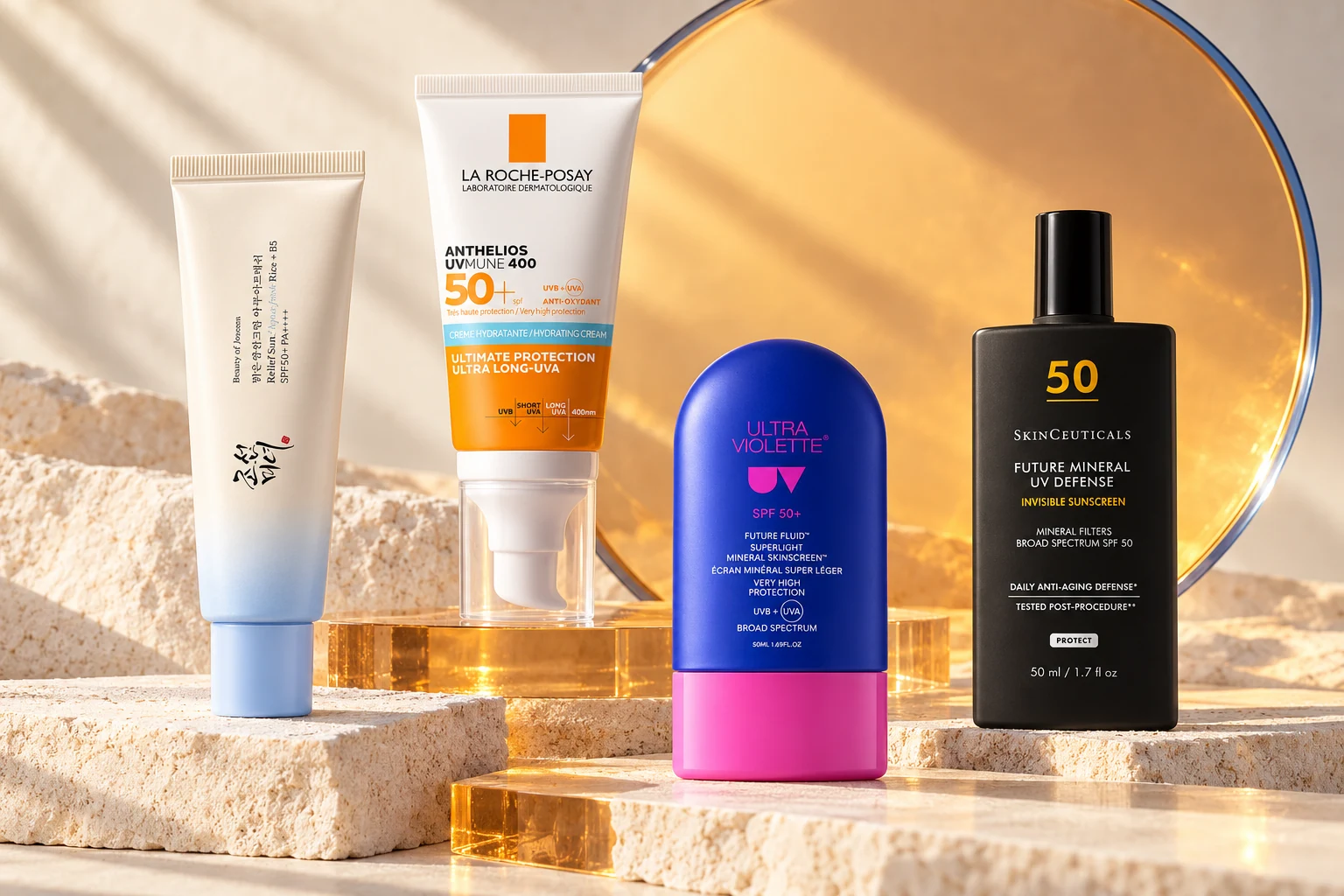
Four high-protection facial sunscreens arranged in low winter sunlight
THE FINAL MORNING STEP.

Then choose one sunscreen—not the one with the most fashionable bottle, but the one you will apply generously.

Sunscreen names and filters differ by market. Buy the authorised formula sold for the country in which you live rather than importing an apparently identical version from an unknown marketplace.

THE UPDATE: Give the morning one target beyond hydration and protection. It does not need four.

EVENING IS WHERE THE ROUTINE CAN CHANGE.

Evening skincare has more room for variation because there is something to remove and time for a treatment to stay on the skin.

Double cleansing is useful when the first cleanser is doing a distinct job: dissolving makeup, water-resistant sunscreen or a heavy layer of the day. The second wash removes the remaining film. On a bare-face day, one well-chosen cleanser may already do everything required.

After cleansing comes the decision that matters most: what is tonight for?

THE CLEANSING EDIT

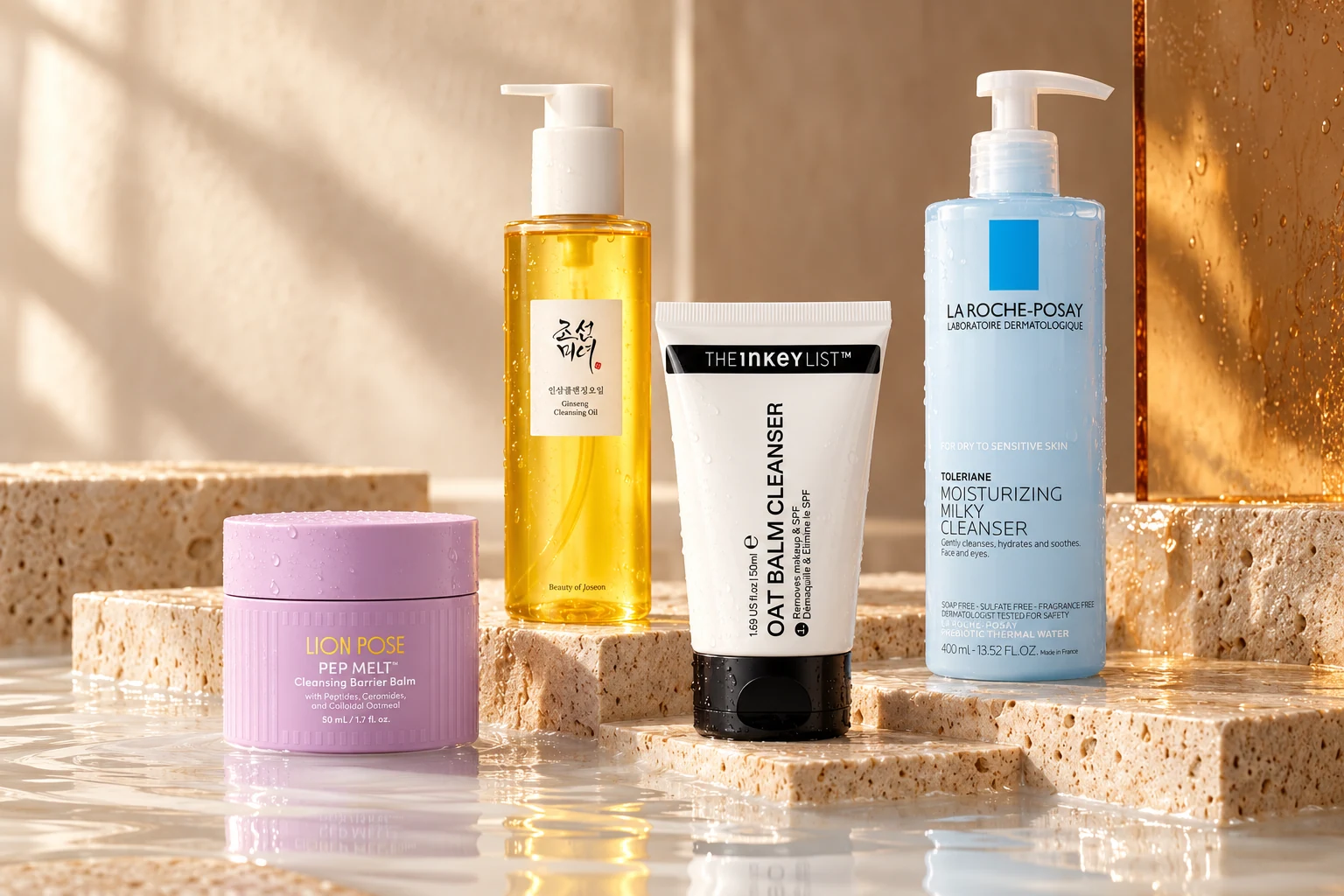
Four cleansing oils, balms and milky cleansers on travertine in warm winter light
ONE CLEANSER — OR TWO WHEN EACH HAS A JOB.

These products do not all perform the same job. Choose an oil or balm when there is makeup or persistent sunscreen to dissolve; choose a milk or gel when one gentle cleanse is enough.

It may be a retinoid night. It may be an exfoliation night. It may be a recovery night with no ambitious active at all. Dermatologist Dr Shereene Idriss describes her own routine in her 40s as a weekly plan, alternating acids and retinoids while adjusting for winter dryness and melasma. Targeted serums, masks and richer creams appear on different evenings. They are not stacked into the same performance every night. [4]

A practical evening might be:

Remove makeup or sunscreen if necessary → cleanse → one treatment → moisturiser.

On a recovery night, the treatment can be a hydrating essence, peptide serum or barrier serum. When the skin is already comfortable, it can disappear entirely. A face oil or balm may seal the driest areas in cold weather, but it is a finishing layer rather than evidence that the moisturiser has failed.

The routine can contain variety without demanding complexity at every use.

THE UPDATE: Ask what tonight is for before opening the first treatment bottle.

SOME EXTRA STEPS DO EARN THEIR PLACE.

Minimalism can become as rigid as maximalism. A product does not have to be medically essential to be worthwhile.

A milky toner or essence can add a thin, comfortable layer of hydration before cream. This may be particularly pleasant in winter, when one very heavy product can feel less elegant than two lighter layers. It is useful when the skin feels better with it and easy to remove when it does not make a noticeable difference.

A peptide serum offers a gentler treatment option on evenings without retinoids or acids. Peptides are increasingly promoted for firmness, repair and “skin longevity.” The formulas vary widely, and they should not be described as a softer version of a facelift. Their more convincing place is supportive: hydration, barrier care and gradual improvement without the irritation associated with stronger actives.

Around the eyes, lips and sides of the nose, texture can matter as much as the ingredient headline. A smaller, more occlusive product can be useful because it stays where it is placed. The same logic applies to the neck and chest: they need sunscreen and moisturising care, but they do not automatically require an entirely separate collection with “neck” printed on every bottle.

Masks sit firmly in the optional category. A hydrating mask can make winter skin feel more comfortable and give an immediate cosmetic improvement. That is a perfectly valid reason to use one. It does not need to be presented as long-term reconstruction of the face.

Pleasure matters too. Skincare is allowed to smell beautiful if your skin tolerates fragrance, feel luxurious and mark the end of the day. The honest distinction is between a product that treats a defined concern and one that makes the ritual more enjoyable.

THE HYDRATION EDIT

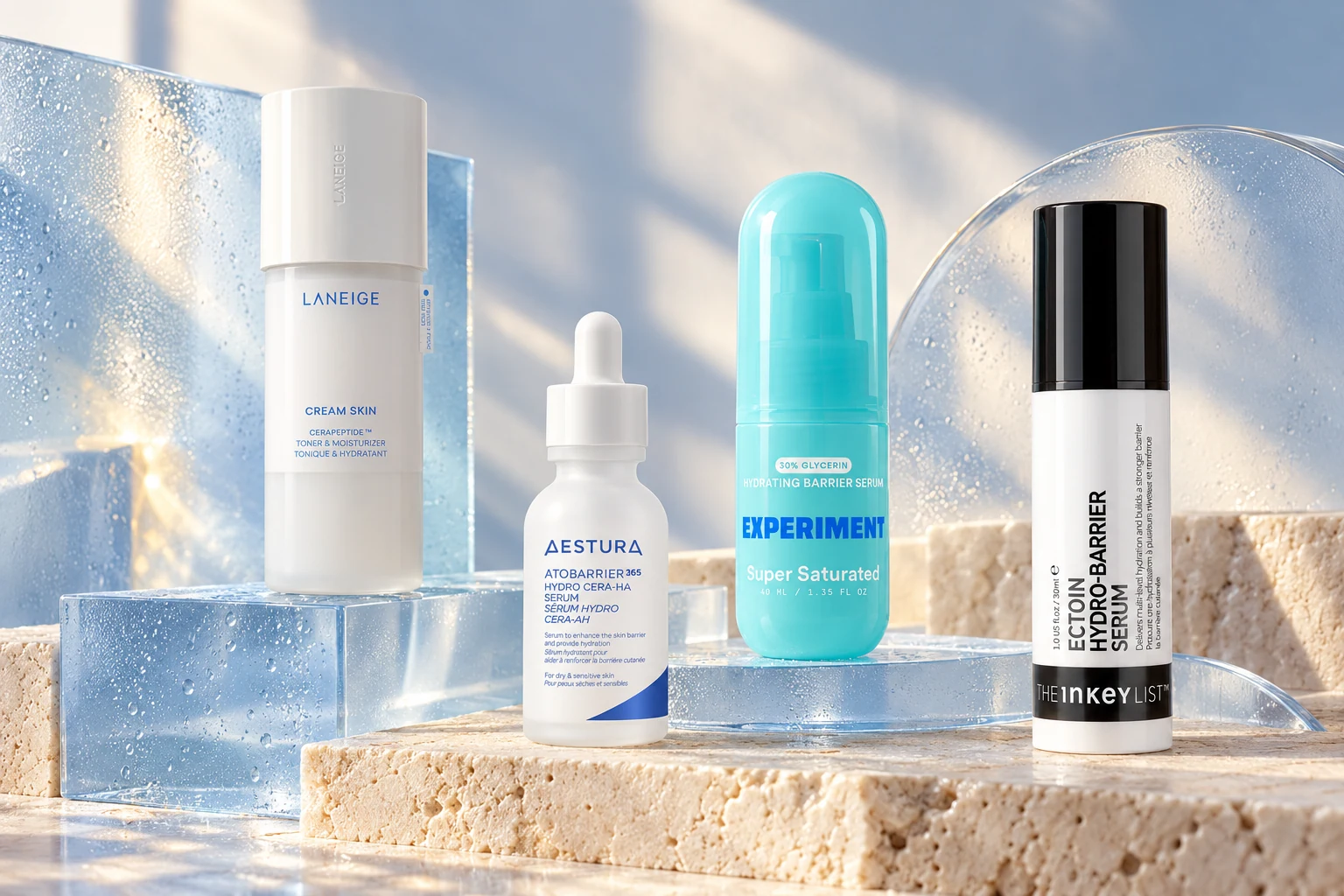
Four hydrating toners and serums among frosted blue glass and pale stone
HYDRATION IS A CATEGORY, NOT A COUNTING CONTEST.

This is the category most likely to turn one useful idea into five consecutive layers. One of these is enough—and on comfortable skin, none may be needed.

  • Laneige Cream Skin Cerapeptide Toner & Moisturizer is the commercial K-beauty choice and a good expression of the milky-toner trend: glycerin, meadowfoam oil, squalane and ceramide NP in a fluid layer.
  • Aestura Atobarrier365 Hydro Cera-HA Serum is the Korean insider choice. Panthenol, betaine, ceramide, cholesterol and fatty acids make it more interesting than another basic hyaluronic-acid serum.
  • Experiment Super Saturated is the under-discussed problem solver. Its 30% glycerin formula is unusually concentrated and has the National Eczema Association Seal of Acceptance. The texture is sticky; the hydration is the point.
  • The Inkey List Ectoin Hydro-Barrier Serum is the strongest of the new accessible options: 2% ectoin supported by panthenol, oat, ceramides and cholesterol. Unlike many trend-led launches, the complete formula makes sense even without the fashionable headline.

THE UPDATE: Optional does not mean useless. It means you are free to choose.

Also worth readingHow I used AI to organise my skincare and its calendar

A full shelf does not have to mean a full evening.

ACTIVE INGREDIENTS NEED A CALENDAR.

The internet tends to organise skincare vertically: one product layered over the next. Skin often responds better when the routine is organised horizontally, across the week.

Retinoids remain among the better-supported topical options for fine lines, uneven tone and other signs of photoageing. A 2024 systematic review examined 25 studies comparing tretinoin with alternative topical treatments. A 2025 network meta-analysis brought together 23 randomised trials involving 3,905 participants and found benefits for some retinoids on particular signs of photoageing. Both reviews also show why the details matter: products, concentrations, study quality and tolerability vary. [5, 6]

The most effective product is not the one that makes the skin peel hardest. It is the one a person can use consistently without keeping the barrier in a permanent state of protest.

Exfoliating acids can improve dullness, surface texture or congestion, but they do not have to share an evening with a retinoid. One or two carefully chosen treatment nights can be more useful than turning every night into an active-ingredient obstacle course.

The remaining nights are not wasted. Moisturiser-only evenings give dry or reactive skin space to settle. They also make it easier to understand which product is helping and which one is causing the sudden sting around the mouth.

THE UPDATE: A rest night is part of the routine, not a failure to complete it.

THE RETINOID EDIT

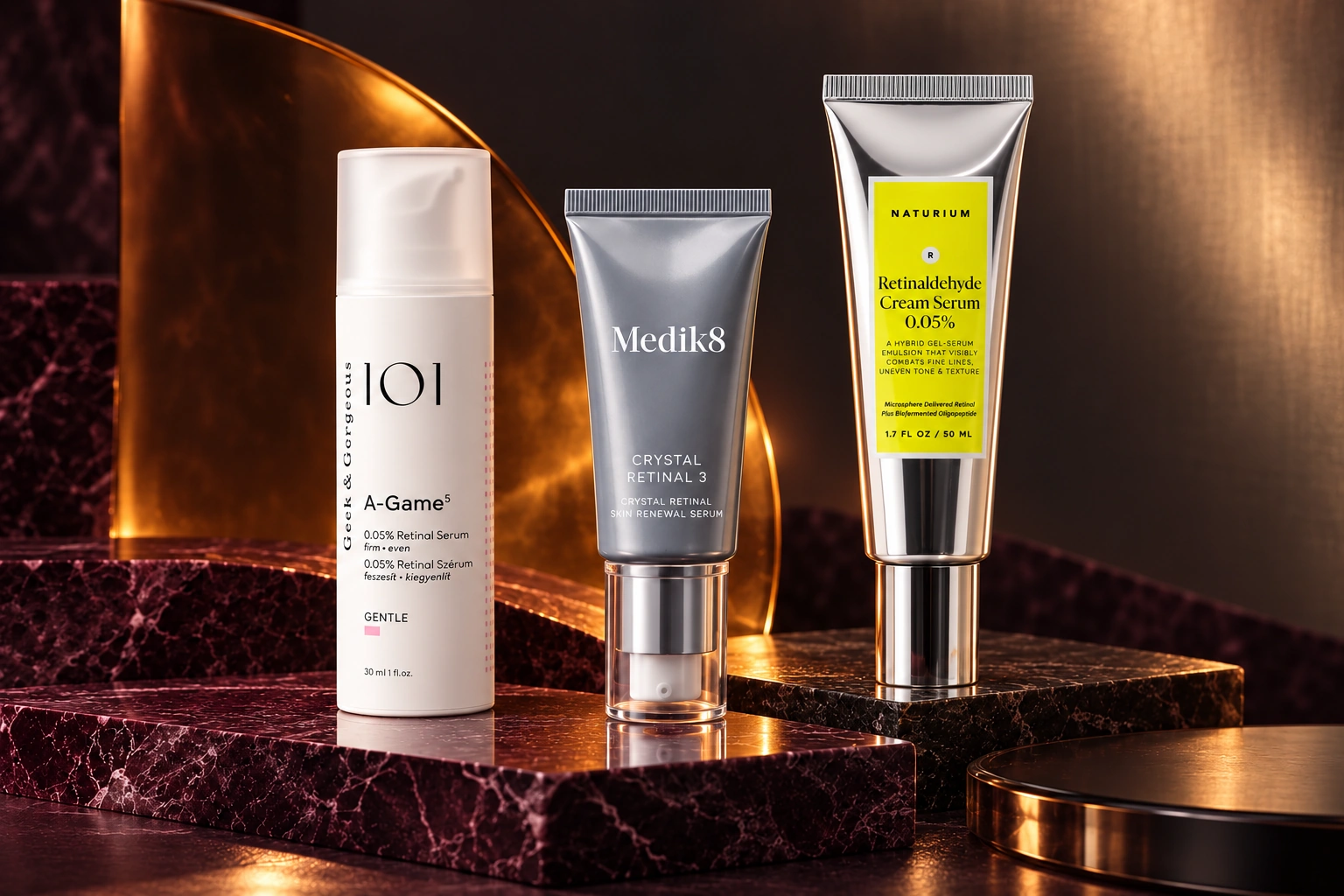
Left to right: Geek & Gorgeous A-Game 5, Medik8 Crystal Retinal 3 and Naturium Retinaldehyde Cream Serum 0.05%
LEFT TO RIGHT: GEEK & GORGEOUS A-GAME 5 · MEDIK8 CRYSTAL RETINAL 3 · NATURIUM RETINALDEHYDE CREAM SERUM 0.05%.

Choose one strength, introduce it slowly and do not mistake irritation for progress.

  • Geek & Gorgeous A-Game 5 is the insider value choice: 0.05% retinal in a fragrance-free emulsion with panthenol and allantoin.
  • Medik8 Crystal Retinal 3 is the polished premium option for a new vitamin A user. Its greatest advantage is not glamour but a clear strength ladder, making gradual progression easier to understand.
  • Naturium Retinaldehyde Cream Serum 0.05% sits between the two: accessible in the US and UK, creamy enough for winter and clearly labelled with its retinal concentration.

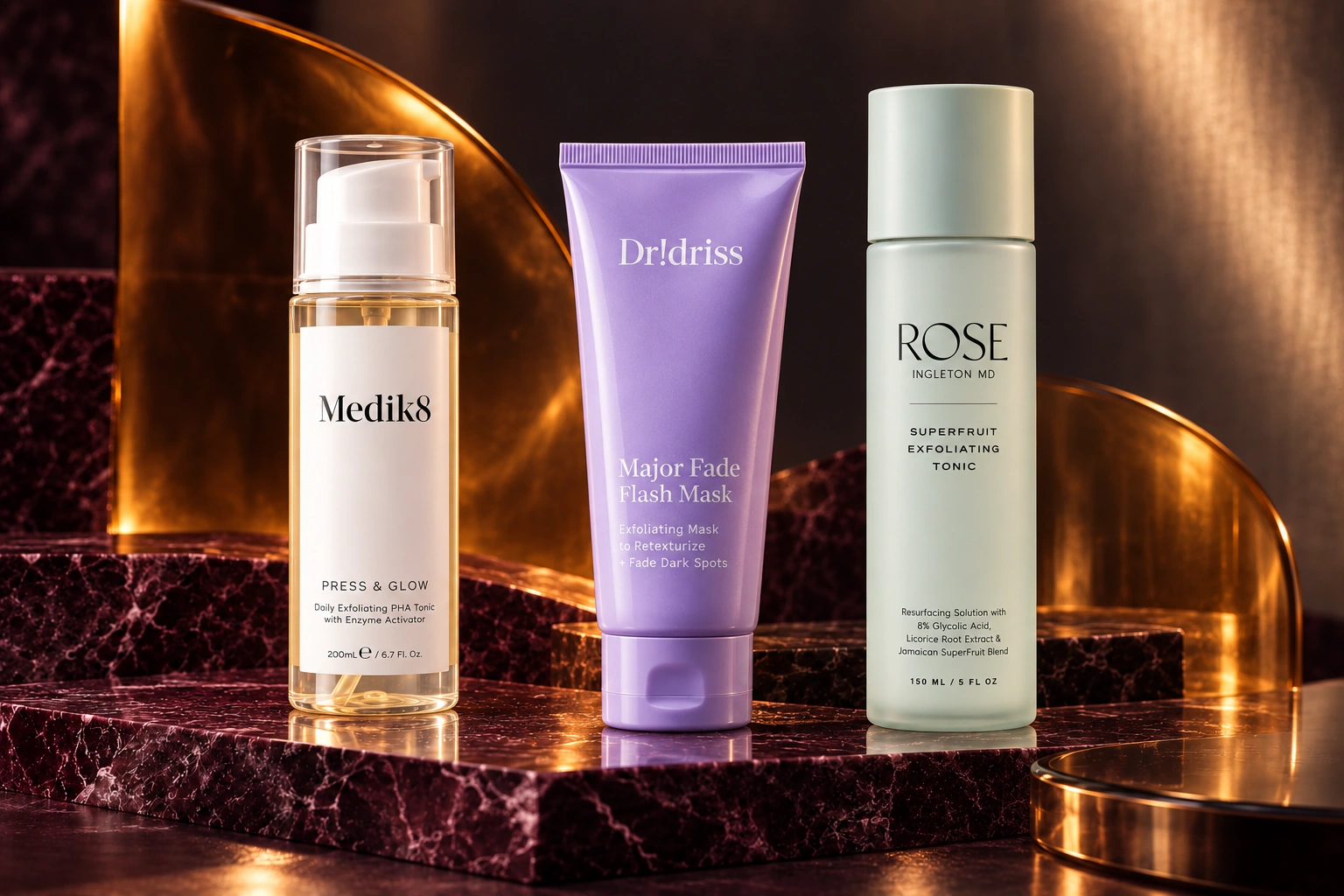
THE OCCASIONAL ACID EDIT

Left to right: Medik8 Press & Glow, Dr Idriss Major Fade Flash Mask and Rose Ingleton MD SuperFruit Exfoliating Tonic
LEFT TO RIGHT: MEDIK8 PRESS & GLOW · DR IDRISS MAJOR FADE FLASH MASK · ROSE INGLETON MD SUPERFRUIT EXFOLIATING TONIC.

Choose one—or skip the category entirely when the skin is dry, stinging or already adjusting to a retinoid.

  • Medik8 Press & Glow uses 5.5% gluconolactone, a PHA that is generally easier to accommodate than a hard-hitting glycolic toner. The brand allows frequent use; a winter routine over 40 does not have to.
  • Dr Idriss Major Fade Flash Mask is the influencer-founded product that earns consideration on formula rather than fame: a ten-minute combination of glycolic, lactic and tranexamic acids for texture and uneven tone. It does not belong on a retinoid night.
  • Rose Ingleton MD SuperFruit Exfoliating Tonic is the quieter dermatologist-created discovery, with 8% glycolic acid, licorice root, glycerin, aloe and hyaluronic acid. Twice a week is already a real treatment—not a warm-up for another peel. [11]

THE HUMBLE CREAM IS DOING MORE THAN IT GETS CREDIT FOR.

The beauty industry is very good at making serums sound intelligent and moisturisers sound ordinary. Recent research gives us a reason to look again at the ordinary jar.

In a 2026 exploratory trial co-authored by dermatologist and skin researcher Professor Jean Krutmann, 50 people with sensitive skin used either a ceramide-containing emollient or its comparison formula for six weeks. Both groups reported improvement, while participants with an impaired barrier using the ceramide formula also showed reduced water loss from the skin. The study examined a specific product and population, but it reinforces the role of barrier-focused moisturising care. [7]

A 2025 study led by dermatologist Dr Zoe D. Draelos followed 27 women aged 50 to 70 using an emollient-rich moisturiser for eight weeks and reported improved hydration measurements. It was small, open-label, without a control group in its clinical stage and funded by the company behind the formula. That does not make the result meaningless; it tells us how narrowly to read it. [8]

Neither study proves that every ceramide cream is transformative. Both make a quieter point: a well-formulated moisturiser is an active part of winter care, not merely the final lid placed over more exciting products.

THE UPDATE: Before adding another serum, ask whether the cream is rich enough for the season.

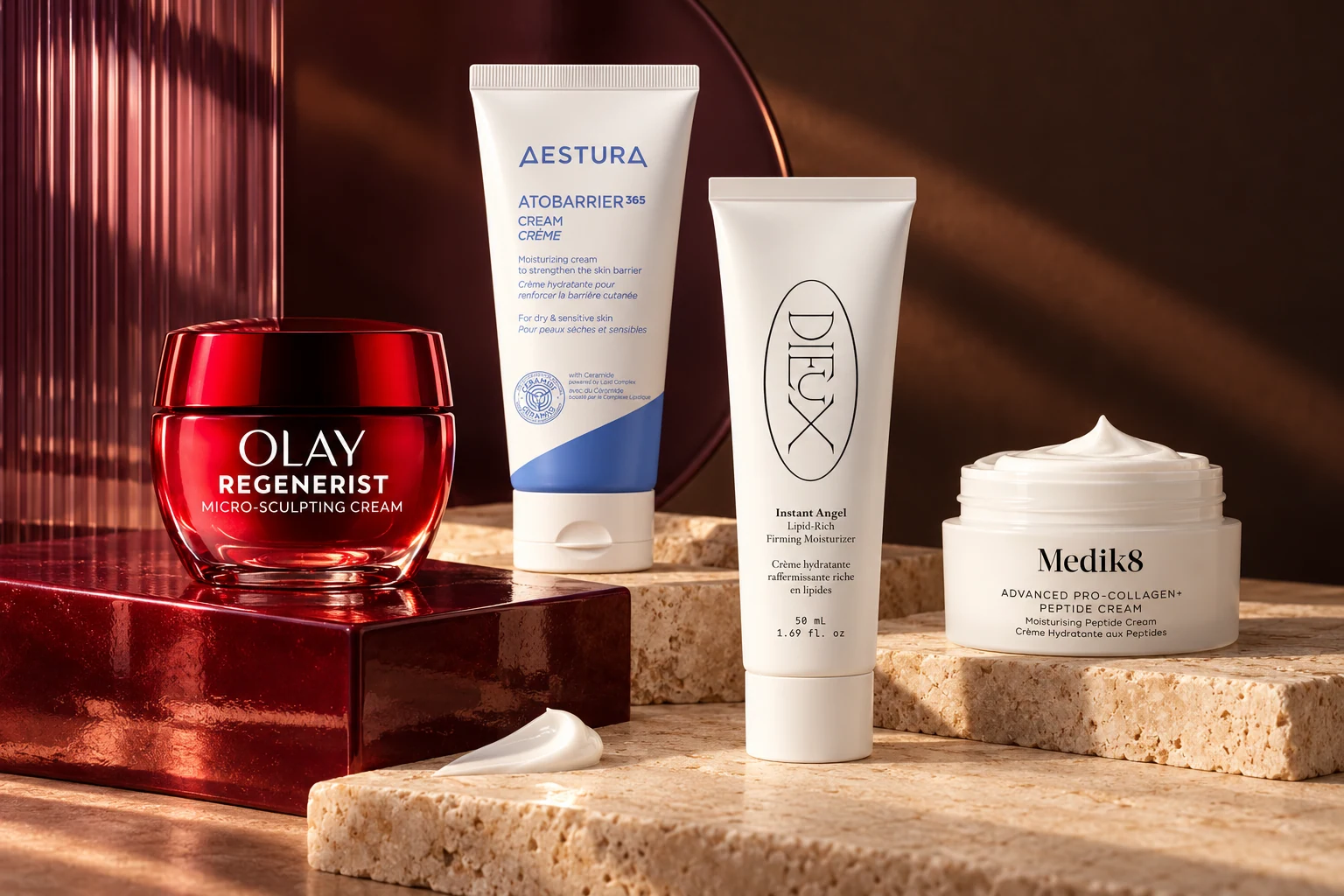
THE WINTER CREAM EDIT

Four winter moisturisers arranged on stone with deep red and chocolate accents
THE ORDINARY JAR MAY BE DOING THE MOST IMPORTANT WORK.
  • Olay Regenerist Micro-Sculpting Cream Fragrance-Free is the commercial value choice. Peptides, niacinamide and panthenol make it a useful reminder that mature skin does not require a niche price tag. It was also an Allure 2026 winner. [11]
  • Aestura Atobarrier365 Cream is the Korean barrier specialist, using ceramide-rich capsules in a comfortable formula for dry and sensitive skin.
  • Dieux Instant Angel is the less obvious editorial favourite: fragrance-free and rich in glycerin, urea, squalane, fatty acids, phytosterols and ceramide NG without feeling like old-fashioned cold cream.
  • Medik8 Advanced Pro-Collagen+ Peptide Cream is the convincing splurge: a plush winter texture, a complex peptide formula and an independent one-week clinical study on 60 volunteers. The trial is small and short, but it is more useful information than a jar photographed beside a laboratory coat. [11]

A very expensive moisturiser may still be worth buying for pleasure, fragrance, packaging or texture. Those are legitimate luxuries. They are not proof that a £400 cream repairs the barrier eight times better than one costing £40.

WHAT’S NEW—AND WHAT IS MOSTLY NEW MARKETING?

Skincare in 2026 is talking less about “anti-ageing” and more about regeneration, resilience and skin longevity. The language is softer. The promises are not always smaller.

PDRN

PDRN is made from purified DNA fragments, most commonly derived from salmon or trout cells, although plant-derived alternatives are appearing. It has a medical history in tissue repair and is now sold in serums, creams and masks with promises of regeneration, elasticity and calmer skin.

The important distinction is delivery. Evidence connected to medical or injectable use cannot simply be transferred to a serum placed on intact skin. Questions remain about penetration, stability and the amount that remains active in a cosmetic formula. A PDRN product may still be a very good hydrating product because it also contains glycerin, niacinamide or other familiar ingredients. We should not automatically credit every result to the fashionable name on the front. [9]

EXOSOMES AND GROWTH FACTORS

These are the expensive stars of regenerative skincare. In simple terms, they are promoted as messengers that encourage skin cells to repair and communicate more effectively. The category is interesting, particularly around professional procedures, but products differ enormously in source, processing, stability and supporting evidence.

For a reader building a winter routine, they belong in the promising-extra category. They do not outrank sunscreen, retinoids or a cream the skin can tolerate.

ECTOIN

Ectoin is less sensational and potentially more relevant to winter. It is a protective molecule associated with helping skin retain water and cope with environmental stress. Its rise fits the current move away from relentless exfoliation and towards barrier support. It can appear in a toner, serum, cream or sunscreen, so it does not necessarily require a separate ectoin step.

PEPTIDES, AGAIN

Peptides are not new, but they have returned with the language of longevity. Copper peptides in particular are appearing in more routines. This is a category worth watching, while remembering that “contains peptides” tells us little about the type, concentration or finished formula.

MILKY TEXTURES

Milky toners, essences and light emulsions are everywhere because they suit the current desire for comfort without heaviness. This is a texture trend with a practical advantage: it makes adding hydration pleasant. It is also easy for brands to turn one moisturising idea into three separate products. Choose the texture that fills a real gap.

LED MASKS

An LED mask is closer to a scheduled treatment than a skincare step. Results depend on the wavelength, dose, quality of the device and consistent use. Ten or twenty minutes under a mask can be part of a weekly ritual, but it should not be used as proof that effective skincare must take an hour.
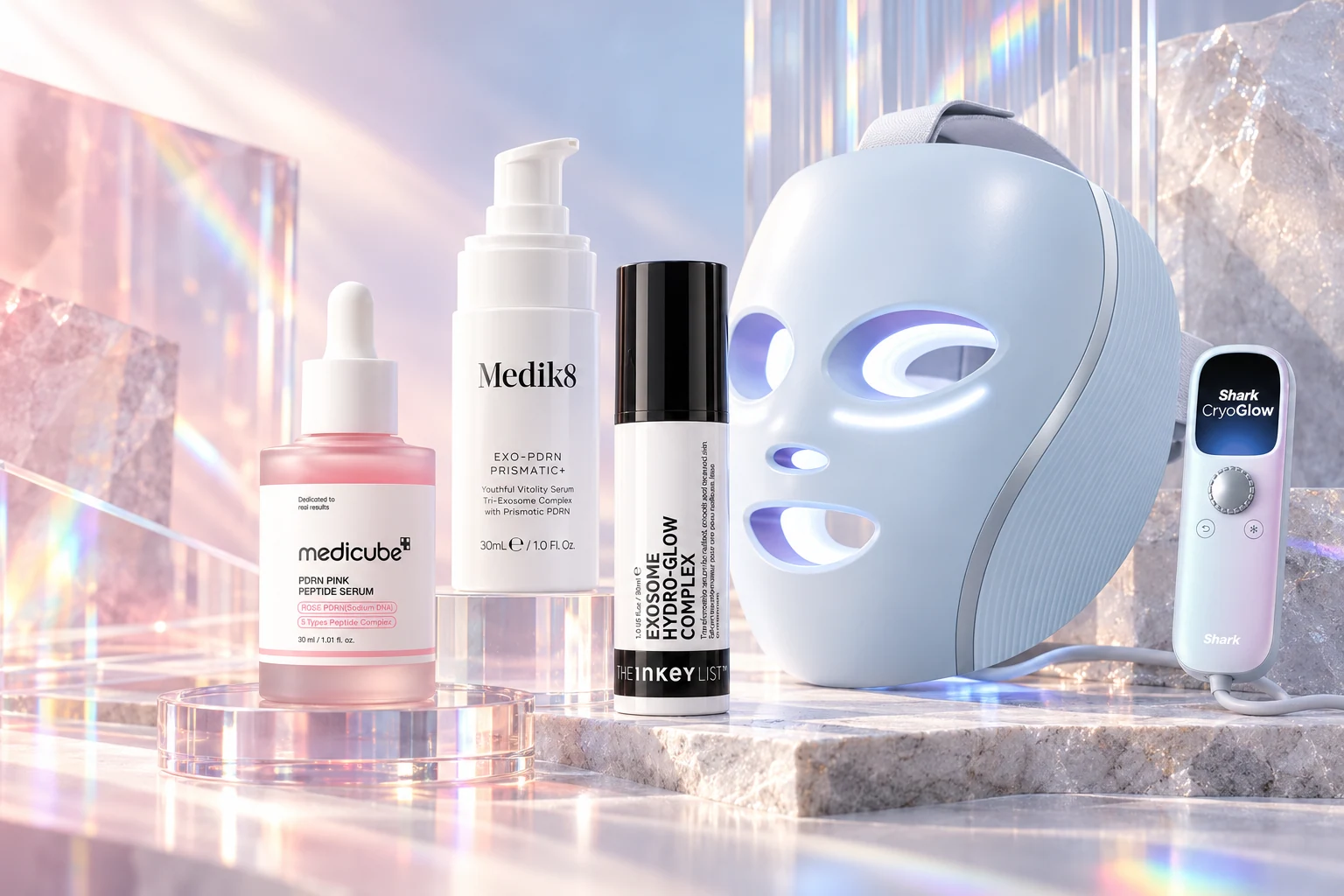
THE TREND SHELF

PDRN and exosome serums with a cooling LED face mask in a prismatic editorial setting
PROMISING NEWNESS — UNDER OBSERVATION.

These are products worth discussing, not products every reader should buy.

  • Medicube PDRN Pink Peptide Serum is the viral, commercial face of PDRN. Its niacinamide, humectants and peptides may make it a pleasant glow serum, but the formula also contains fragrance and the topical PDRN claim should not be confused with evidence for injected polynucleotides.
  • Medik8 Exo-PDRN Prismatic+ is the technologically ambitious premium newcomer. The brand reports an independent one-week study with 60 volunteers. Interesting, yes; enough to displace sunscreen, retinal or a good cream, no.
  • The Inkey List Exosome Hydro-Glow Complex is the more accessible experiment. Its cica-derived exosome story is new, while ectoin, hyaluronic acid and Q10 provide more familiar reasons for hydration and glow.
  • Shark CryoGlow LED Face Mask is the device option rather than another layer. It won Allure’s 2026 LED category and its short preset sessions are more realistic than an elaborate nightly gadget ritual. Device-specific consistency still matters. [11]

THE UPDATE: New technology can be worth watching without being promoted straight into the daily essentials.

MY EDIT

The ideas I’d take with me.

01

The routine with an end point

The idea I would keep from the morning section: a routine should be clear enough to finish, rather than expand every time another product appears.

02

The distinction between essential and optional

A product can be interesting without belonging in every routine. I would keep asking what role it is meant to play.

03

The calendar instead of the pile

Organisation is the useful idea here. The article separates the decisions so that every evening does not become a reason to use everything.

THE TAKEAWAY

HOW LONG SHOULD A REAL ROUTINE TAKE?

There is no prize for finishing in 90 seconds, and there is no biological bonus for standing in the bathroom for an hour.

A morning routine with one serum, moisturiser and sunscreen can be applied in a few minutes. An evening cleanse, treatment and cream need not take much longer. The extra time belongs to choices: removing elaborate makeup, using a mask, enjoying facial massage or sitting under an LED device.

Those can be lovely ways to spend an evening. They are not the entrance fee for well-cared-for skin.

Long waiting periods between ordinary layers are rarely necessary unless the product instructions or a clinician say otherwise. Let each layer settle enough to avoid pilling, use amounts that feel comfortable and pay attention to how the combination behaves. A routine that repeatedly burns, flakes or makes makeup roll into little balls is not becoming more effective through perseverance.

The realistic goal is not to own as little as possible. It is to know why each product is there and when it belongs.

You may have an extensive shelf: a cleansing balm for makeup days, a milky essence for cold mornings, vitamin C, peptides, a retinoid, an acid, two creams, a face oil, eye cream, lip treatment, sunscreen and a mask. That is a generous collection.

Used with intention, it can still produce a four-step morning and a four-step evening.

The shelf can be maximalist. The routine should remain legible.

Pass it on.

RESEARCH & EDITORIAL SOURCES

  1. Harper’s Bazaar (2026). — How to Build a 10-Step Korean Skincare Routine in 2026, According to Experts
  2. HotandFlashy (2025). — Current Skincare Routine: Winter 2025 — The page discloses affiliate links and discount codes.
  3. Vogue (2025). — The Best Anti-Aging Skincare Routine, According to Top Dermatologists and Estheticians
  4. Dr Shereene Idriss (2025). — Collagen Boosting Skincare Routine for 30s & 40s: A Weekly Breakdown
  5. Siddiqui Z. et al. (2024). — Tretinoin and alternative topical treatments for photoageing: a systematic review
  6. Lin L. et al. (2025). — Network meta-analysis of topical treatments for skin photoageing
  7. Dimmers F. et al., including Jean Krutmann (2026). — Vehicle-controlled, double-blind study of a Ceramide NP C15 emollient — Exploratory trial with 50 participants with sensitive skin over six weeks.
  8. Draelos Z.D. and Nelson D.B. (2025). — In Vitro and In Vivo Evaluation of an Emollient-Rich Moisturizer — Clinical stage: 27 women aged 50–70; eight weeks; open-label, single-arm and industry-funded.
  9. Allure (2026). — PDRN Has Quickly Taken Over Skin Care
  10. Vogue (2026). — 2026’s Biggest Skincare Trends to Try Now
  11. Allure (2026). — Best of Beauty 2026: Skin-Care Winners — Products were editor-tested; awards are not a substitute for independent clinical evidence.
  12. Medik8. — Liquid Peptides Advanced MP clinical claims and ingredient information — Independent brand-commissioned clinical study: 34 participants over eight weeks.
  13. PEOPLE (2026). — Beauty Awards: Best Skin Care Launches of 2026

Original AI-generated editorial imagery for YANA, LATELY. Packaging details may differ from the products sold.