01
The drawer before the shopping list
The part I would start with: an accurate list of what is already there, with anything uncertain clearly marked.
BEAUTY / EVERYDAY AI
How I built a personal AI skincare assistant to understand my products, organise a weekly routine and decide what I actually needed.
About 6 min read
I didn’t need another cream. I needed someone to look at all the creams I already had.
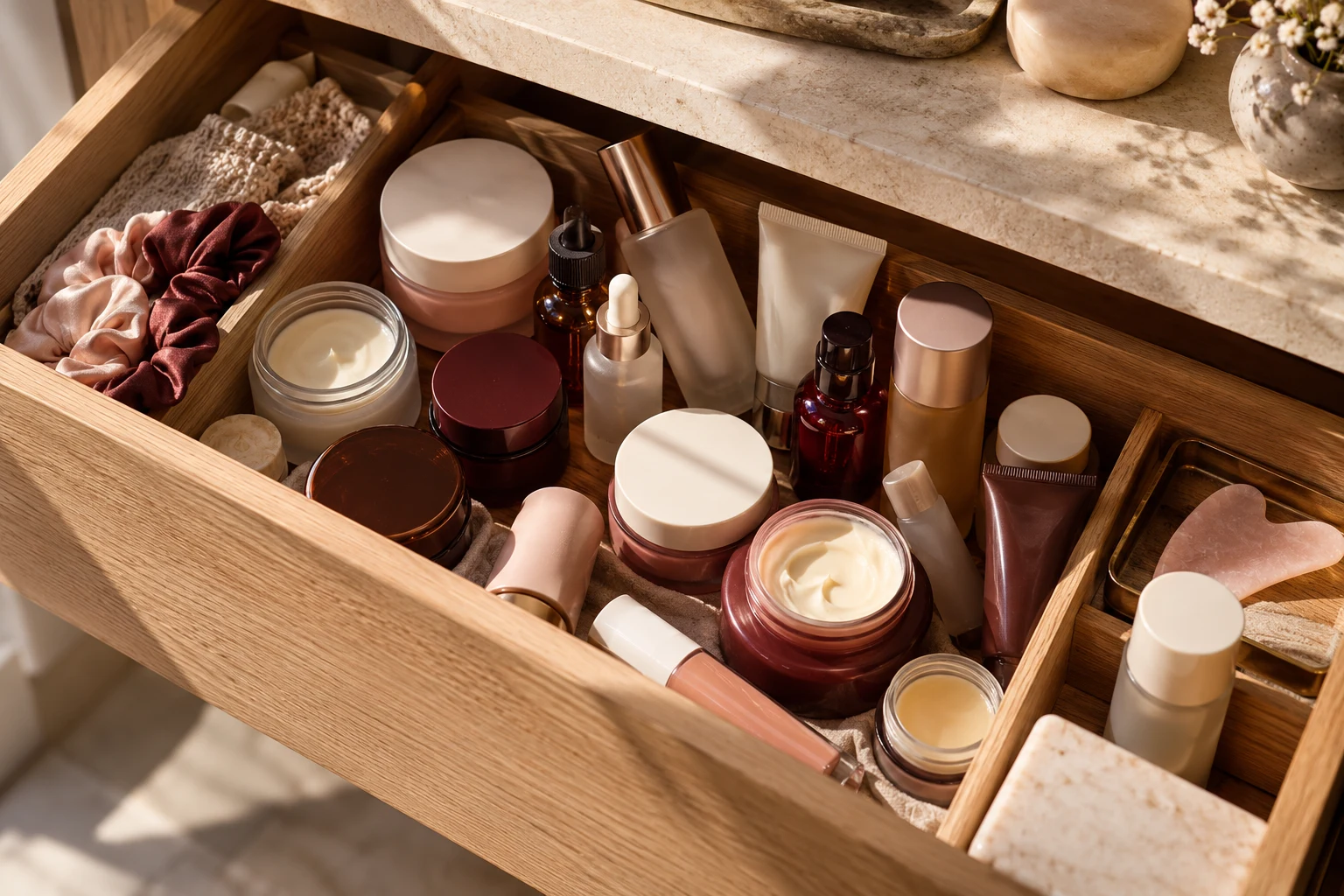
My drawer is full of skincare, and I have one face. I can’t use everything at once. But I don’t want half of it sitting there while I buy the next interesting thing, either.
And there is always something interesting. You open Instagram and someone has already found the serum that changes everything. There is a lovely texture, a convincing explanation and skin that looks beautiful in the light beside a window.
I like skincare. I understand the temptation.
But at some point, I wanted to understand what I had collected. What made sense for my skin, what overlapped, and how to use the products so that each had a place in my routine.
That was how my conversation with AI began.
I wanted to know what I actually owned, what suited my skin and how to use it. Which products did similar things? Which could I alternate? And was there anything among them that could stand in for my favourite cream if I couldn’t justify buying it this month?
All questions that rarely get answered in the video that persuaded you to buy the product.
When I buy a cream, I usually think about that cream. I like what it promises, read about the ingredients and compare the price. I rarely picture it beside everything else at home to check whether I already own something with the same job.
That was the wider view I was missing.
We started by sorting through and analysing the products I already had. What did each one do? Which had similar functions? Where was there a real difference, and where had two brands simply described a similar idea in different words?
This is where AI can help you understand what sits behind the name on the packaging. Give it the exact products, ingredient lists and directions, as clear photographs or text, and start asking questions.
For example, does a hydrating serum add something that is missing from the rest of your routine? Or do two products for a more even-looking complexion work in similar ways, and is there a reason to use both?
One shared ingredient does not make two formulas identical. But it gives you a starting point for comparison that is more useful than “this one is very popular”.
That gave the whole conversation a direction.
Sorting things out is a good start, but I also wanted to understand how to work towards the result I was looking for. So I described my skin and what I wanted to achieve.
Now we were looking at the products with a particular goal in mind. Which of them supported it? Which had another purpose? What was missing?
We added products, too. A full drawer does not necessarily mean a complete routine. You can own several similar serums and still be missing something better suited to your needs.
I like thinking about a new purchase this way: what will it add to what I already have? Where will it fit into my routine? Will it replace anything?
Those are questions worth asking before placing the order.
Details help: how your skin feels after cleansing, what has disagreed with it and what you currently use. A photograph can add visible features, but you need to describe how your skin feels. AI’s assessment remains a starting point, rather than a guarantee that a product will agree with you or a medical diagnosis.
The useful part is knowing where everything belongs.
Then comes the practical question: when do I use all of this?
I wanted to use more of my collection without putting the entire drawer on my face every evening. To understand what could be alternated, what made sense to finish first and what could wait.
This is where a personal calendar becomes useful.
Morning and evening, day by day, with the exact product names. Frequency and combinations need to reflect product directions, how your skin tolerates them and any advice from your dermatologist. An empty space in the calendar is not a reason to add another product.
Once the plan is clear, it can become a set of reminders.
This is an everyday use of AI I can easily imagine: an evening message telling me the day and exactly what is scheduled. No need to remember which evening was meant for which bottle.
In an app with scheduled tasks, you can set up those notifications. Check that the task has actually been created and that notifications are enabled. When you change the routine, update the reminders, too.
There is another question I would ask regularly: can I use something I already own?
Especially when my favourite cream runs out and this month’s budget has other plans.
You can ask for a comparison with the products you have, or with more affordable options. It helps to explain what you like about your cream: the texture, the feel, a particular function. That makes the search much more precise.
I don’t expect two creams with similar ingredients to feel identical. But I would like to understand what I am getting, what will be different and whether the difference matters to me.
All of this can stay in a dedicated conversation or project: the products, the goal and the current plan. Add a new product, record a change and occasionally check that the information is still correct.
That is how “What is in this drawer?” can gradually become a personal assistant for your skincare.
I started with a full drawer and a wish to make better use of what I had chosen.
I still like skincare. And I will probably be tempted by something new again.
I simply want to know where it will belong.
MY EDIT
01
The part I would start with: an accurate list of what is already there, with anything uncertain clearly marked.
02
A plan is useful when it is understandable and manageable. The prompts help organise the information; product instructions still matter.
03
My favourite question in the story: can something I already own do the job? It makes the next decision more considered.
THE TAKEAWAY
The aim is to make the collection easier to understand and use. Keep the information clear, check the details and let the plan fit the life around it.
Original AI-generated editorial image for YANA, LATELY. The products shown are illustrative.