DRESSED HOMES
AMIRI
INSPIRED BY AMIRI · AUTUMN / WINTER 2026–27
What happens when AMIRI’s Autumn/Winter 2026 collection becomes a house? Embroidered tailoring, mint knitwear and Western details turn into tactile interiors, one room at a time.
About 6 min read
DRESSED HOMES · ISSUE 02
For the second Dressed Homes story, I chose AMIRI Autumn/Winter 2026–27 and its imagined world of Laurel Canyon.
This hillside neighbourhood in Los Angeles became a gathering place for musicians during the 1960s and ’70s, with residents including Joni Mitchell, Graham Nash and Frank Zappa. Homes were part of that creative life: places to meet, play and write music.
Looking through the collection, I could see why Mike Amiri returned to it. Embroidered jackets sit beside faded denim; soft knitwear meets patterned boots. Some pieces feel intimate, others ready for a stage. I like that tension. It gives a room much more to work with than a single colour palette.
I imagined a house where those different moods could live together. The living room would invite people to stay, the bedroom would carry the most delicate embroidery, and somewhere there had to be a piano.
The timber, records and daylight establish the setting. The clothes decide what happens inside it.
These are AI-generated editorial interiors created under my design direction. The house, custom finishes and textile adaptations are independent concepts, not an AMIRI home collection or collaboration.
01
THE LIVING ROOM
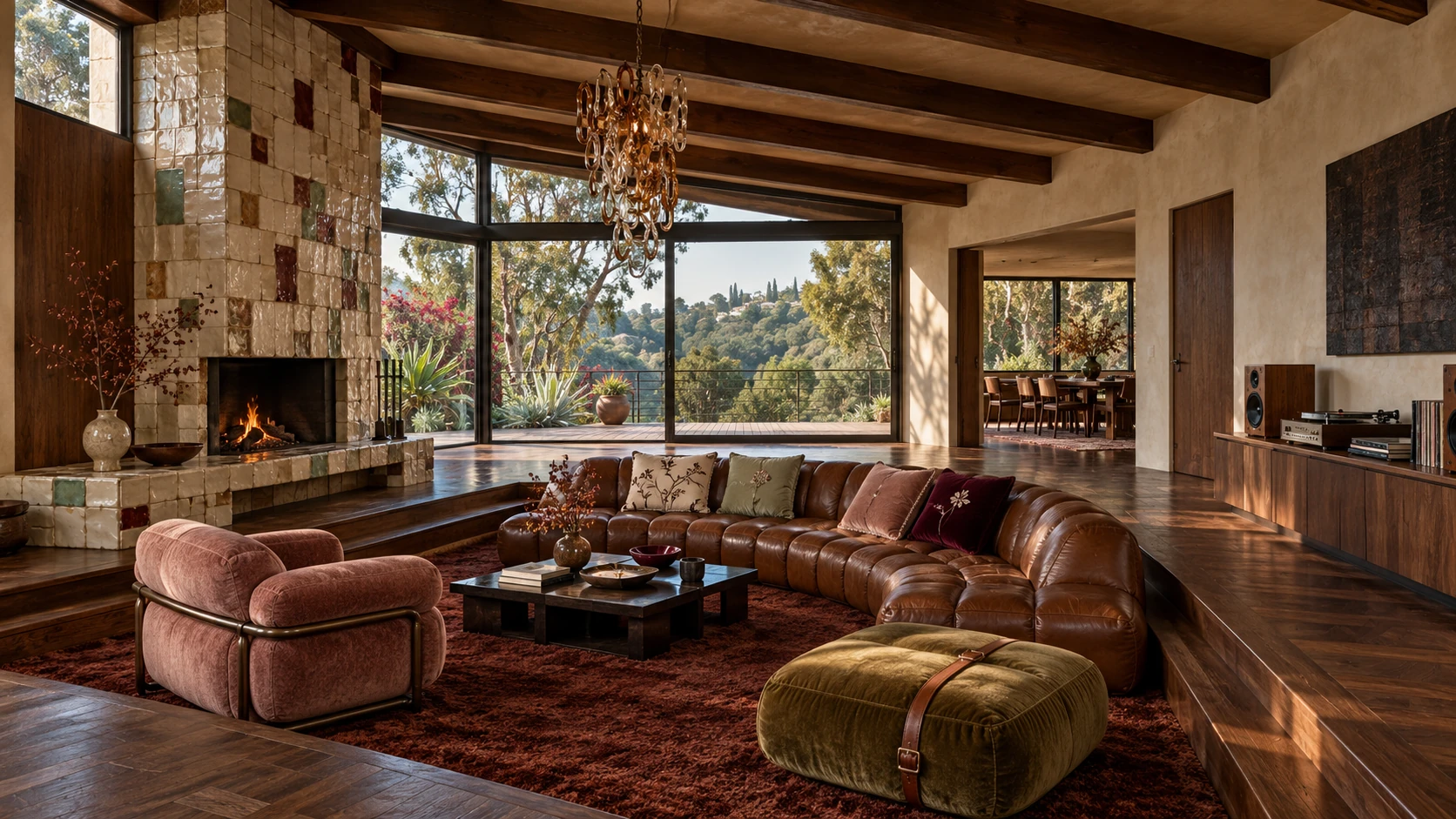
The sunken living room sets the mood. Tobacco leather, dusty rose and a deep wine rug sit beneath timber beams. I wanted generous seating and materials that become more interesting as you get closer.
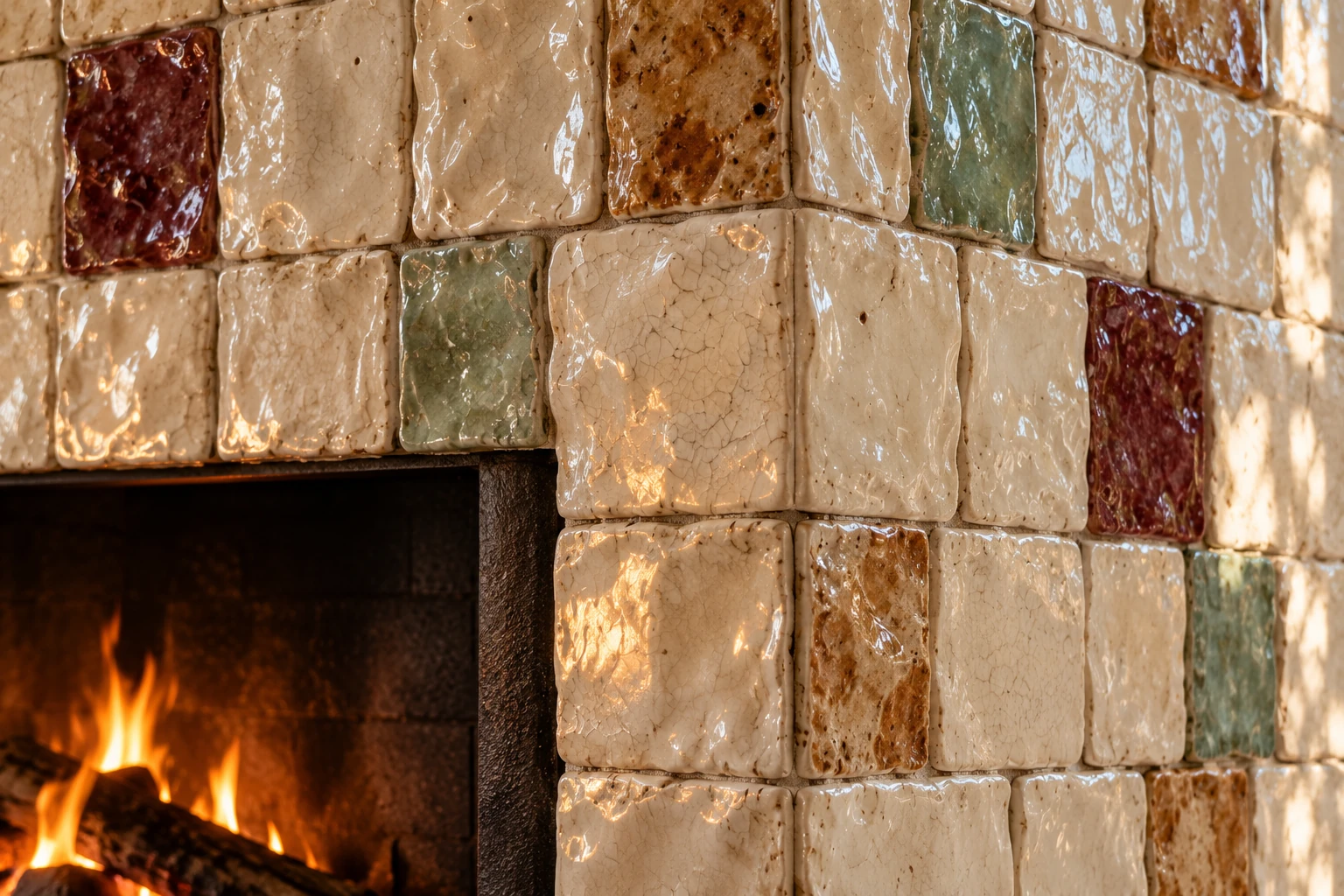
The fireplace brings the palette into handmade ceramic. Small mint, caramel and burgundy tiles interrupt the ivory glaze.
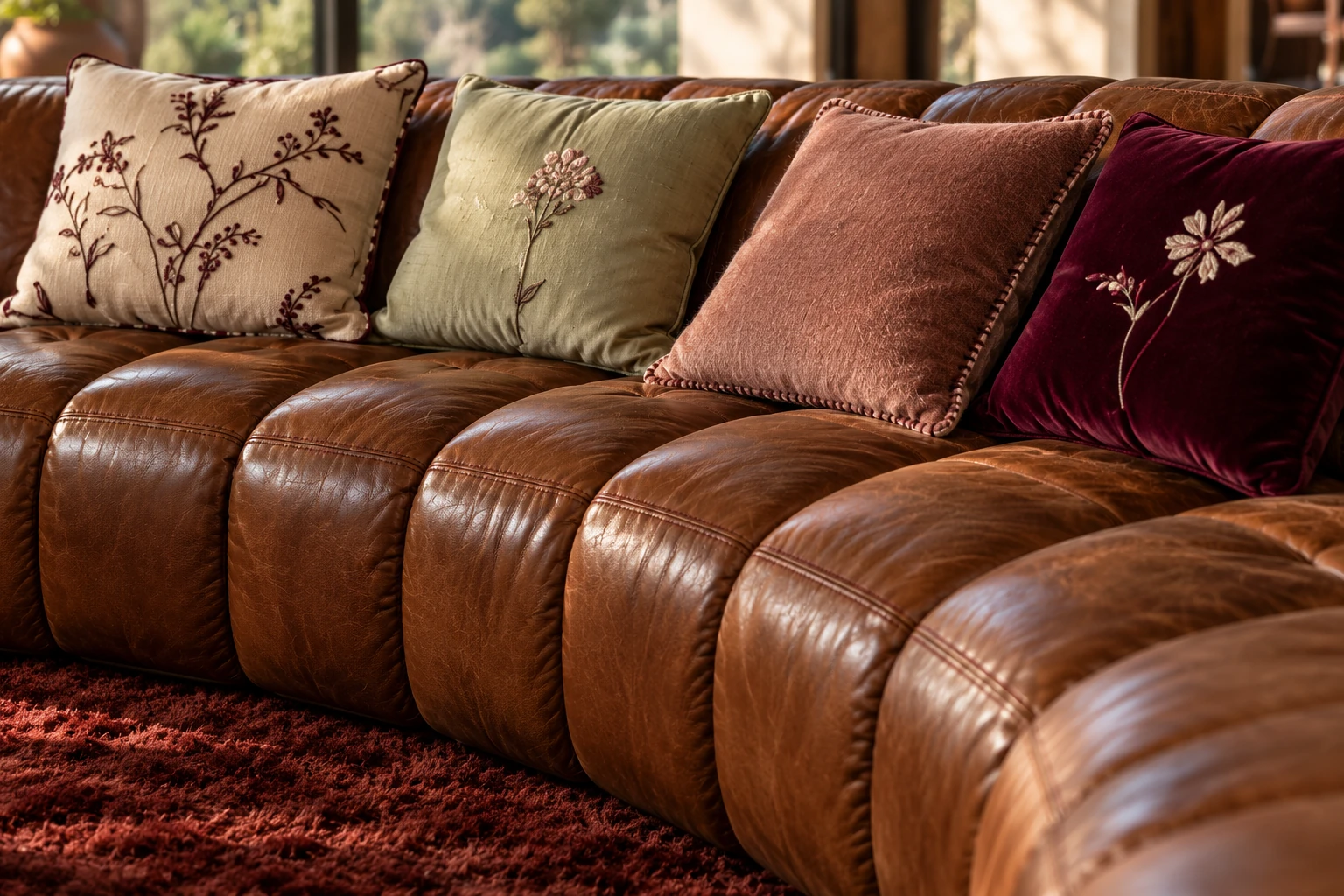
On the sofa, the cushions carry different versions of the collection’s embroidery. Their fabrics change, while the stitching connects them.
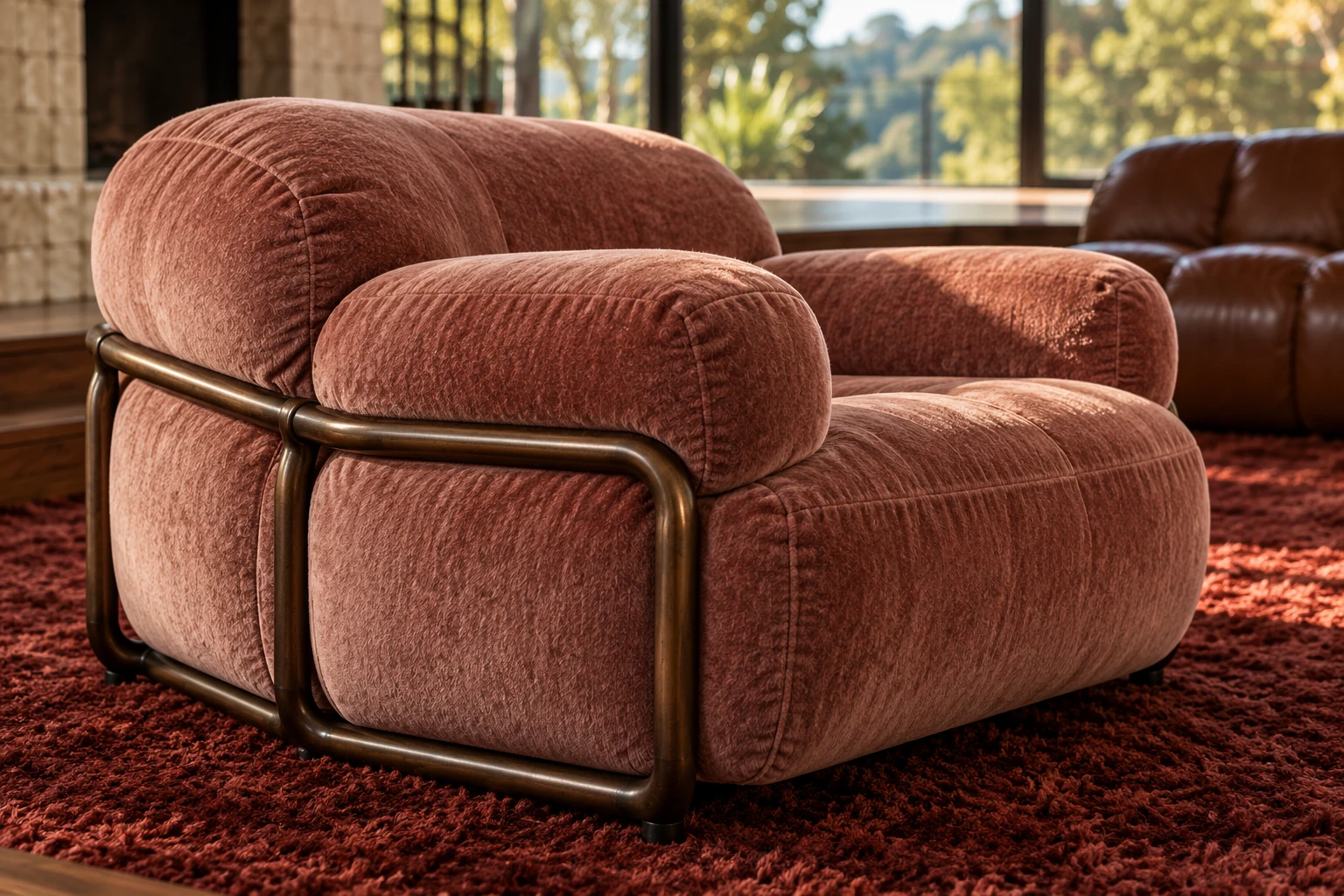
The dusty-rose armchair adds another texture: soft upholstery held inside a visible metal frame.
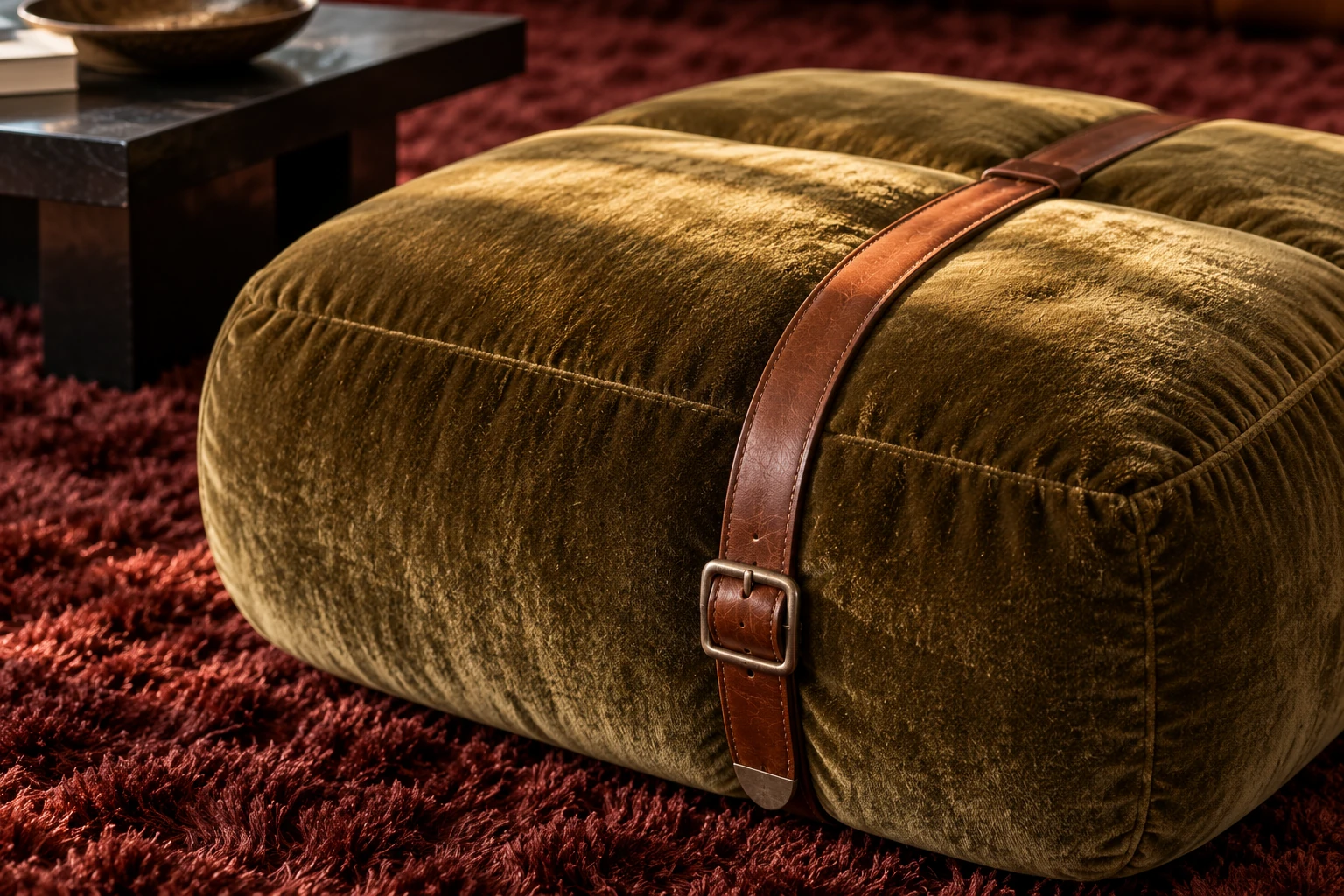
The velvet ottoman takes its detail from the accessories. One leather strap and a buckle are enough.
02
THE DINING ROOM
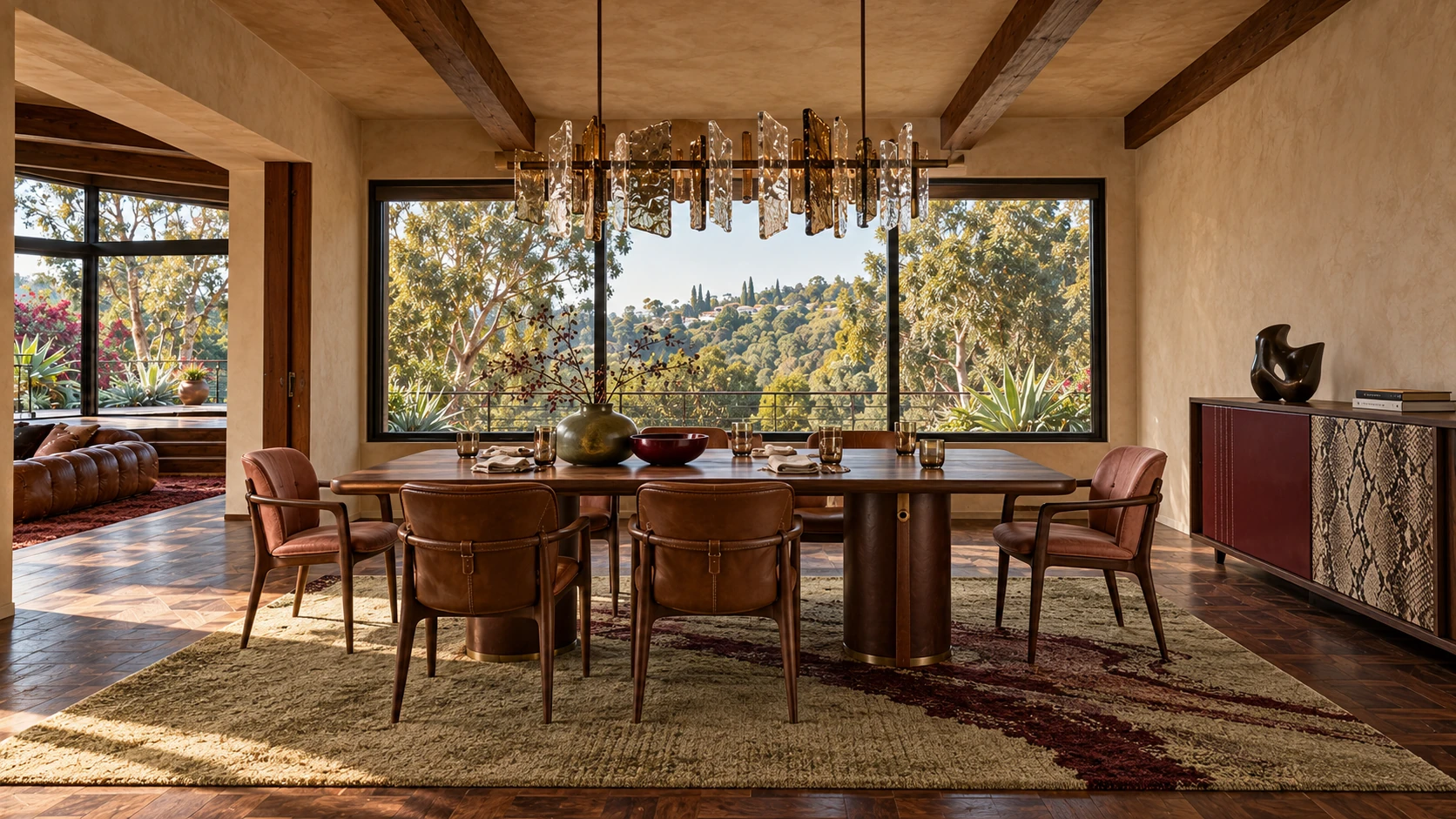
Walnut and leather give the dining room its weight. Dusty-pink end chairs soften the arrangement, while the opening preserves the view down into the living room.
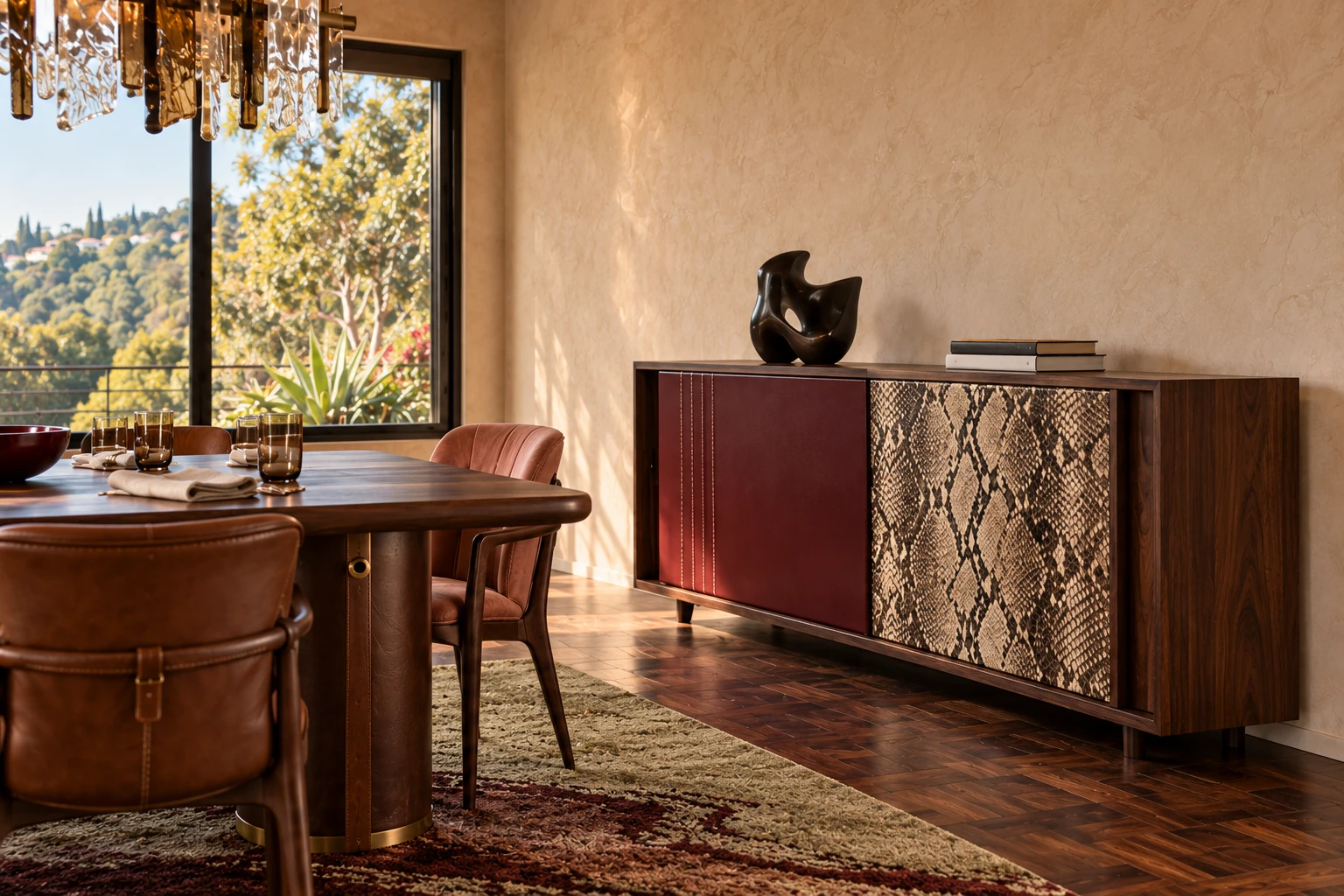
The sideboard holds the strongest contrast: wine-coloured leather beside a cream-and-brown python pattern borrowed from the footwear.
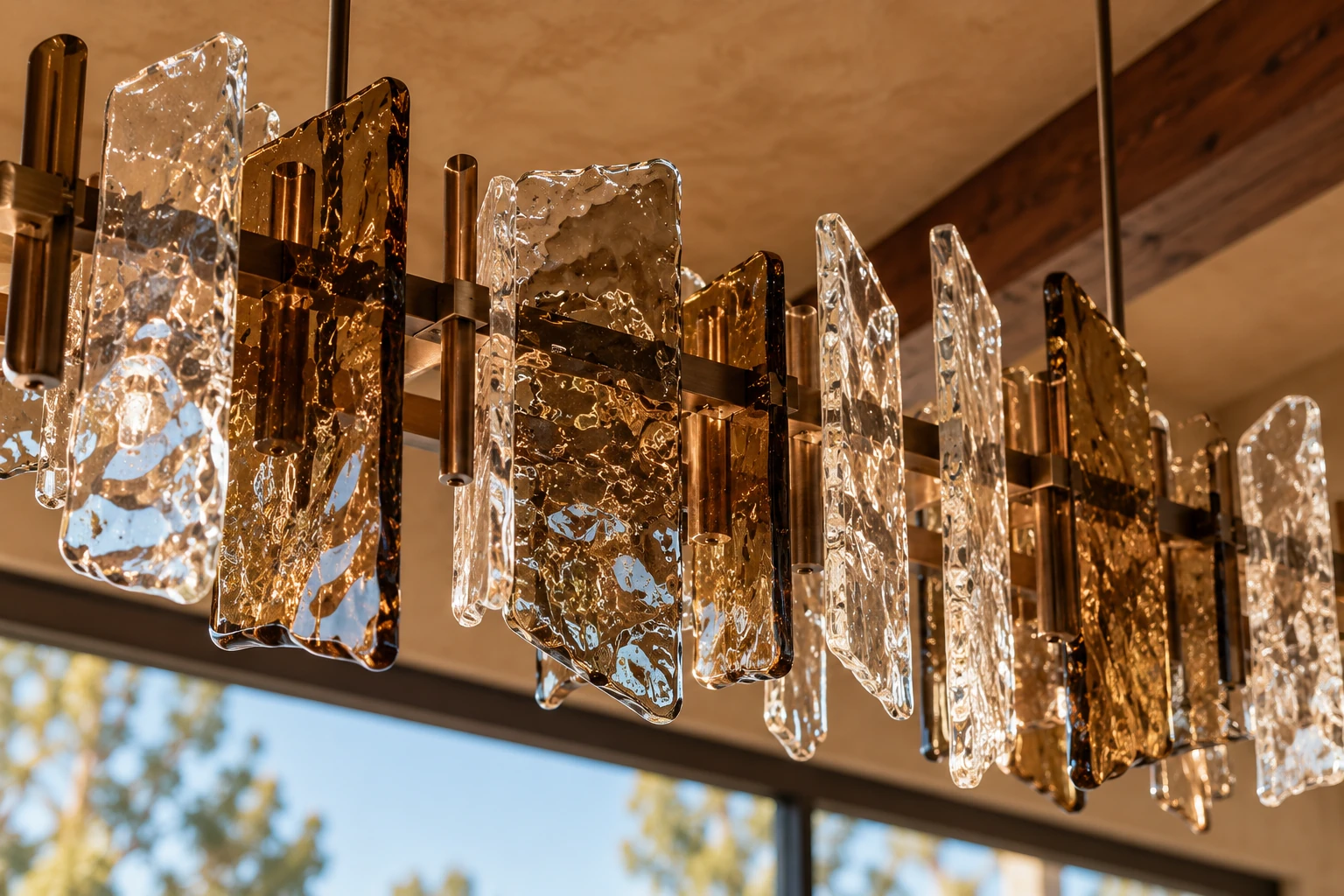
Above the table, textured clear and amber glass catches the daylight. Its irregular surface matters as much as its shape.
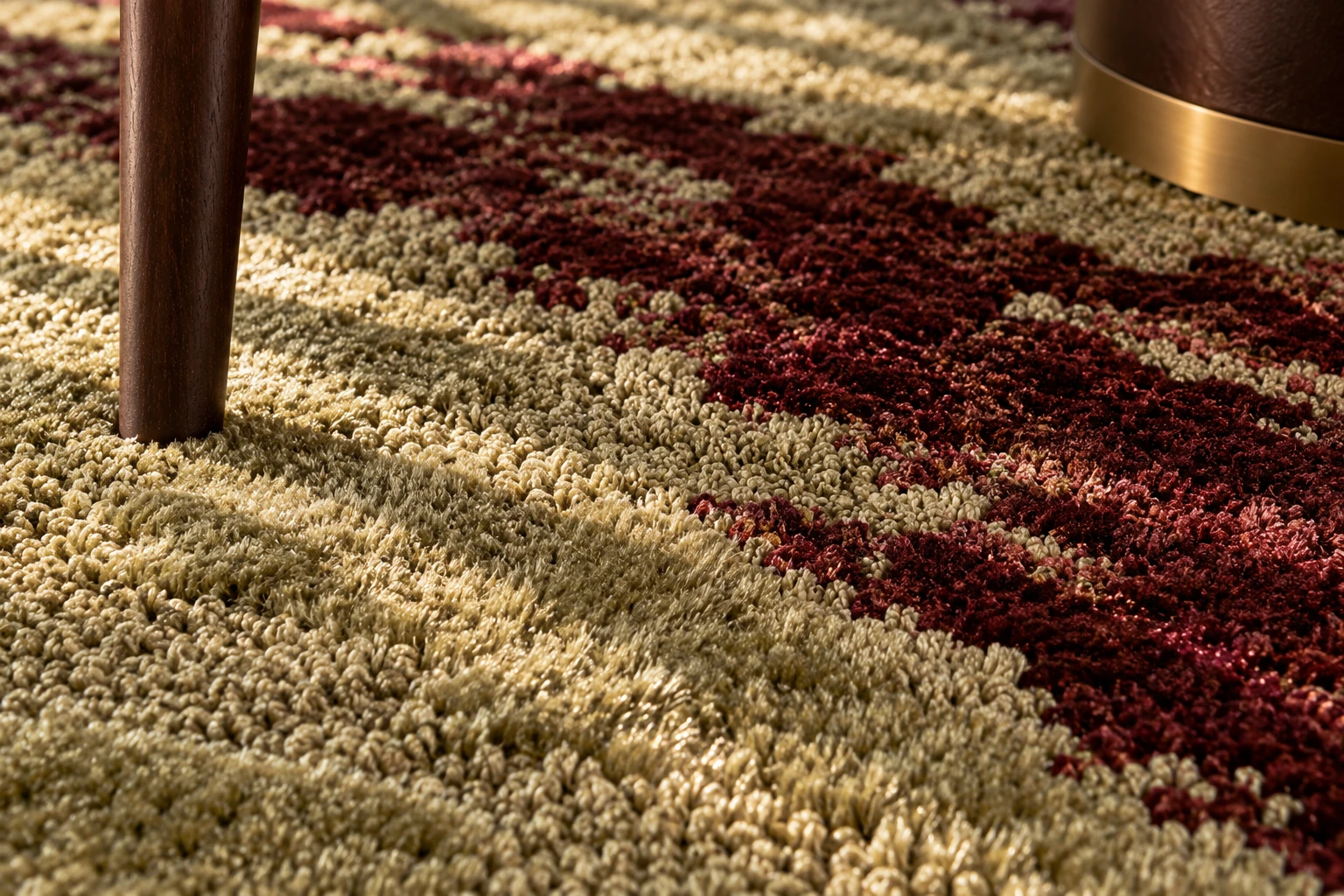
The rug brings the colours together beneath the furniture, with a broad burgundy gesture across its quieter ground.
03
THE KITCHEN
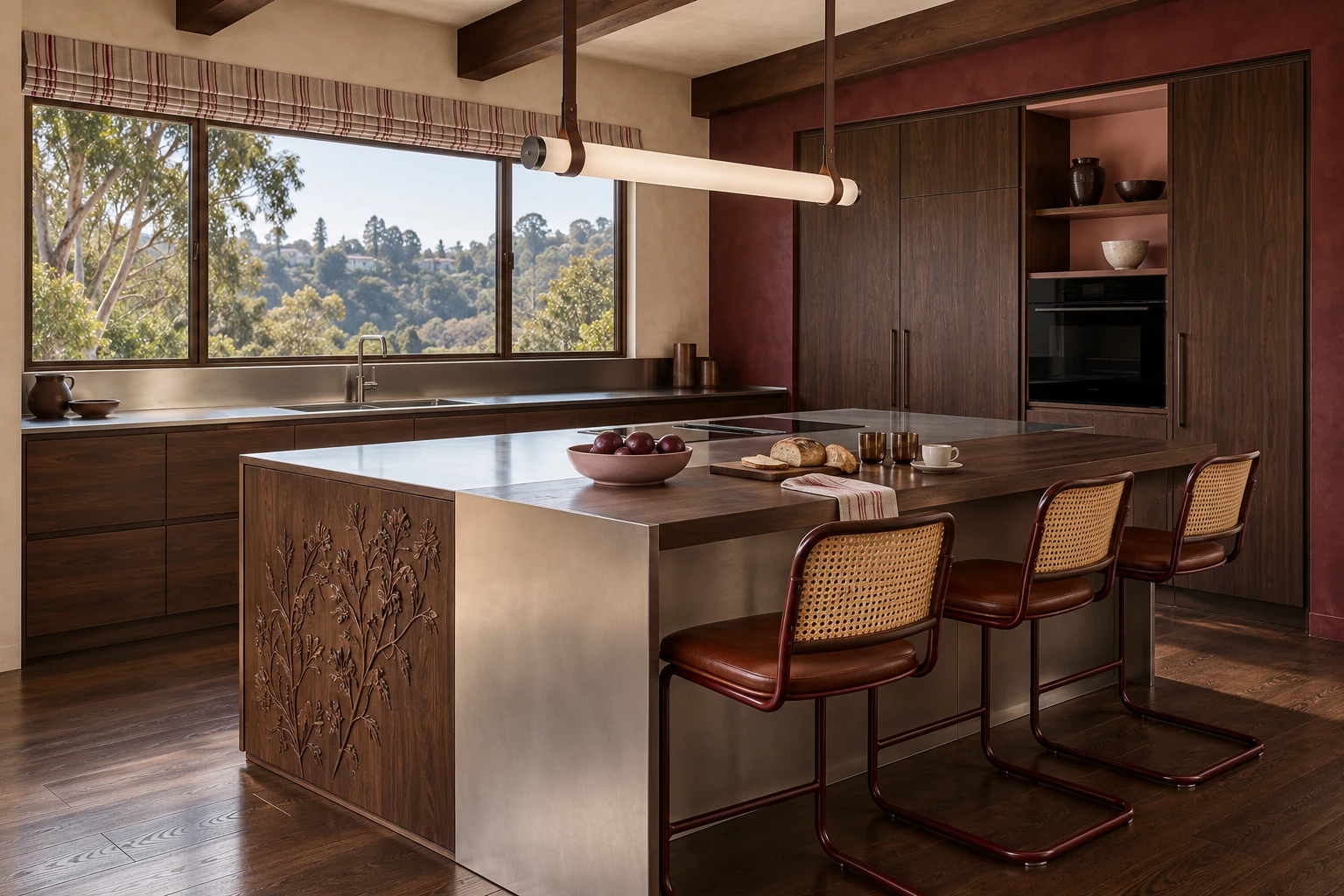
I wanted the kitchen to feel crafted. Walnut cabinetry meets stainless steel, with burgundy around the tall units and a small powder-pink niche.
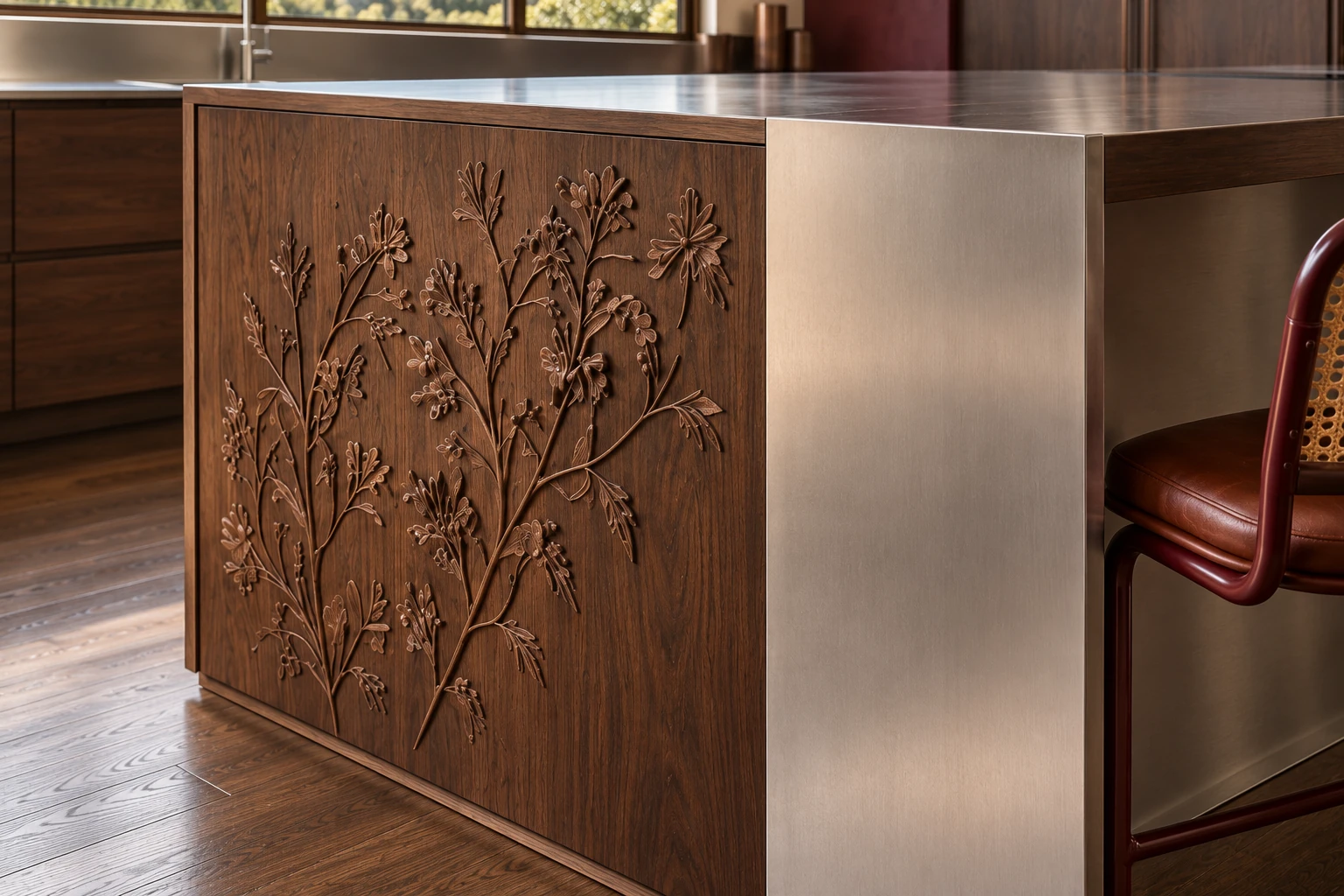
The embroidered vines become carved wood on the island. Here, the pattern has depth and follows the material.
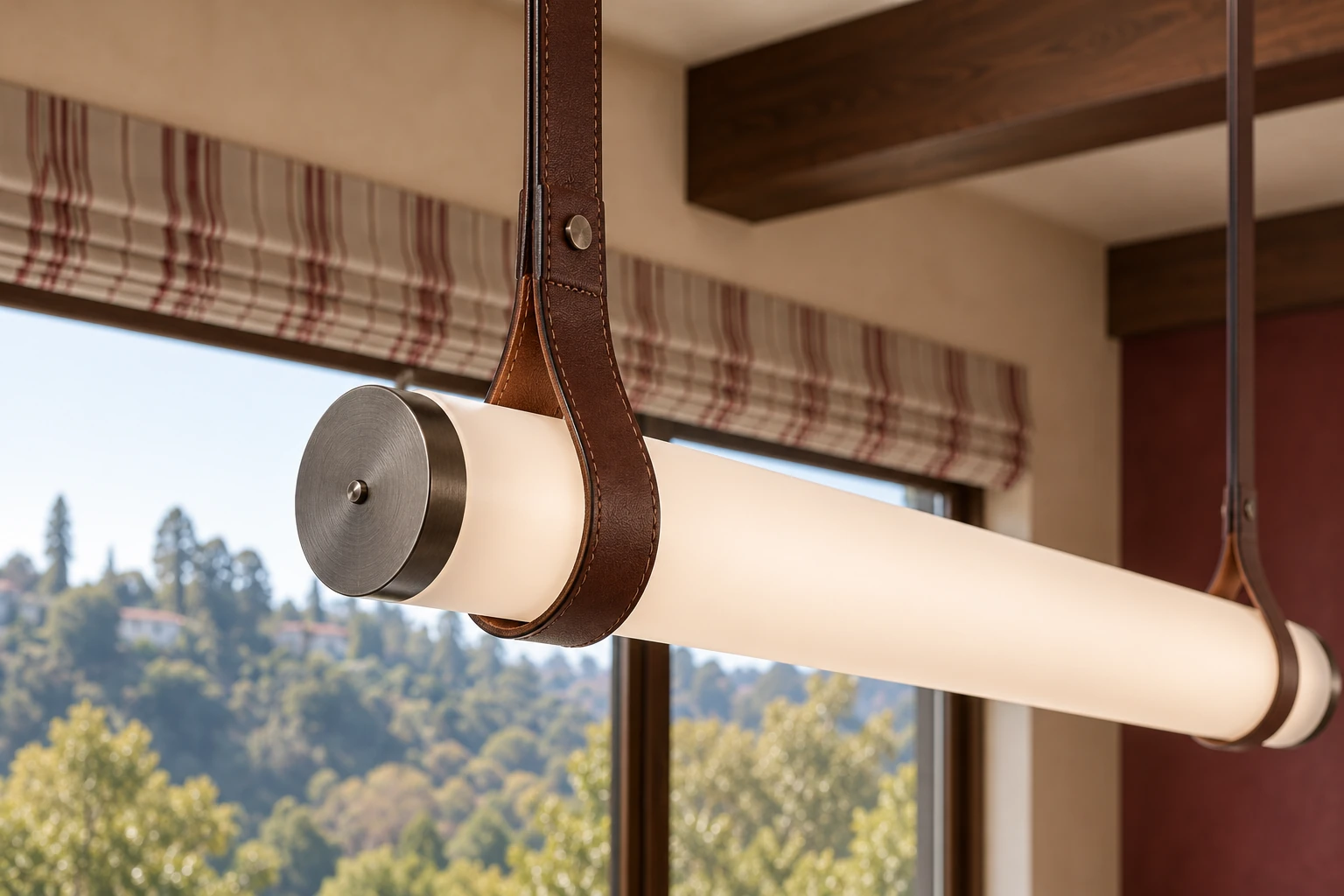
Leather straps suspend the long light above it. The stitching and metal connections deserve their own close view.
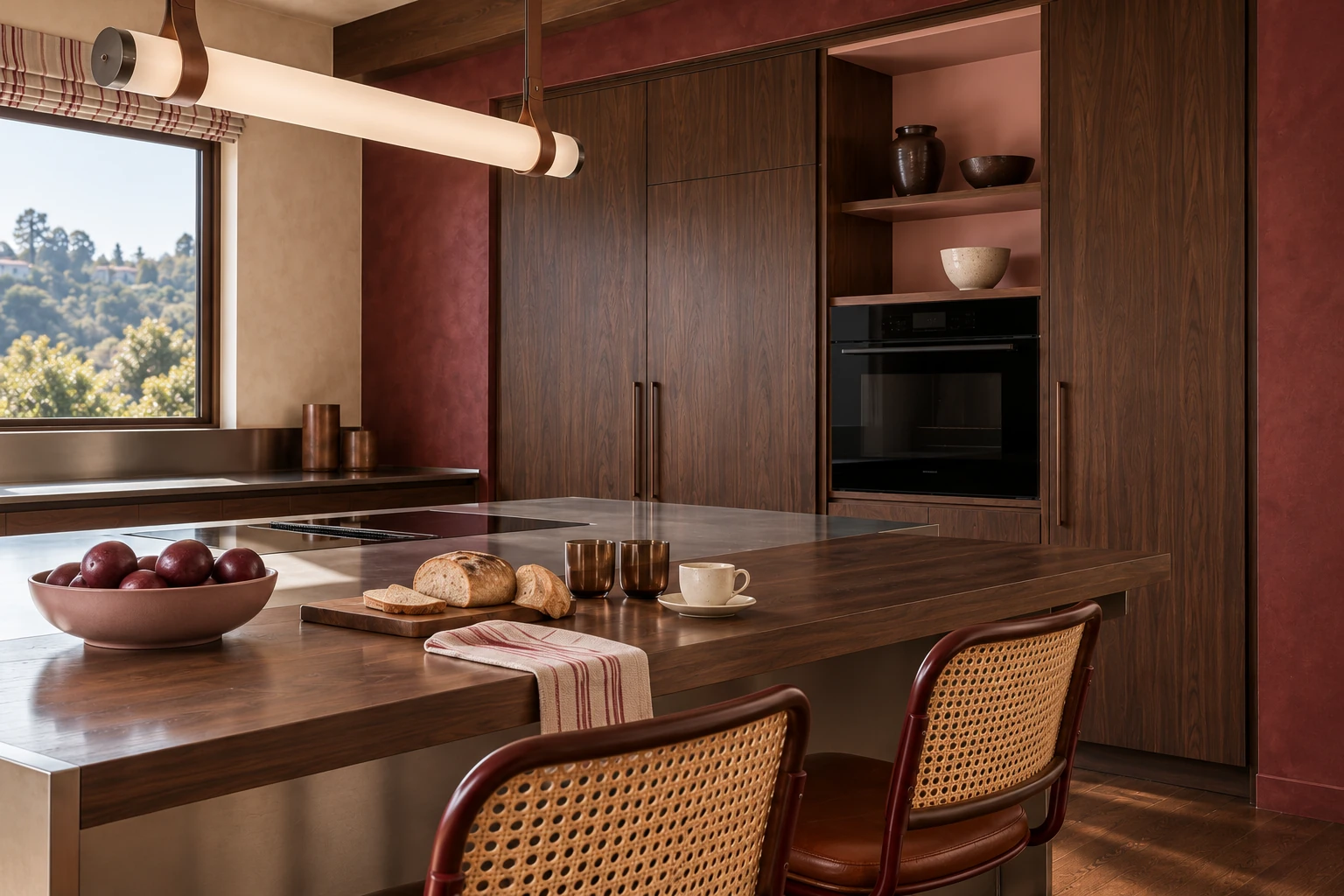
Cane-backed stools bring a lighter structure to the island. Their dark red frames pick up the surrounding colour.
04
THE BEDROOM
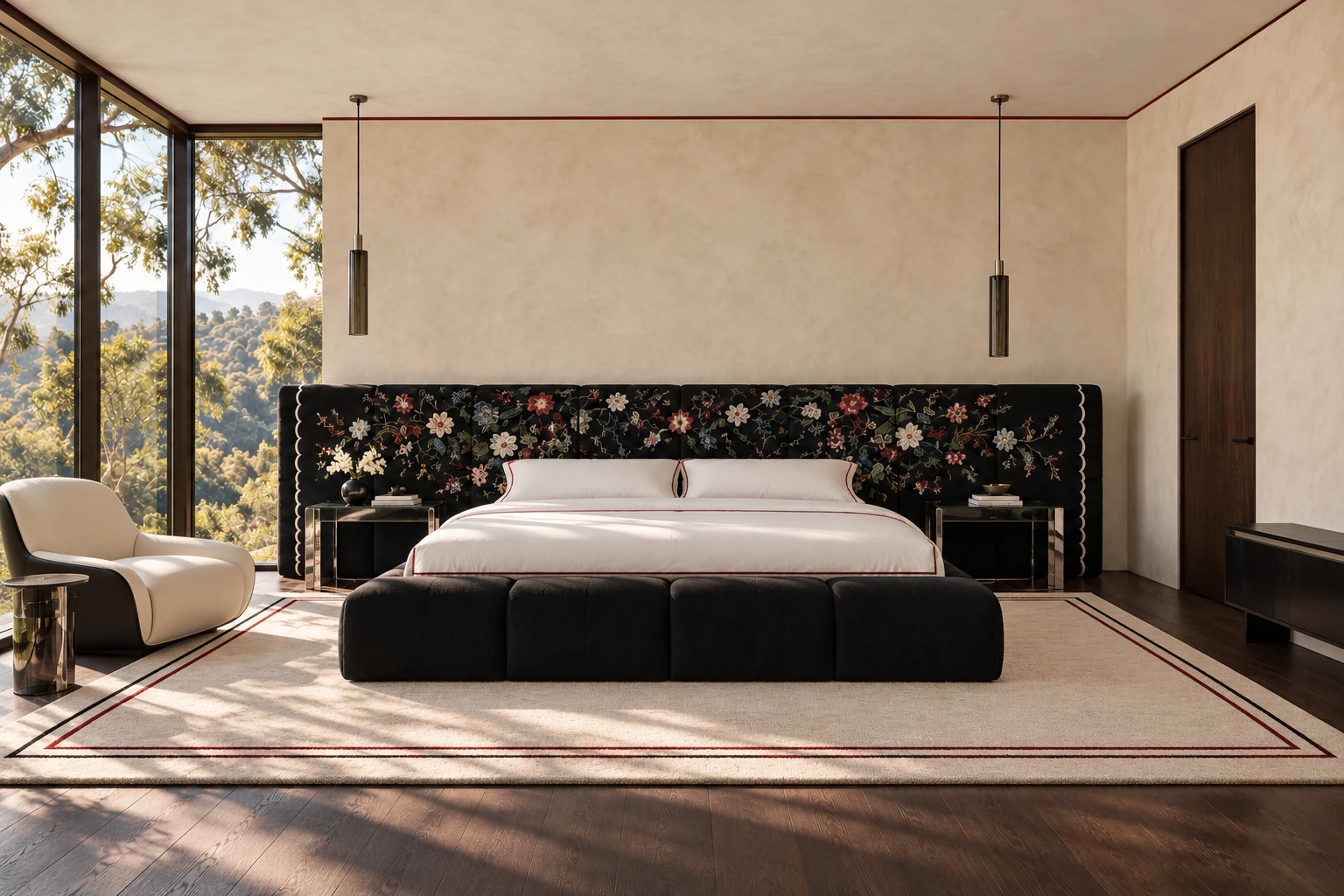
The bedroom began with the black jacket and its embroidered floral borders. I enlarged that detail across the headboard, keeping the bed black and the sheets white.
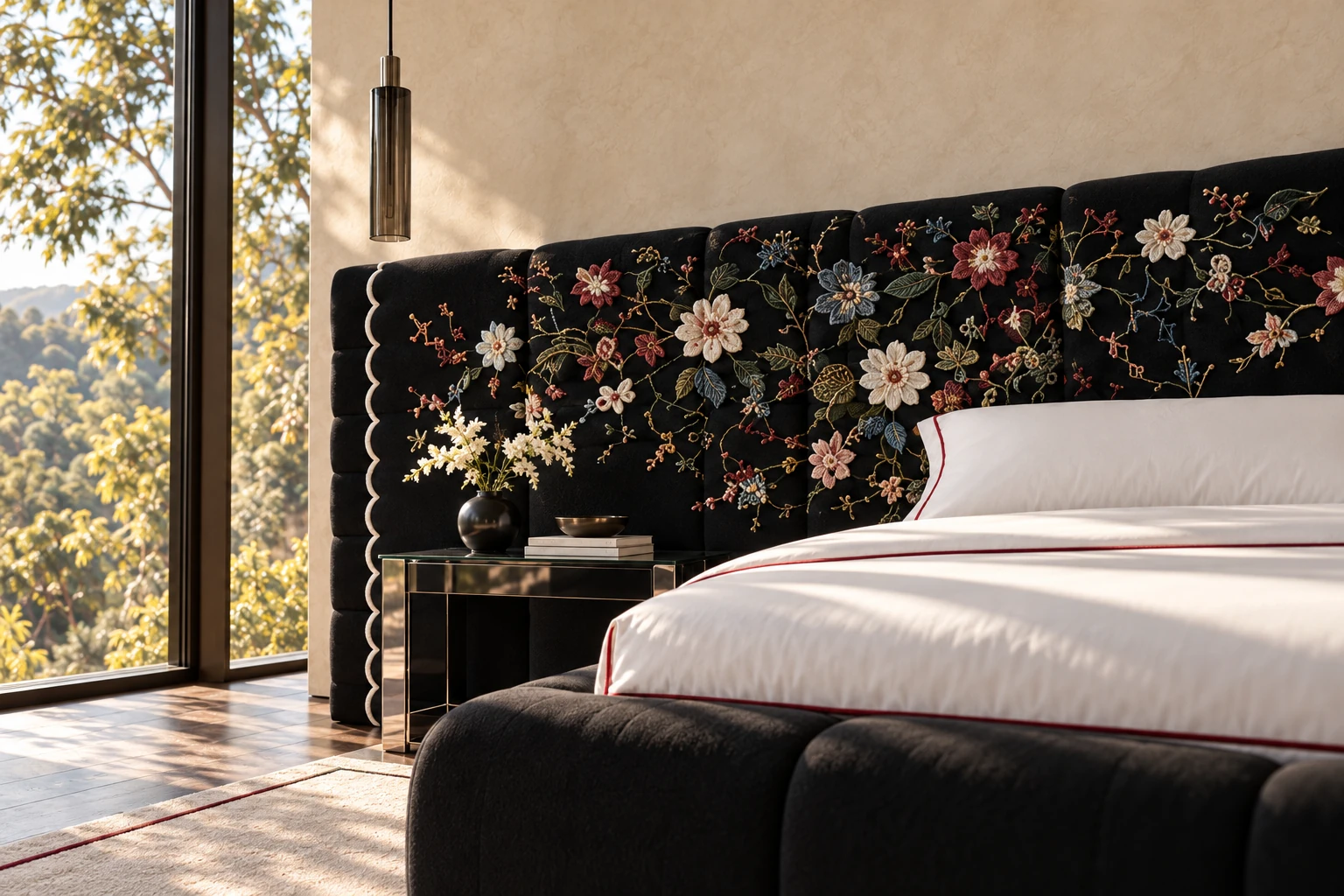
A thin wine-red edge finishes the bedding. Against the raised embroidery, that small line feels especially precise.
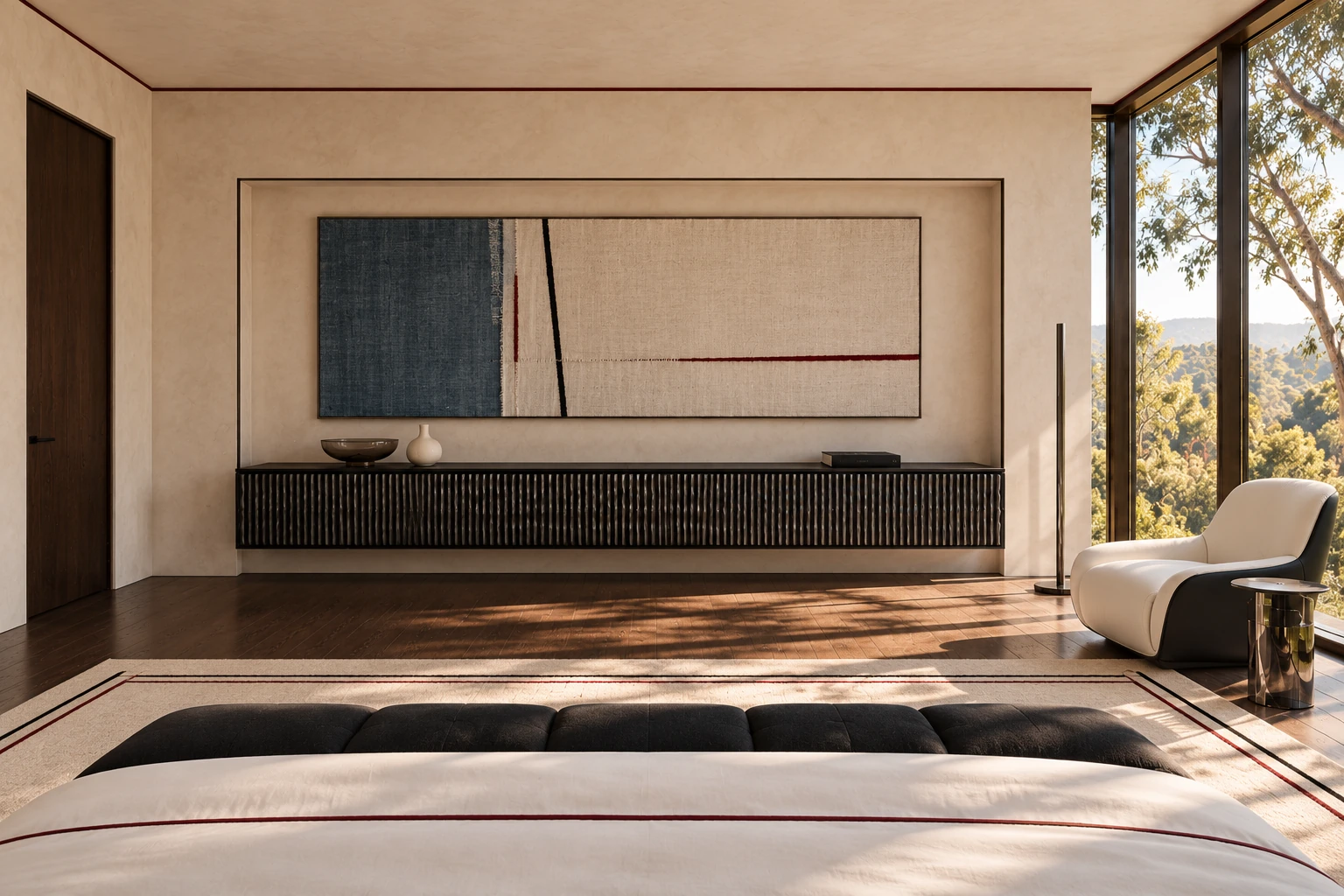
Across the room, a low cabinet introduces folded metal, while a textile artwork picks up the washed denim of the original outfit.
05
THE DRESSING ROOM
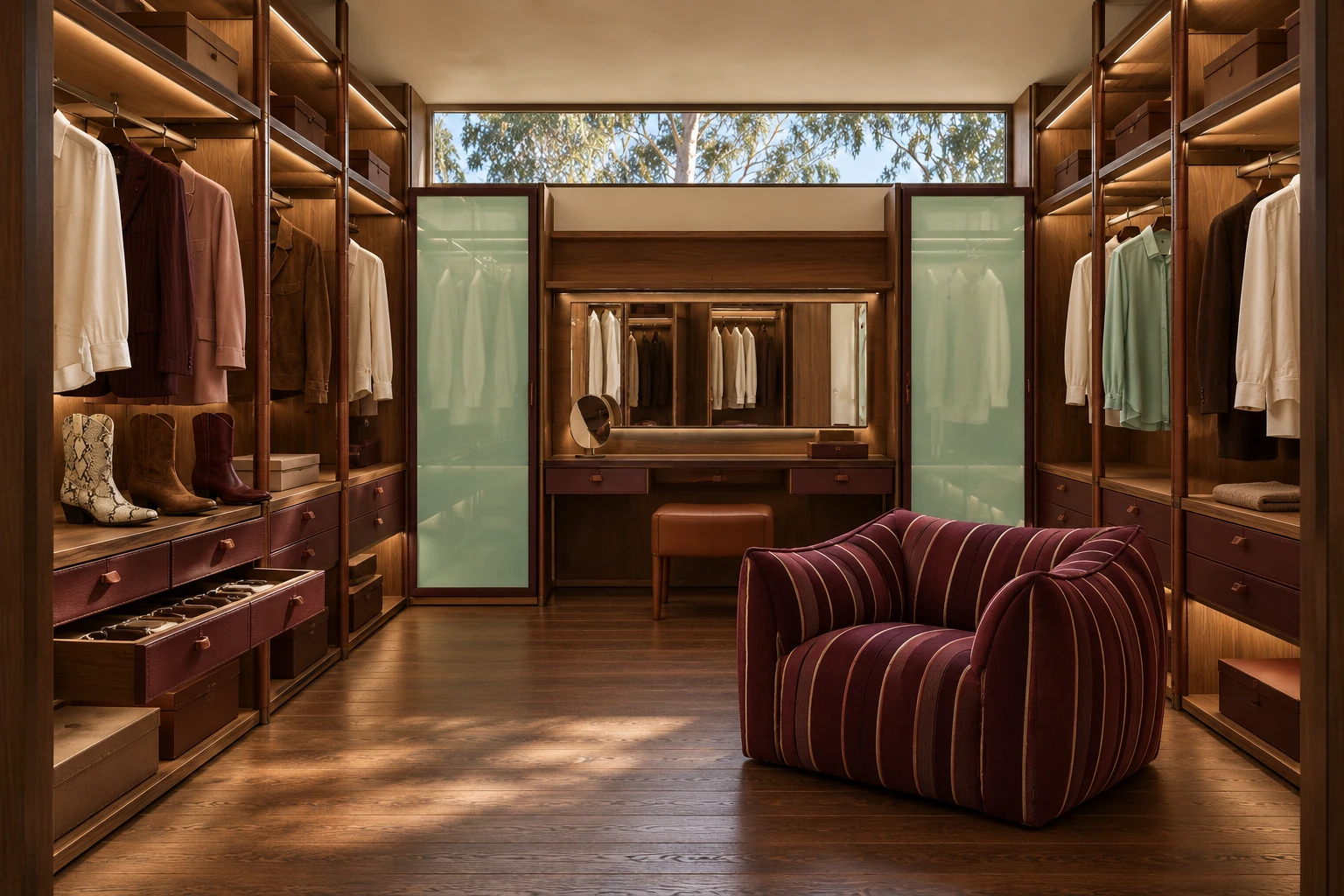
The dressing room brings together walnut, wine-coloured leather and mint glass. I like the contrast between its ordered storage and the deeply gathered upholstery of the central chair.
06
THE BATHROOM
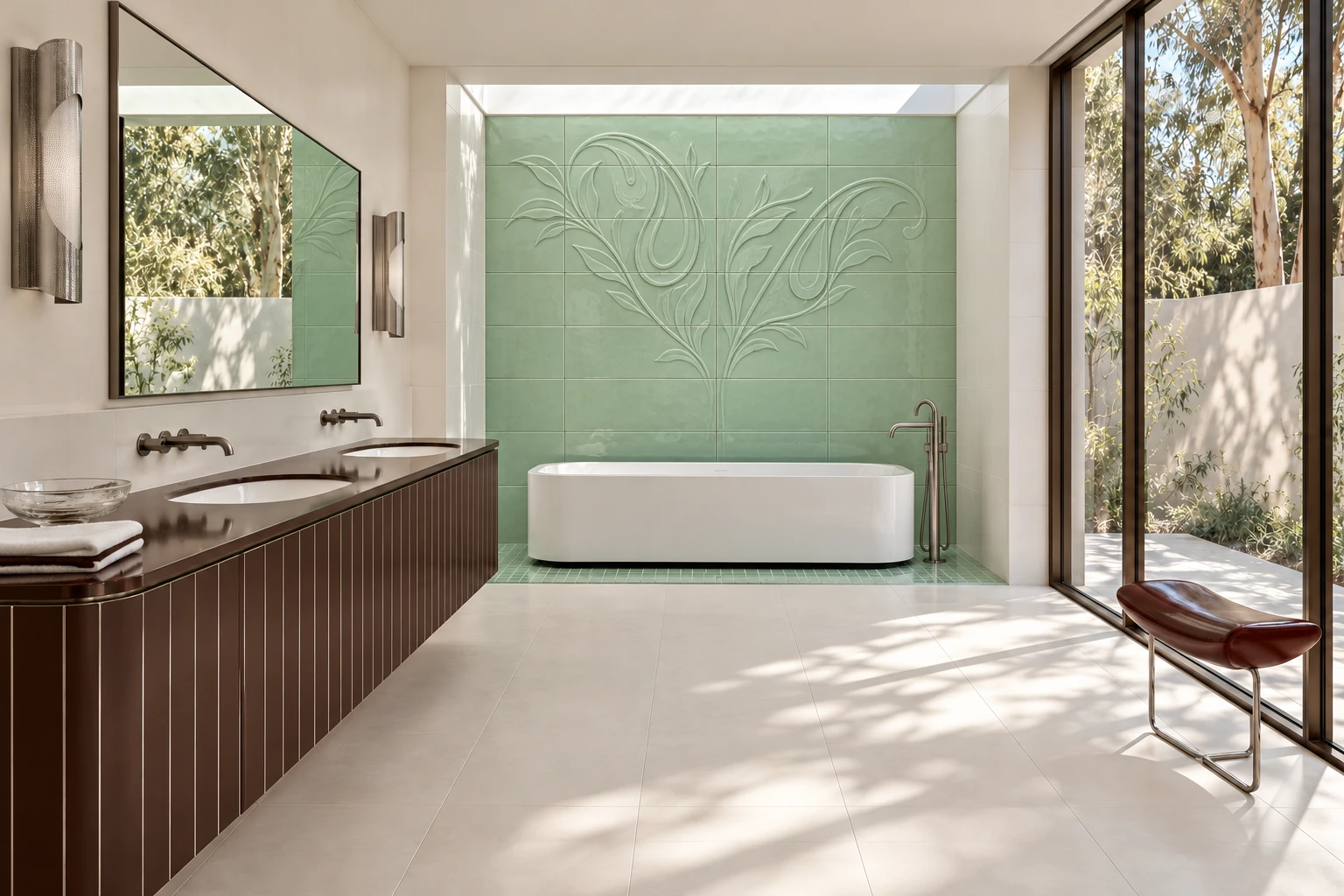
The mint cardigan in look 28 gave the bathroom its direction. Its paisley decoration becomes a shallow ceramic relief, paired with chocolate cabinetry and fine vertical lines.
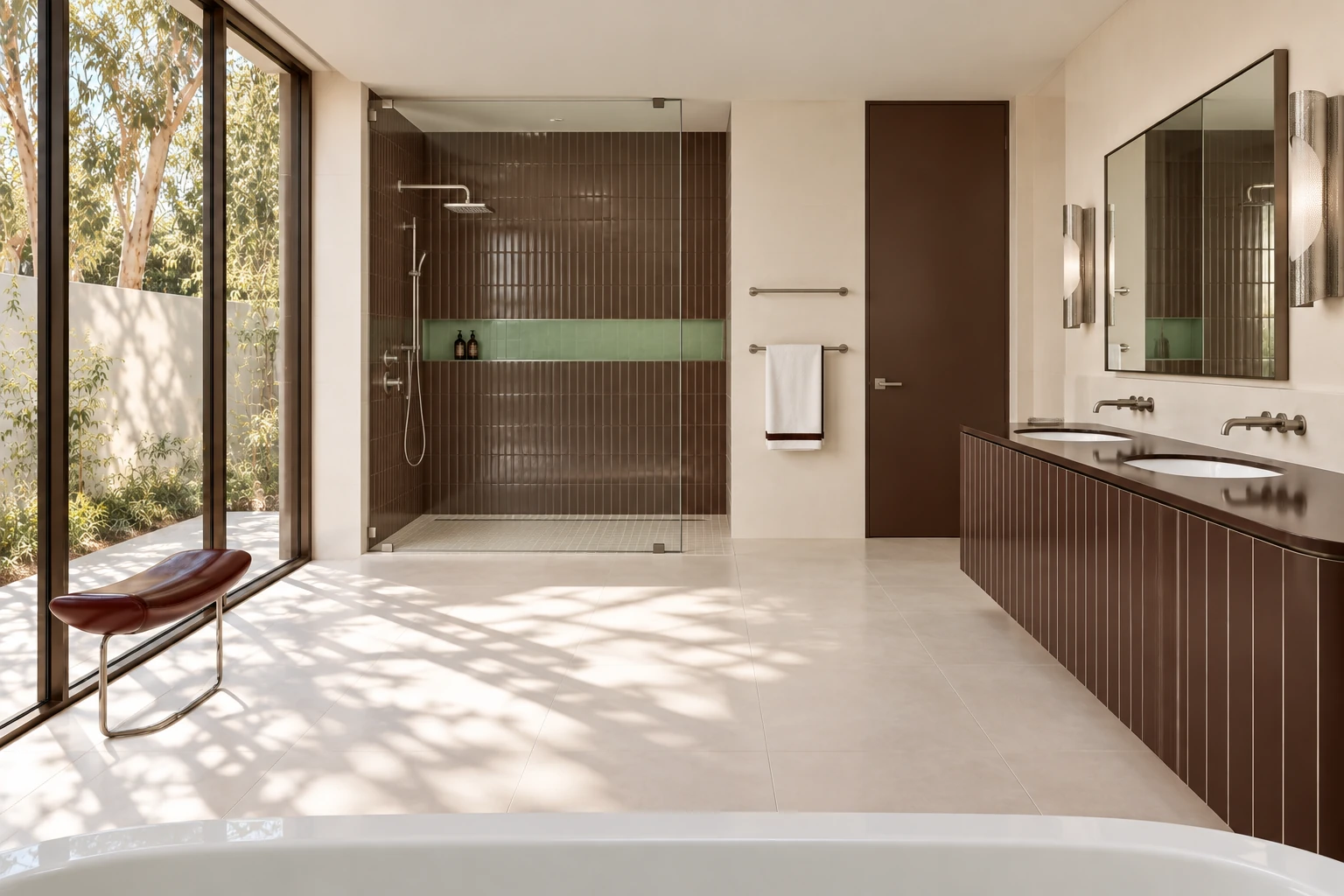
On the opposite wall, the shower continues the chocolate colour. A mint-lined niche makes the connection without covering another wall in pattern.
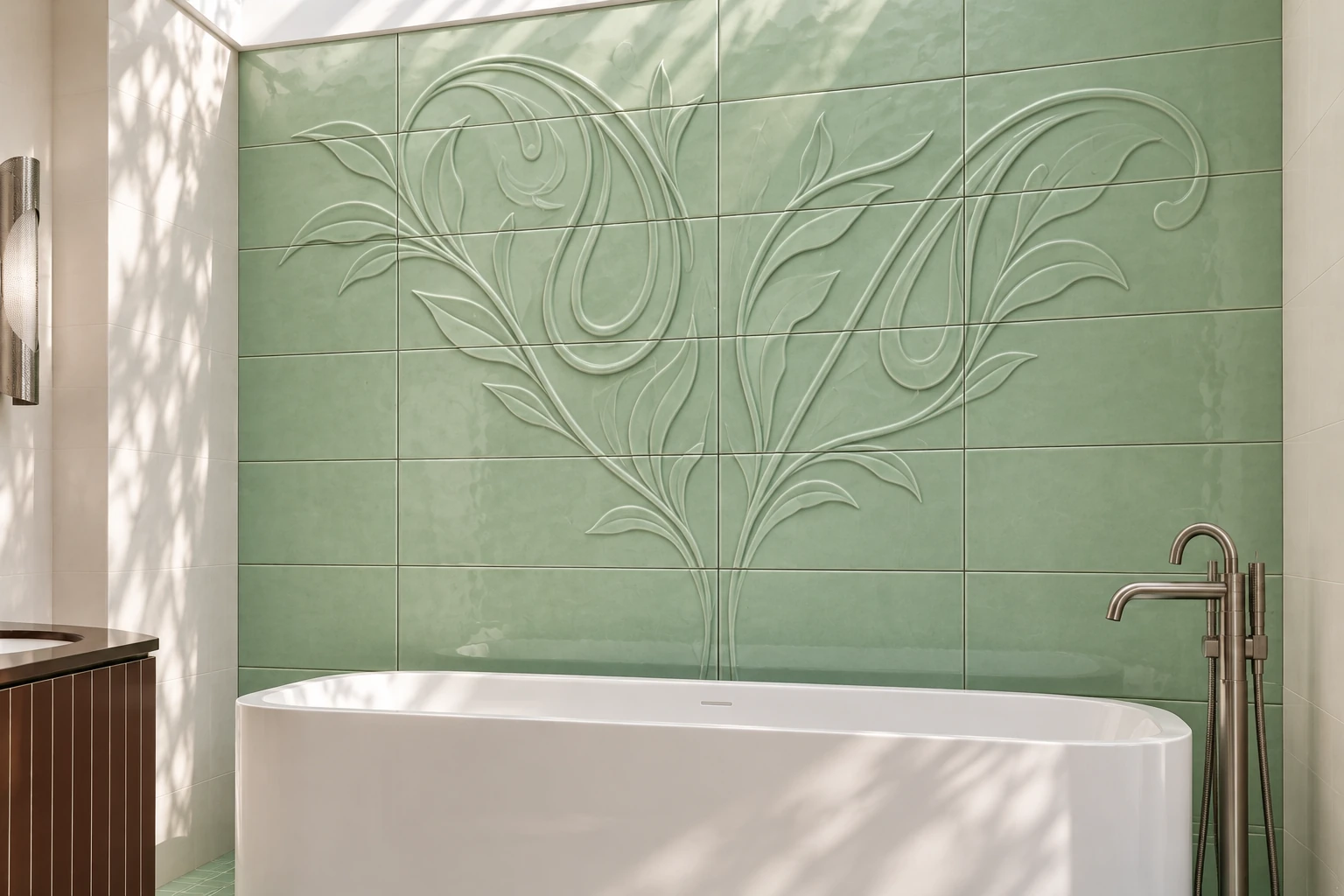
The relief belongs to the tiles themselves. Glaze, shallow shadows and visible joints give the ornament a believable material form.
07
THE HOME MUSIC STUDIO
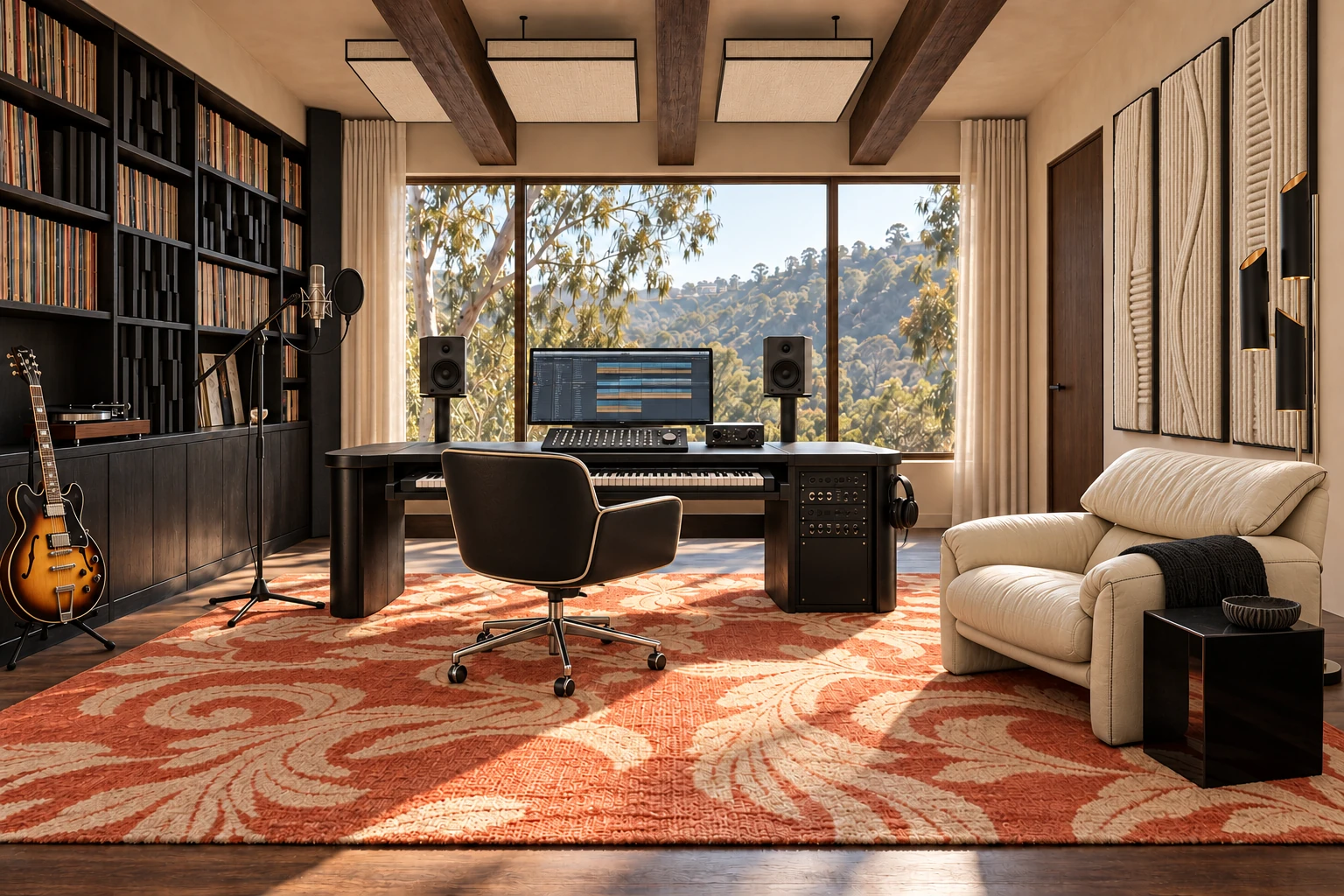
This room needed to be a home music studio. The collection’s musical references made that feel natural, and the house needed somewhere for the records to become something more than decoration.
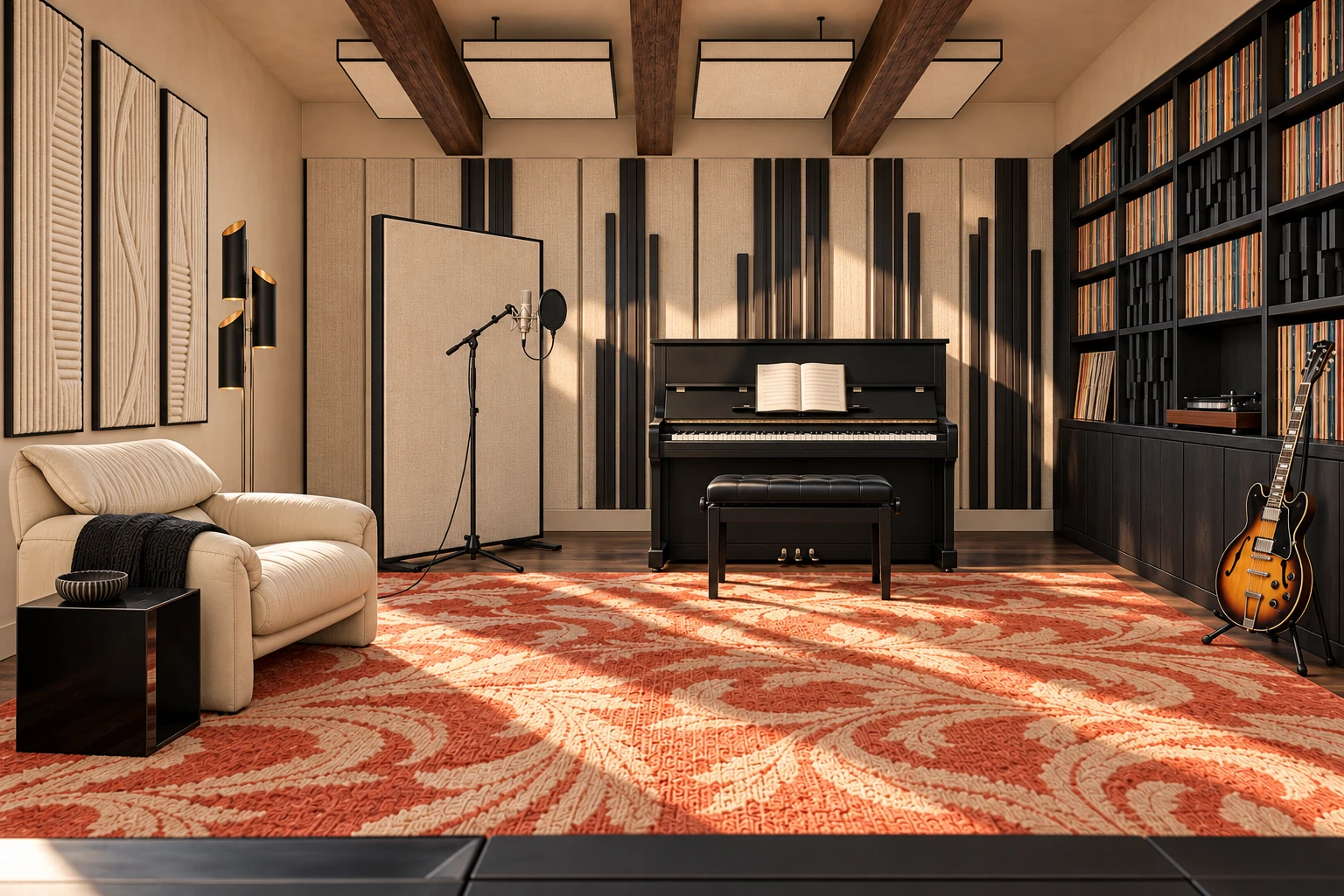
The opposite wall holds an upright piano and a recording corner. A movable acoustic screen keeps the arrangement flexible.
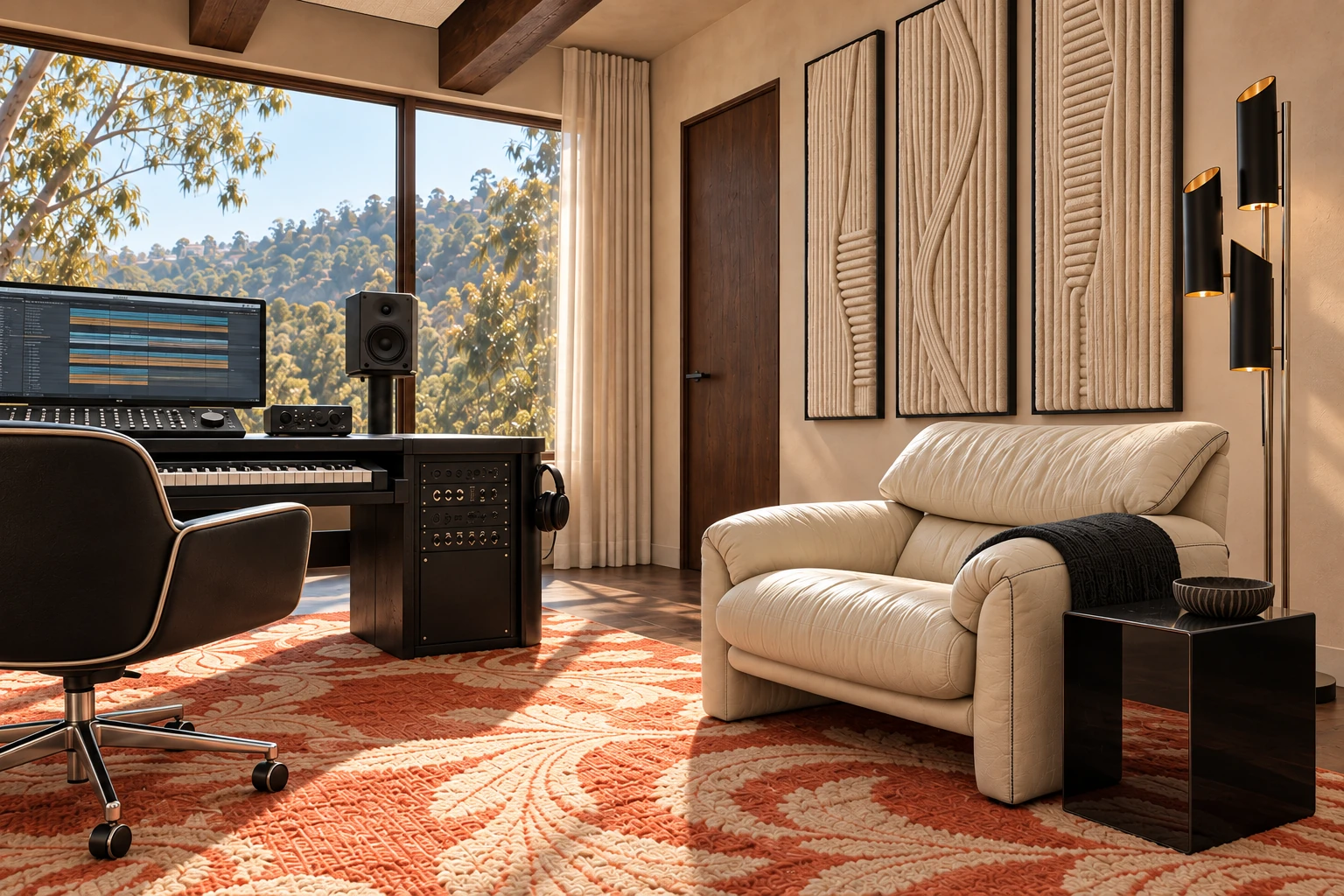
Ivory leather, black wood and raised textile panels give the listening corner its depth.
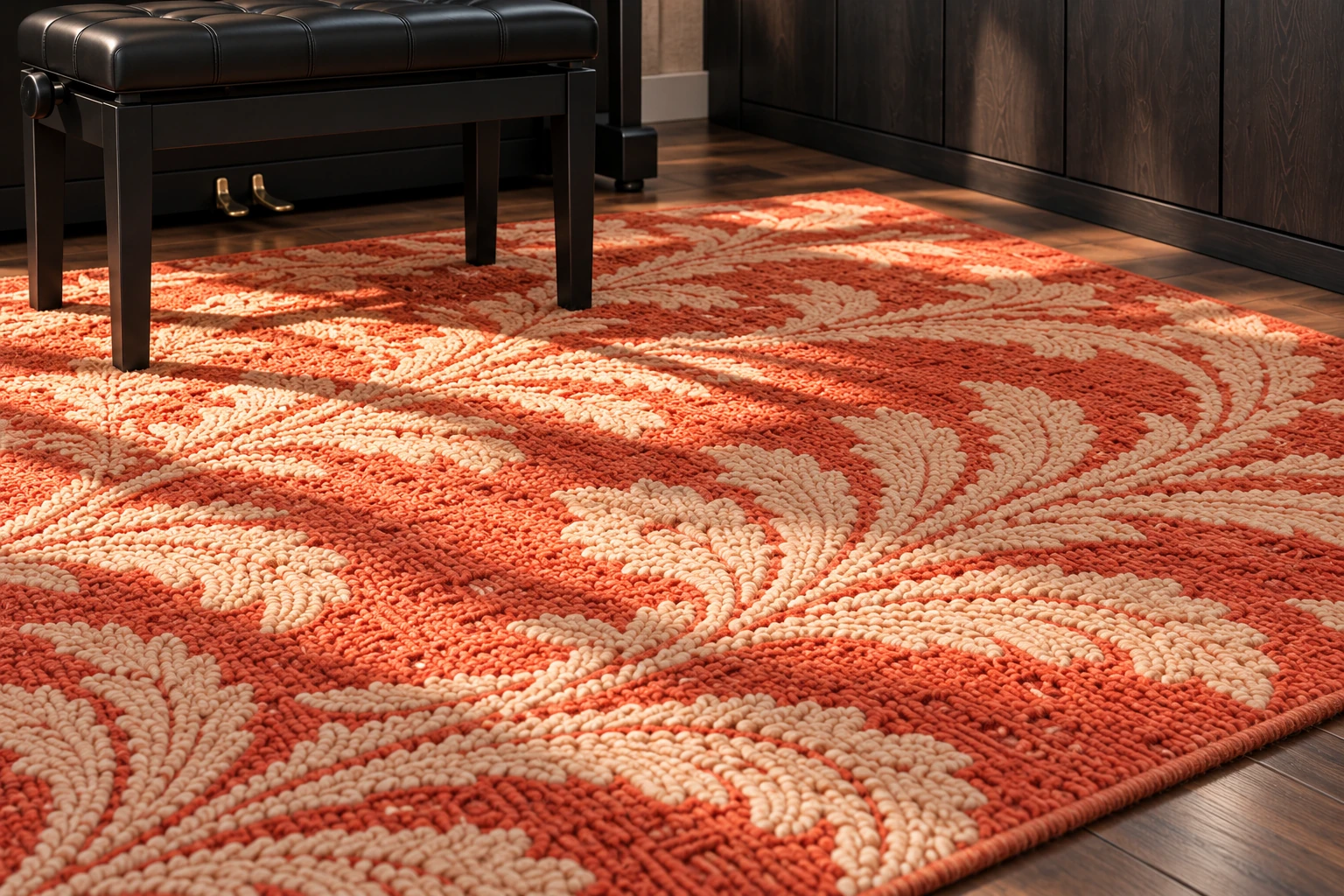
The coral-and-cream rug comes from the large botanical pattern of look 37. Different pile heights let the design catch the light.
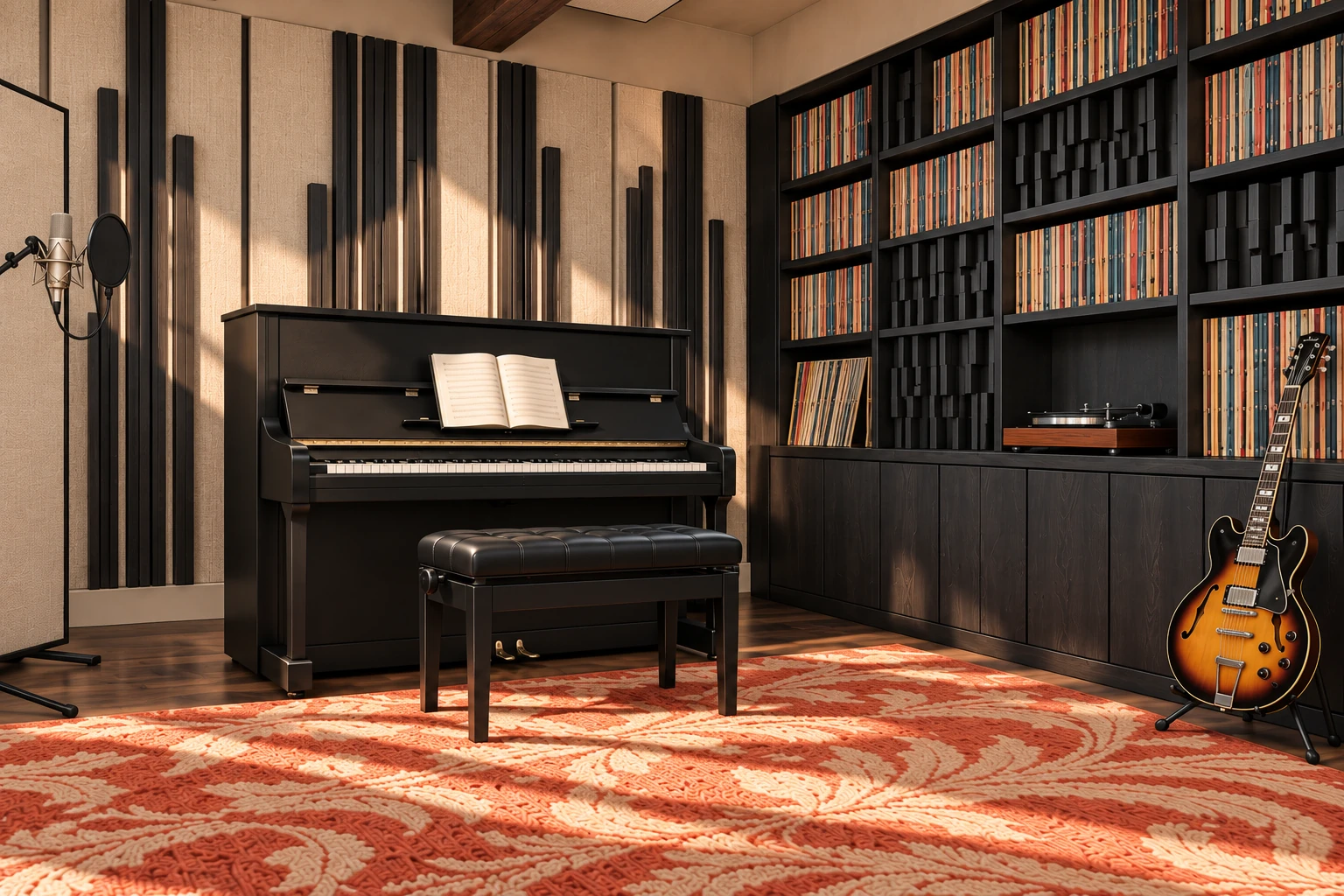
Beside the piano, records and stepped wooden surfaces bring a quieter rhythm to the room.
08
THE TERRACE
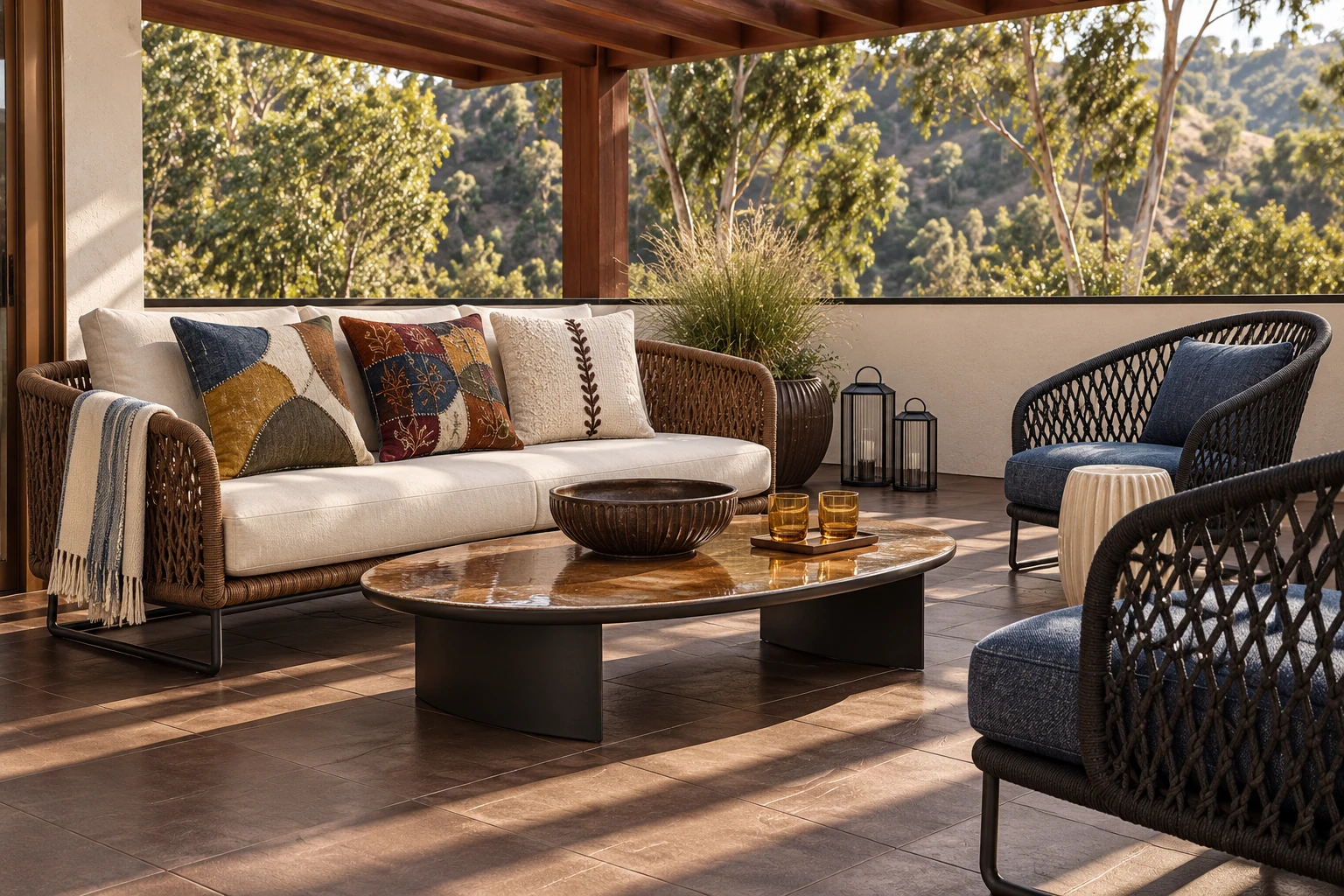
The terrace takes its textile direction from the patchwork jacket in look 18. Tobacco-coloured rope, black woven chairs and denim-blue cushions give the patterned pieces a clear setting.
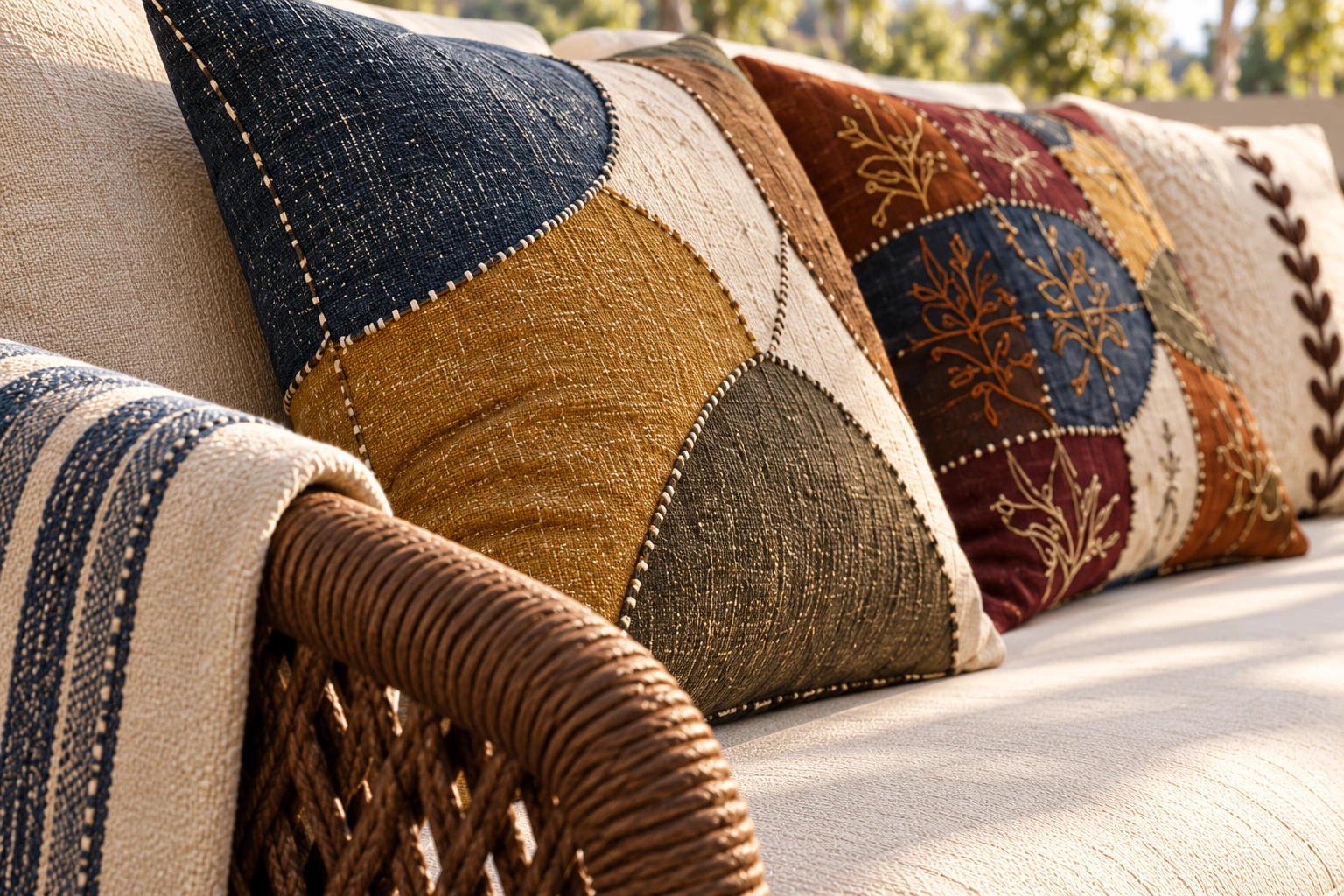
Close up, the cushion seams become the important part: curved fabric sections, small embroidered patches and different woven surfaces.
09
THE ENTRANCE HALL
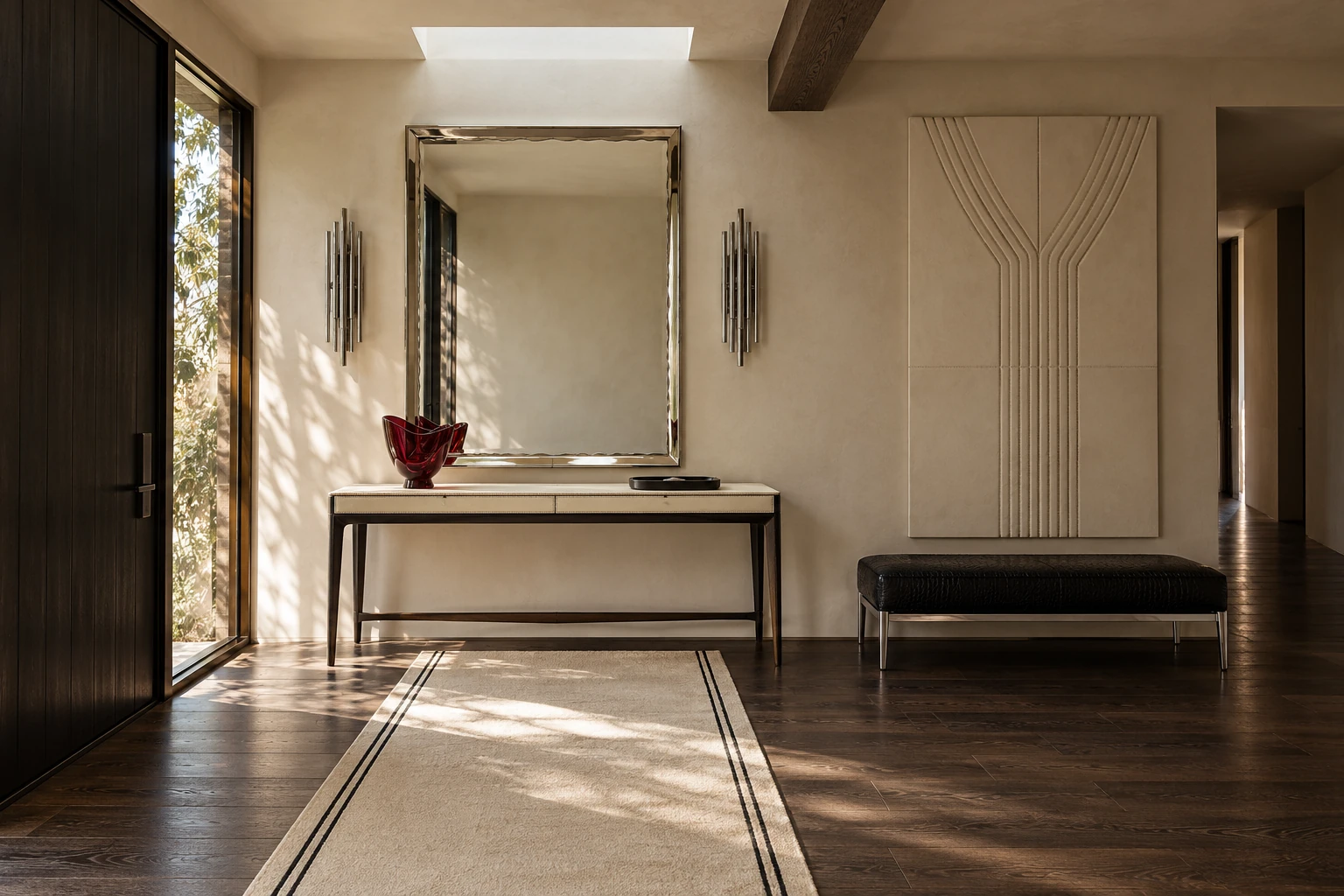
The entrance returns to the collection’s lighter tailoring. Ivory leather, black upholstery and silver-coloured metal frame one concentrated accent of ruby glass.
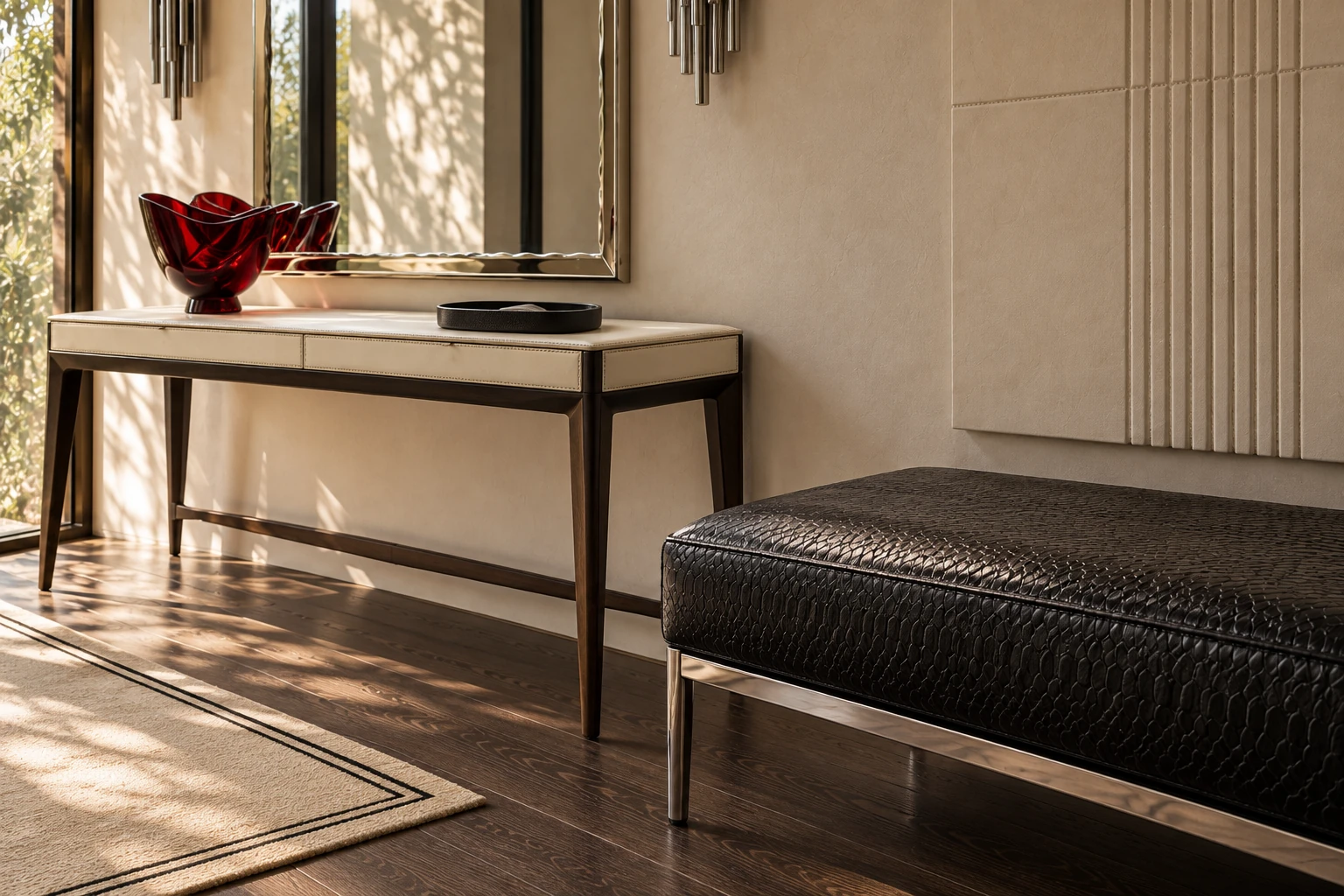
The details explain the room: stitched leather edges, reptile embossing and shallow ceramic lines that recall the construction of a jacket.
ONE COLLECTION, ANOTHER WAY TO LIVE
What stayed with me was the attention given to small things. A seam can change a plain surface. A patterned shoe can suggest an entire cabinet.
That is where I wanted this house to feel like AMIRI.
Wear the room. Live in the collection.
COLLECTION & CONTEXT
- AMIRI Autumn-Winter 2026 — official runway collection
- GRAMMY Museum — California Dreamin’: The Sounds of Laurel Canyon, 1965–1977
- Laurel Canyon Association — the neighbourhood’s musical history
Furniture and lighting references throughout the story include Minotti, Giorgetti, Poltrona Frau, Cassina, Knoll, Kettal and DelightFULL. The images are design interpretations; custom textiles, surface patterns and some finishes are not official catalogue options. Studio equipment and acoustic elements form part of the visual concept.
Previously in the series: Dressed Homes, inspired by Dries Van Noten AW26/27.