INTERIORS
Beyond Acoustic Panels
The New Art of Acoustic Interiors
Acoustic panels are getting a design upgrade. Discover sculptural wood, colorful felt, acoustic lighting, cork, textiles and creative ceiling ideas.
8 sections, 37 ideas
I have nothing against wooden slat panels. But after seeing them in what feels like every other interior, I started wondering what else was out there.
Quite a lot, as it turns out.
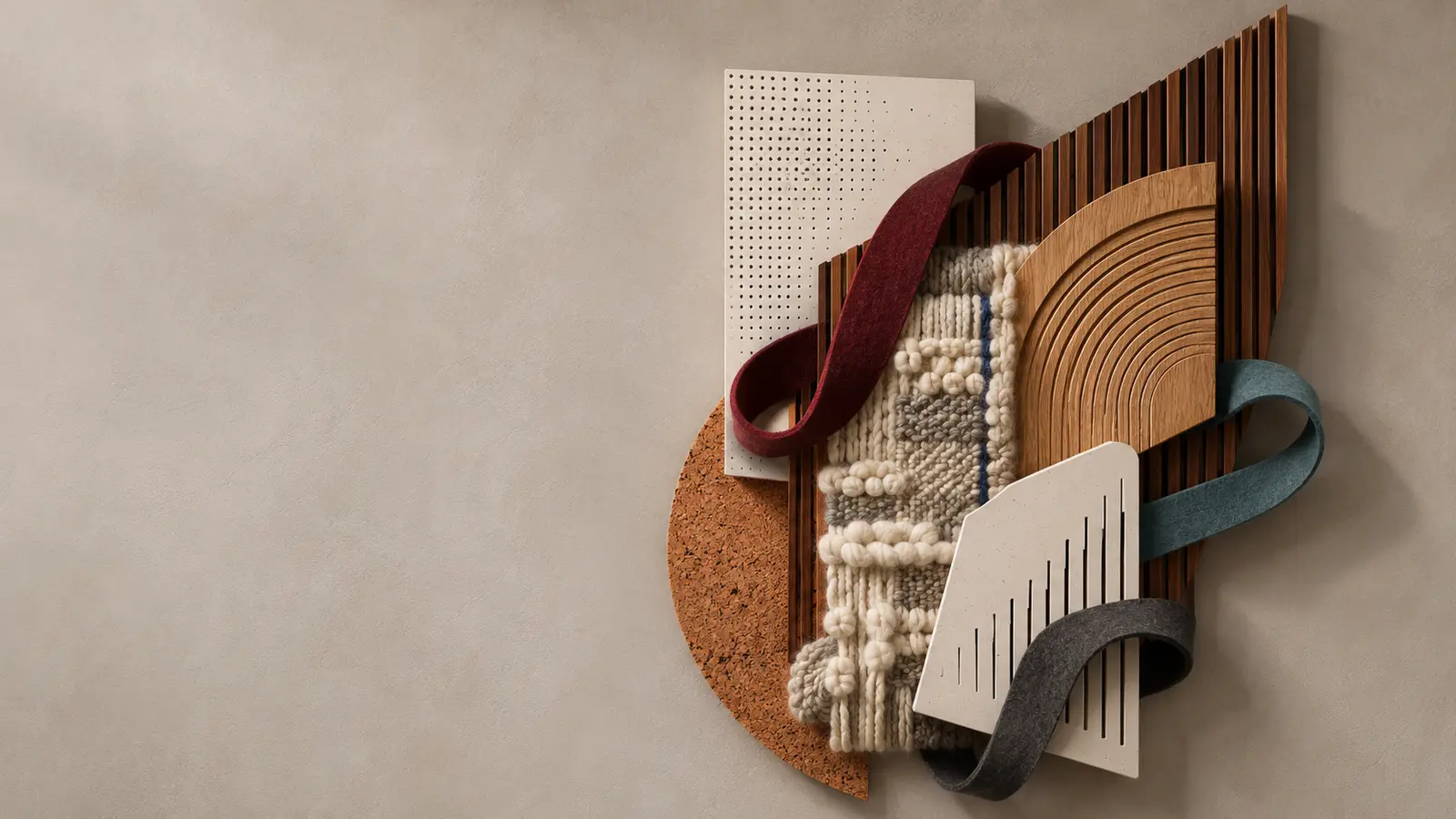
Acoustic materials have become far more interesting than the familiar strips of timber. Felt can turn into sculptural lighting, perforated gypsum can make a ceiling unexpectedly beautiful, and cork or woven wool can bring texture to a room in ways that feel more like decoration than sound treatment.
What interests me most is how naturally these materials can become part of the design. They don’t need to announce themselves as acoustic panels. Sometimes, the most practical element in a room can also be the most beautiful.
Acoustic Felt for Walls, Ceilings and Room Dividers
From walls to lighting, felt is having a much more interesting moment. Cut, folded or layered, it can give a room colour and depth. Here it moves from a sculpted wall to a light, a ceiling, a cabinet and an open divider.
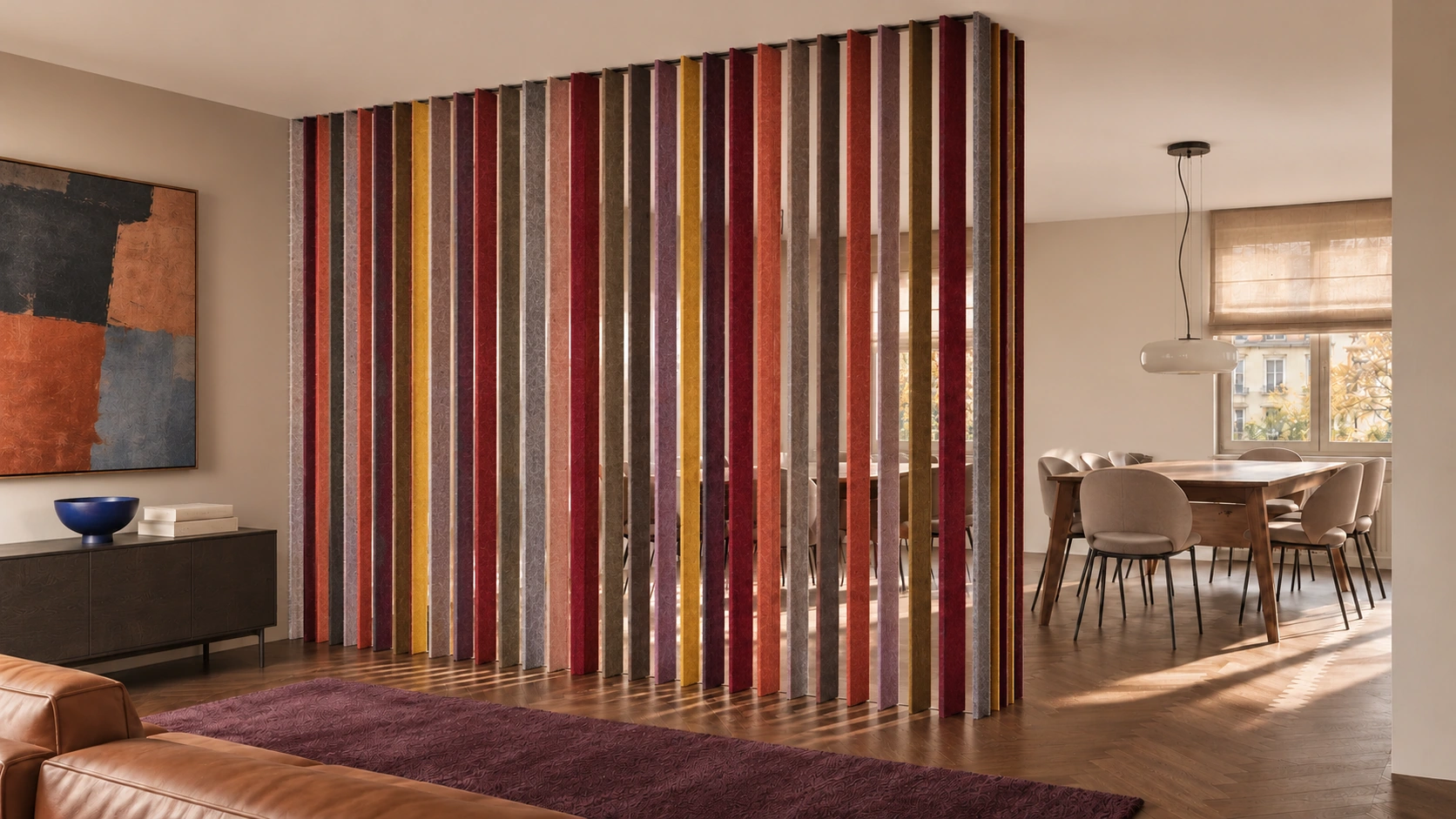
A screen that lets the light through
Vertical strips of coloured felt separate the living area from the dining table. The gaps let daylight through and keep the two rooms in view.
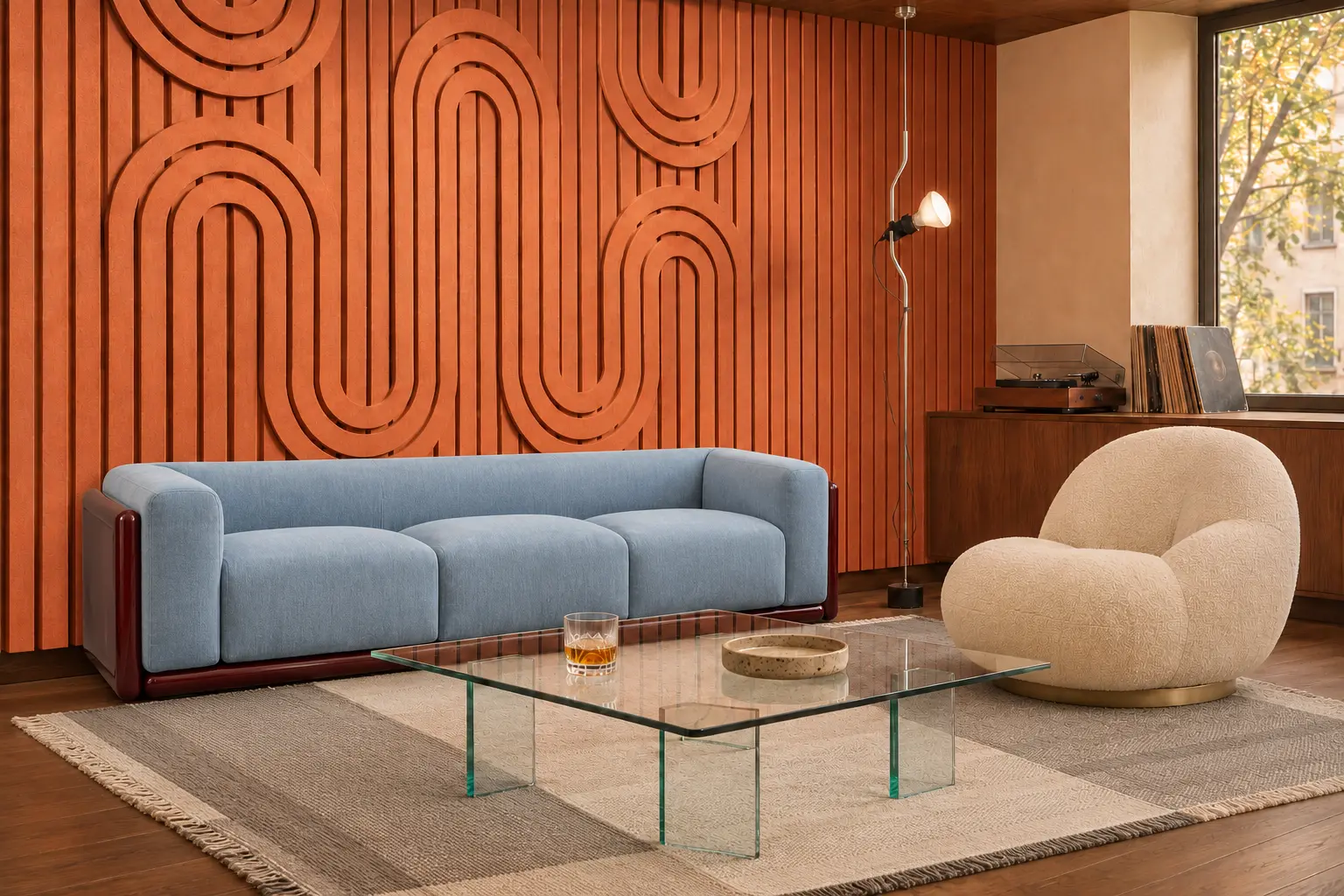
A wall with its own rhythm
The relief in the terracotta felt catches the light. The rest of the room can afford to be quiet.
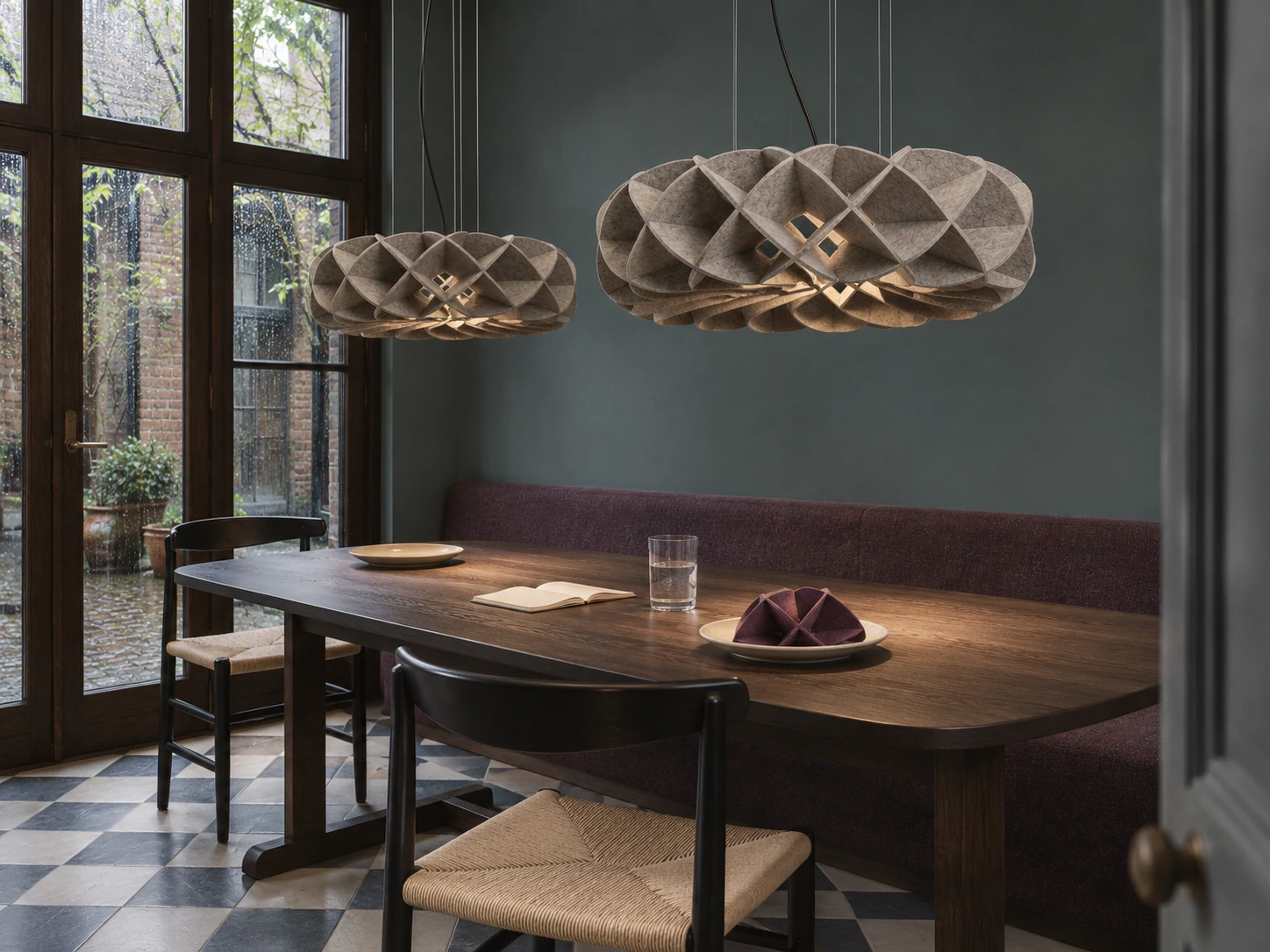
Felt in a different light
In this interior study based on EASYfelt Luma Fiora, you can see how the felt segments interlock from below.
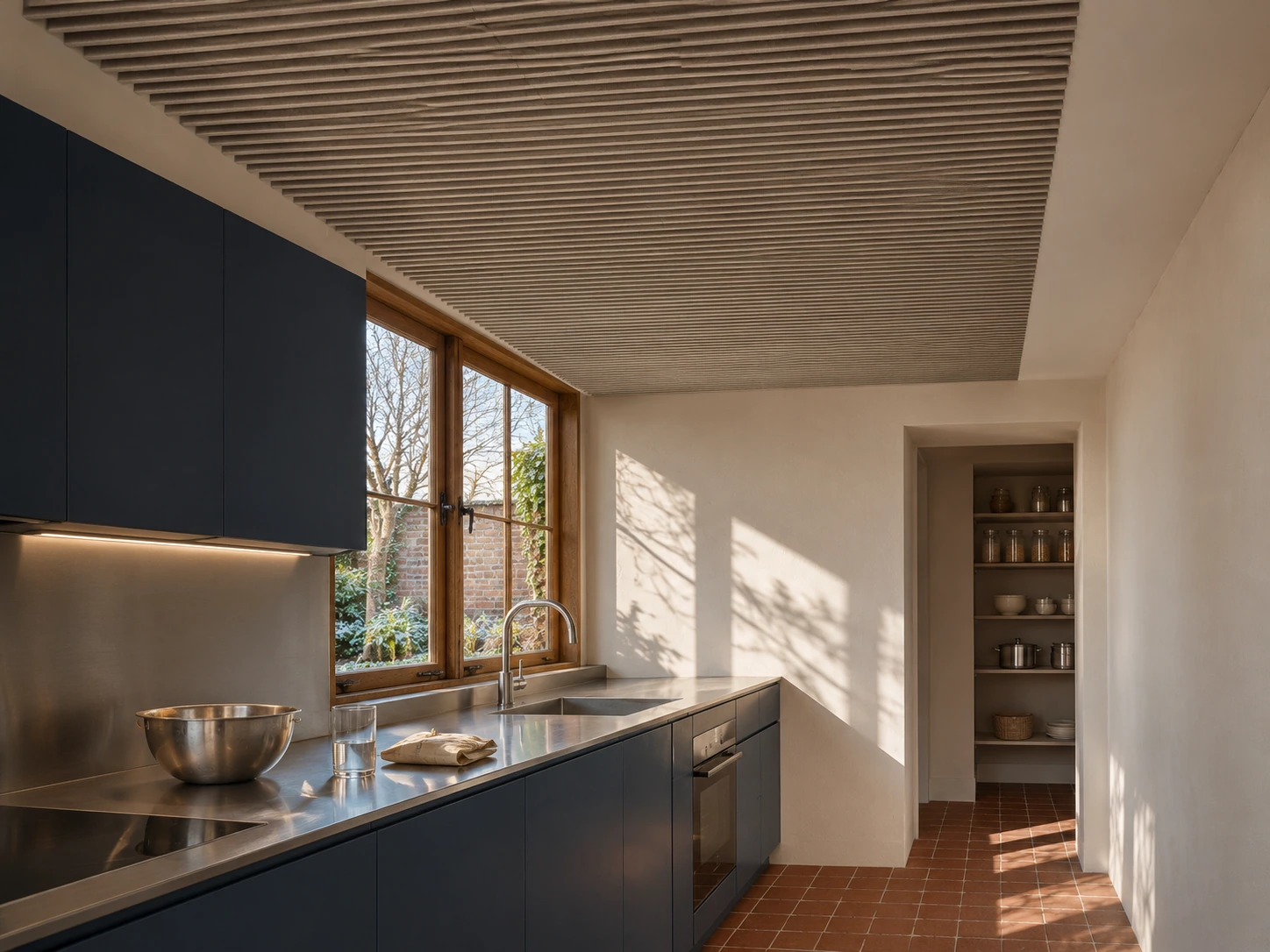
Look up in the kitchen
In this interior study based on Autex Frontier Fins, a field of felt fins defines the work area. The shallow Tundra profile in Pavilion gives the ceiling a fine, even rhythm.
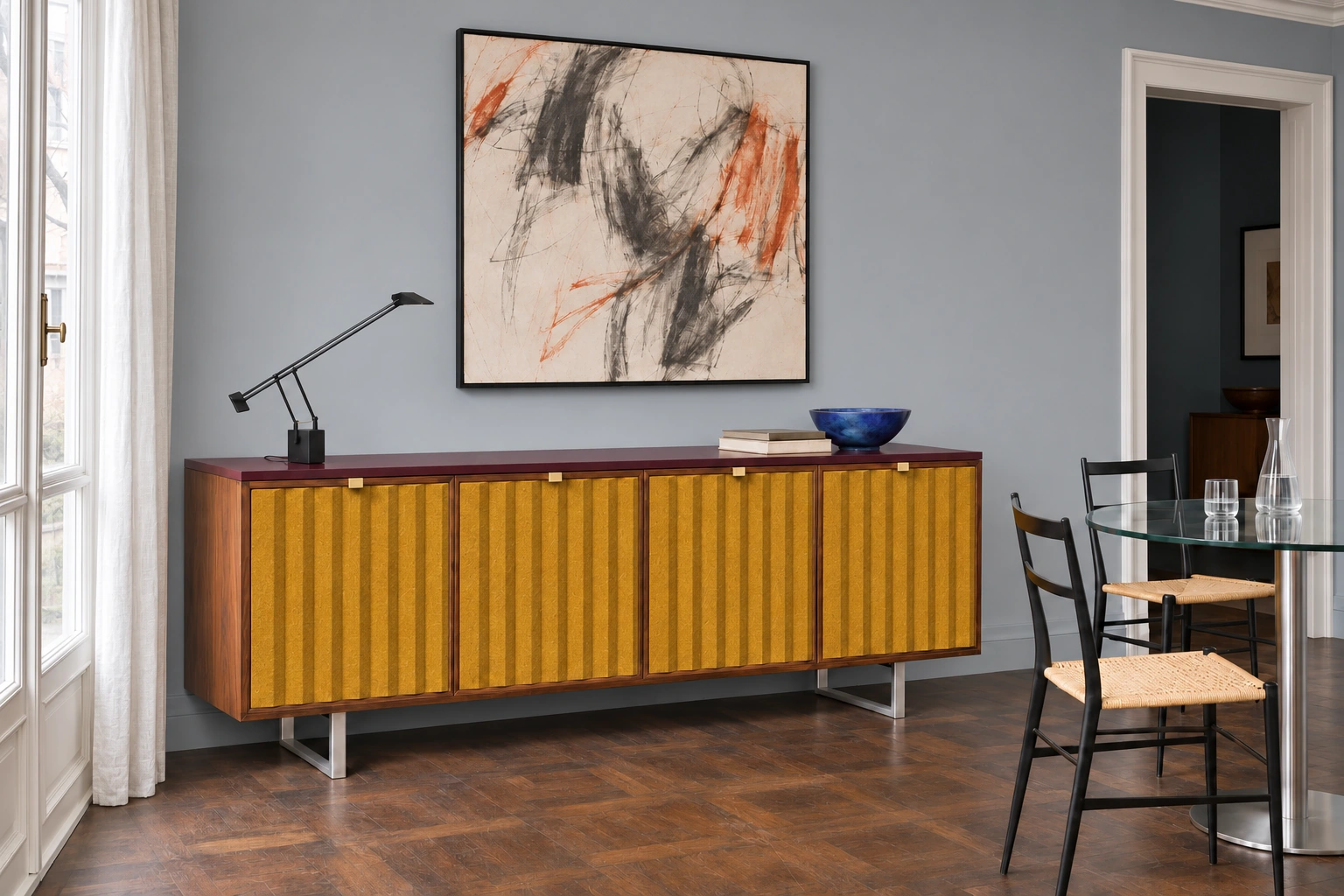
Felt goes on the furniture
The saffron fronts make the cabinet the warmest note in the room. Their texture is as much a part of the design as the colour.
The Beauty of Perforated Gypsum
The ceiling might be the most overlooked surface in the room. In perforated gypsum, the size and spacing of the holes can give it a quiet rhythm or make it the first thing you notice.
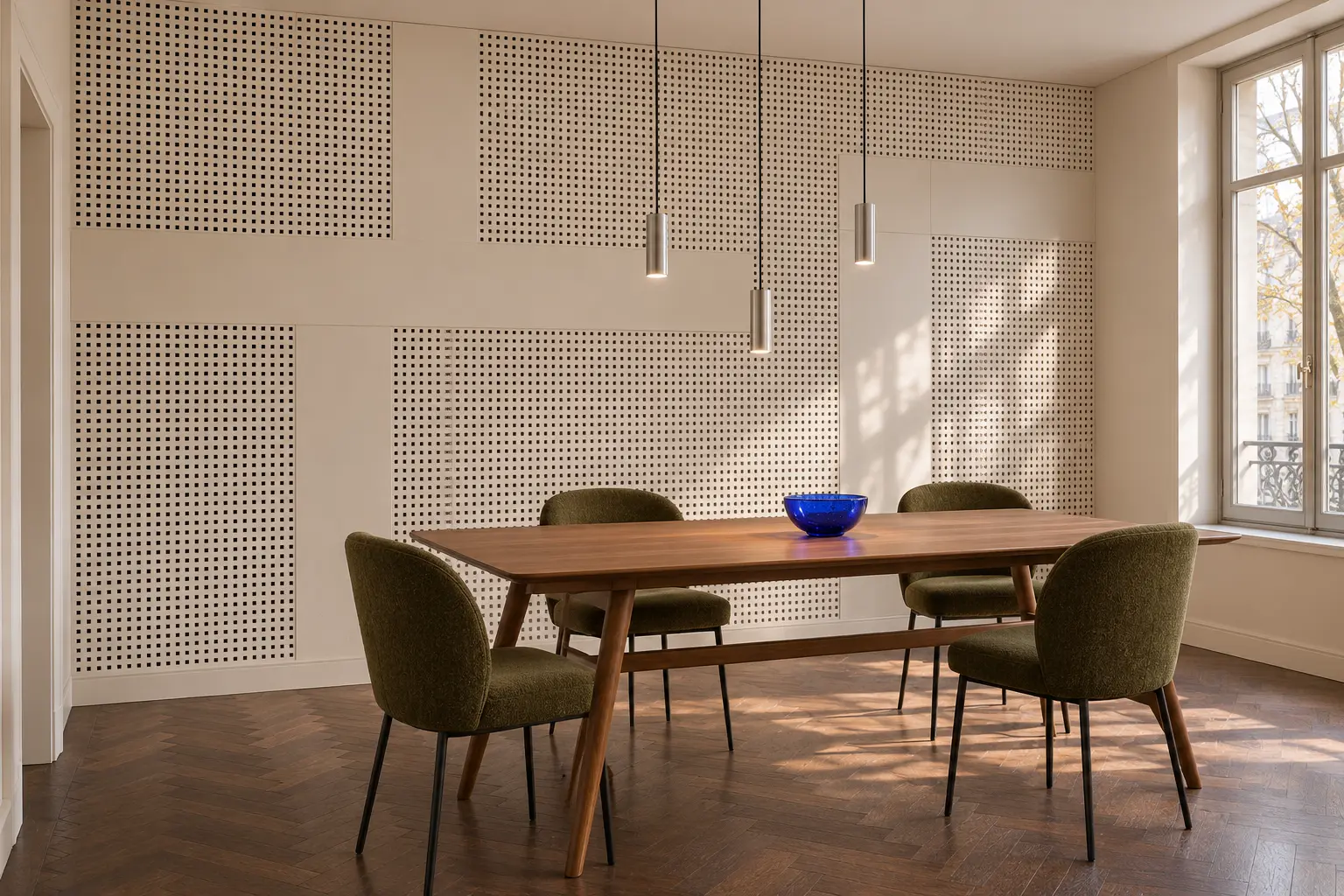
A square grid settles the dining room.
Smooth borders frame the perforated fields behind the dining table in this study inspired by Gyptone Quattro.
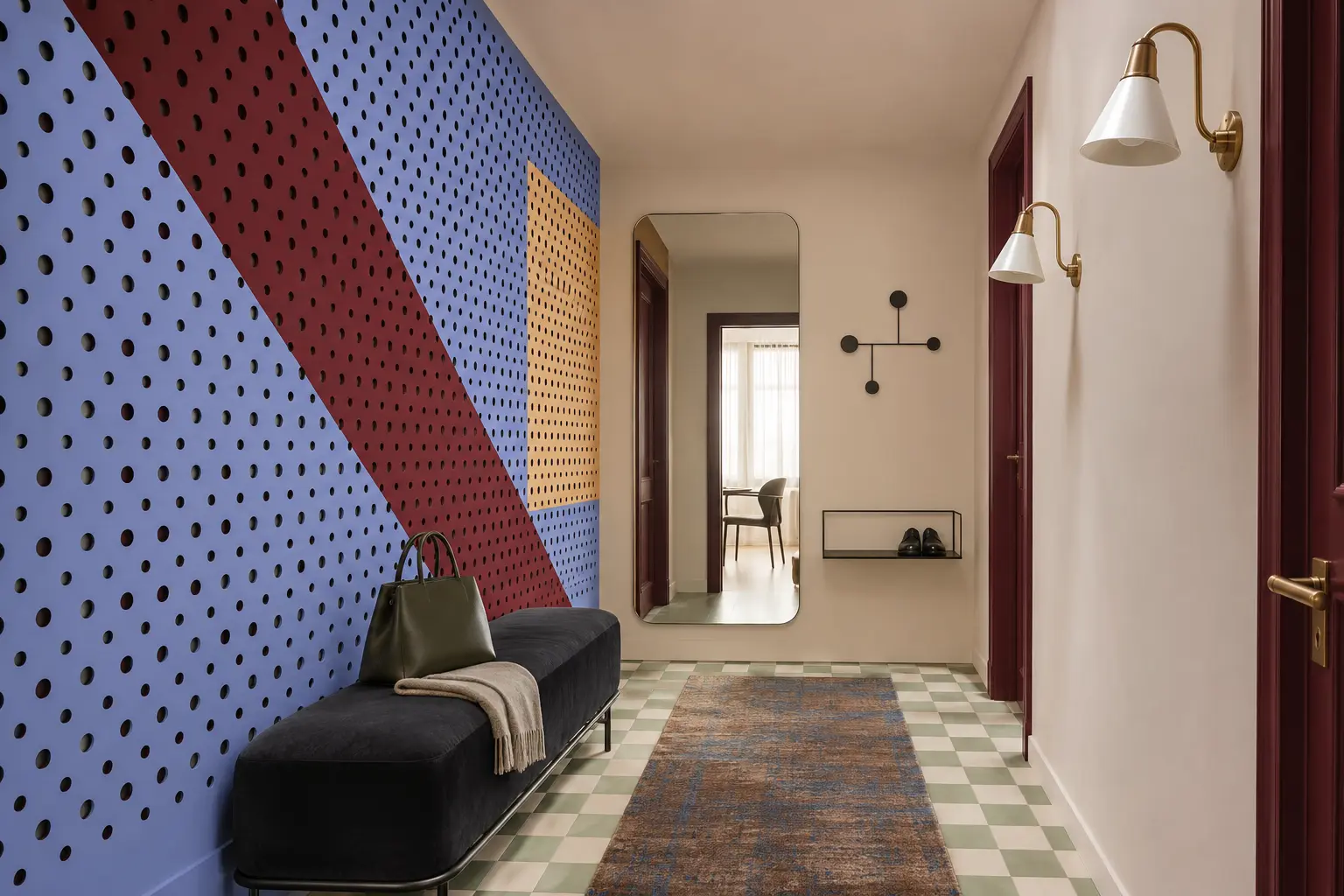
Colour follows the perforations into the hall
Perforation and paint work together instead of pretending the panel is not there.
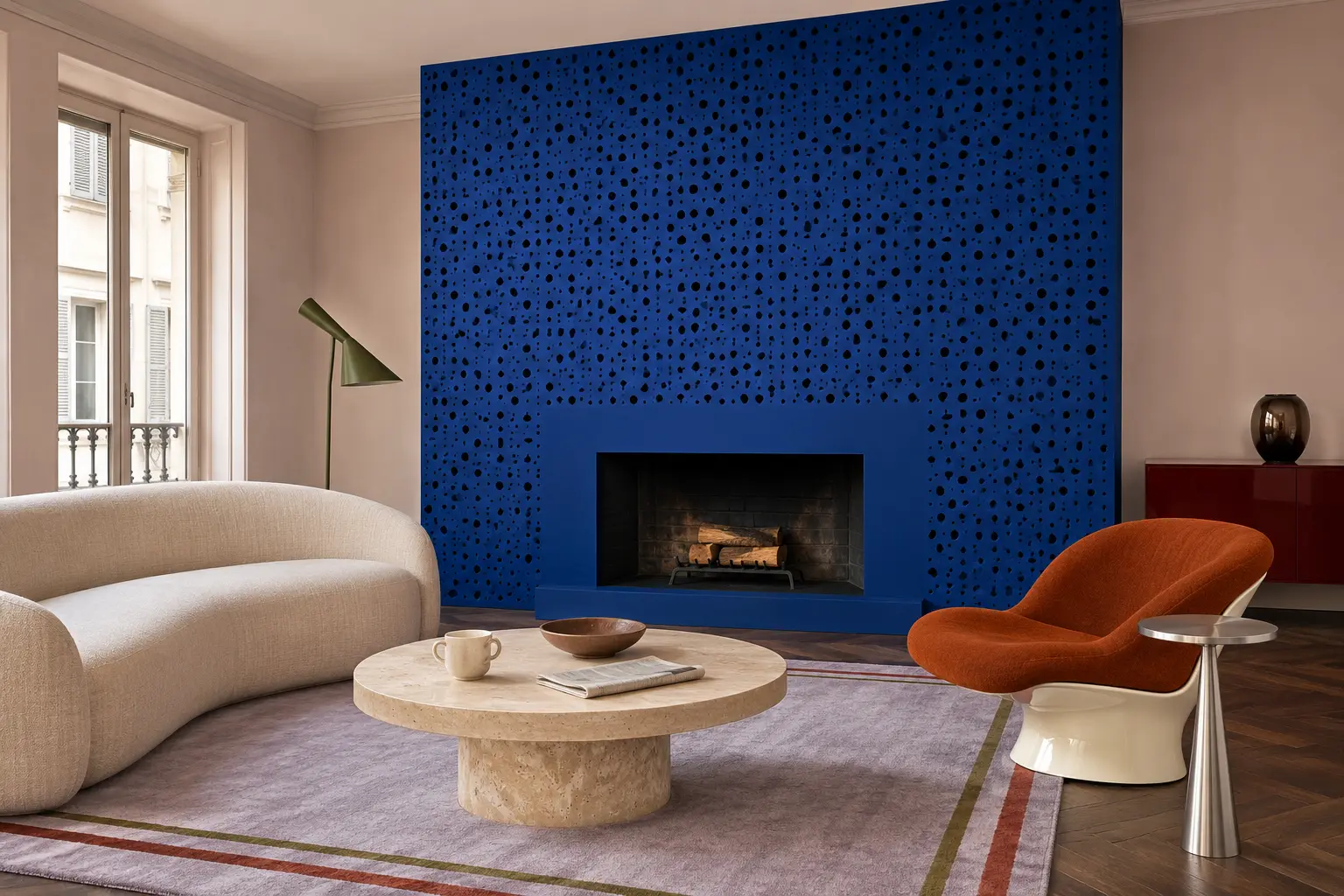
Blue frames the fire.
The deep blue turns the chimney breast into a single plane. A fine dotted finish gives the surface texture in this interior study.
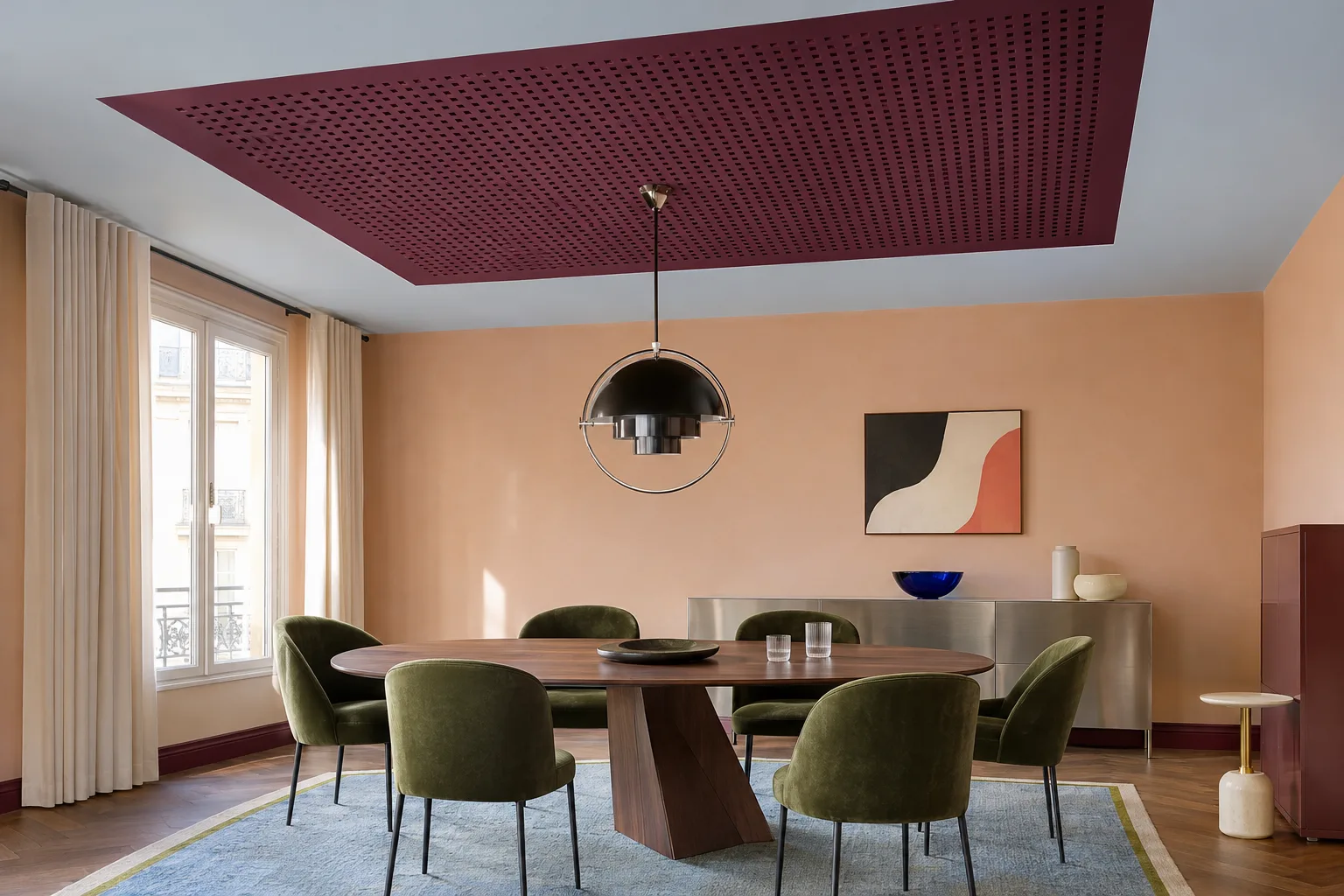
A plum ceiling worth looking up for
A precise field of small perforations reads as a coloured architectural inset.
Sculptural Wood
The part I like about sculptural wood is how much it changes with the light. A curved wall reads as one gesture from the doorway. Up close, the cuts and shadows tell a different story. The examples range from decorative relief to systems designed to diffuse sound.
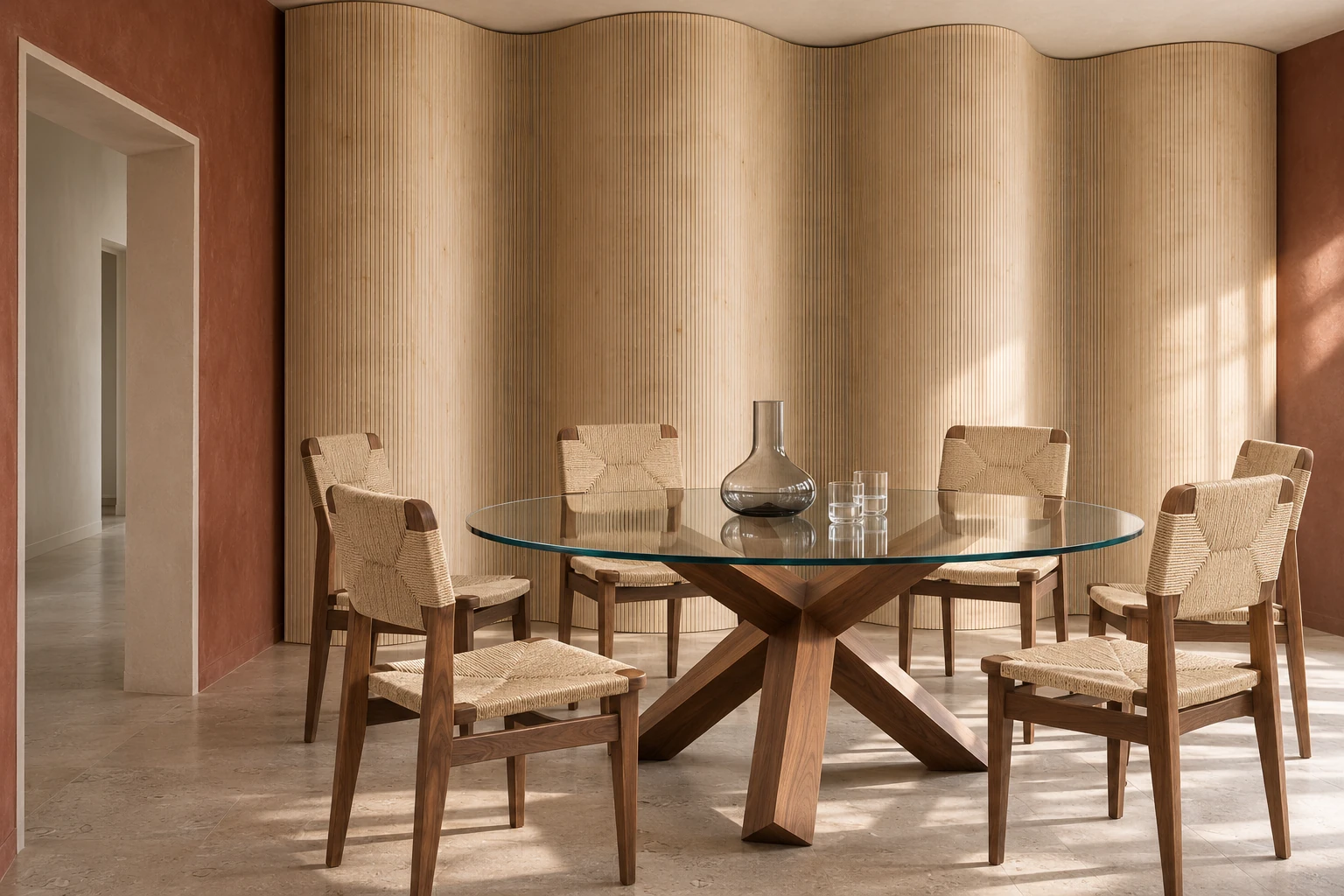
The dining wall folds into waves.
A wall inspired by dukta follows a continuous curve behind the table, with daylight tracing its crests.
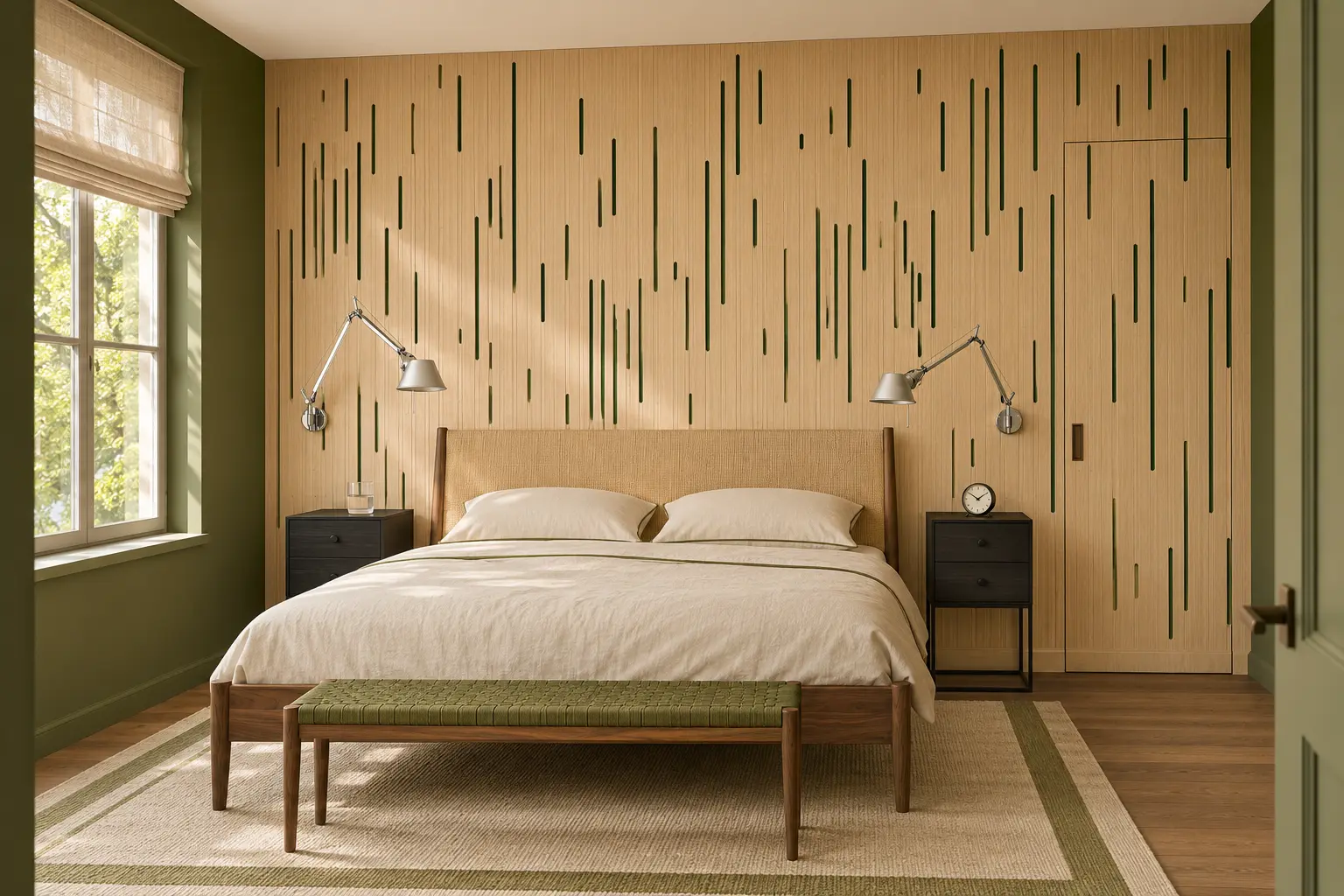
Ash is woven into the bedroom.
The wall borrows the crossing rhythm of textile and gives pale wood a softer character.
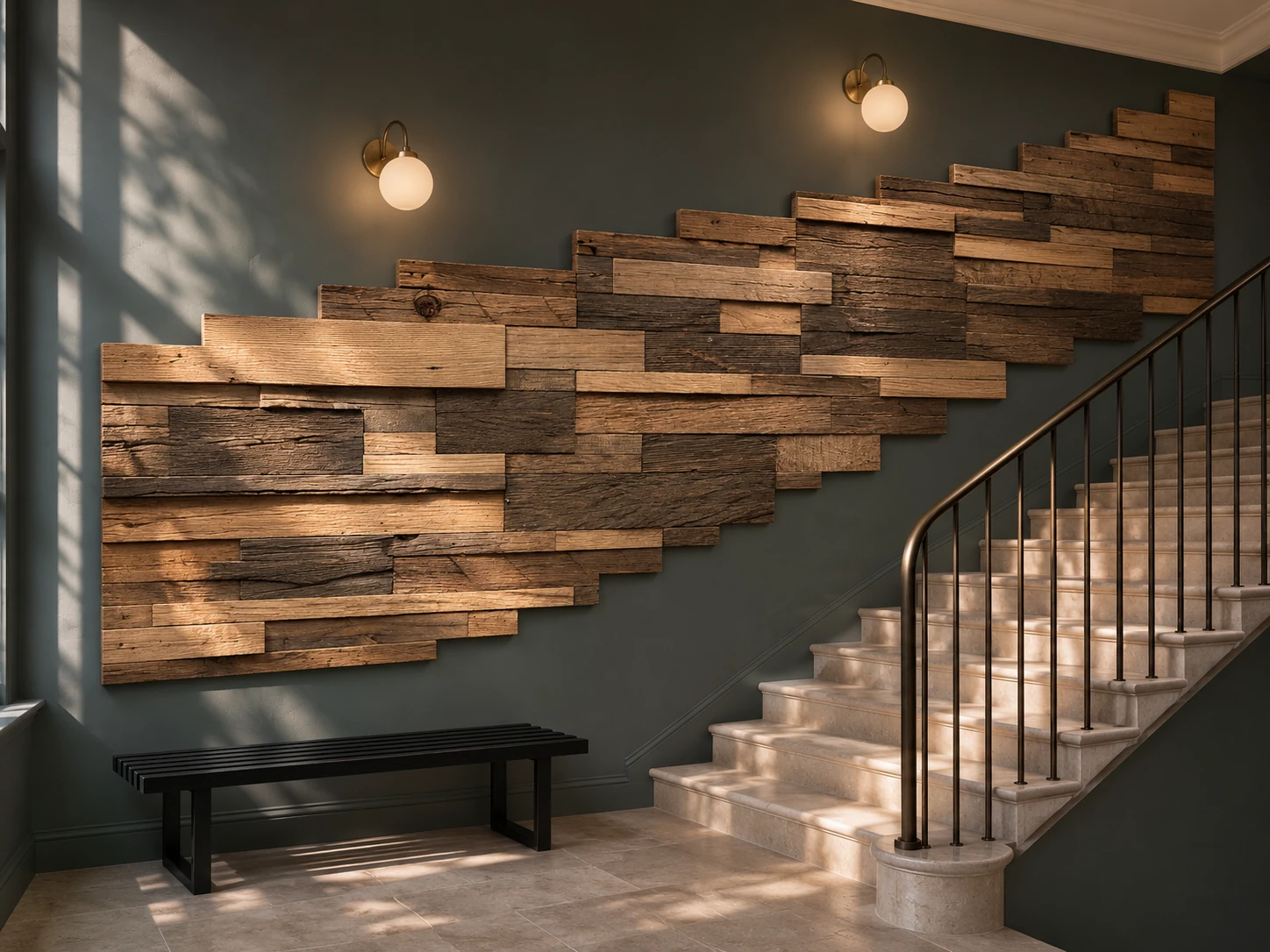
Reclaimed oak follows the stairs.
The BARNWOOD 3D ACOUSTIC OAK study takes its cue from the staircase, letting blocks of reclaimed oak step up the wall.
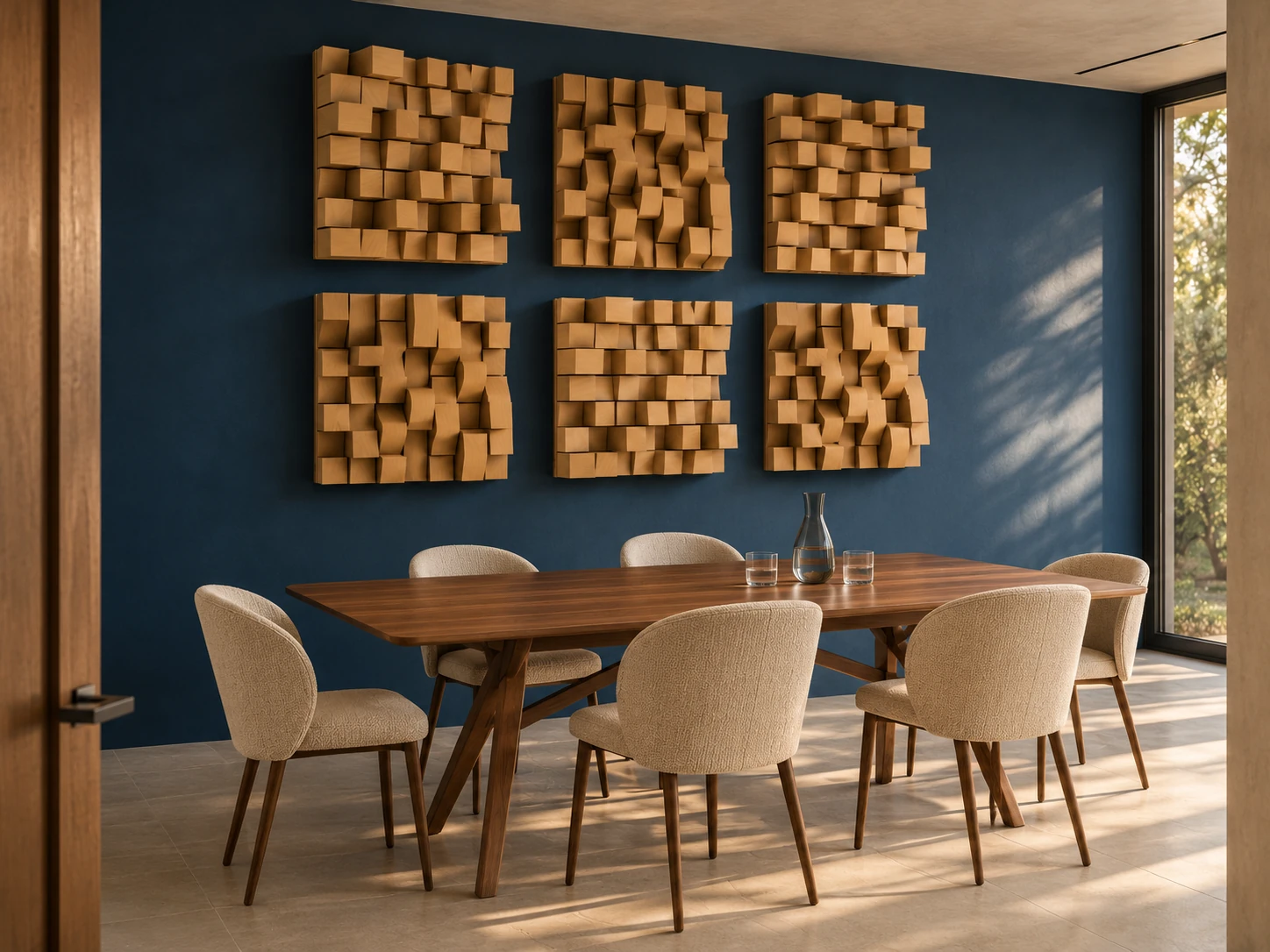
Six timber diffusers above the dining table.
Inspired by Vicoustic’s Multifuser Wood MKII 64, six stepped modules are arranged against a cobalt wall.
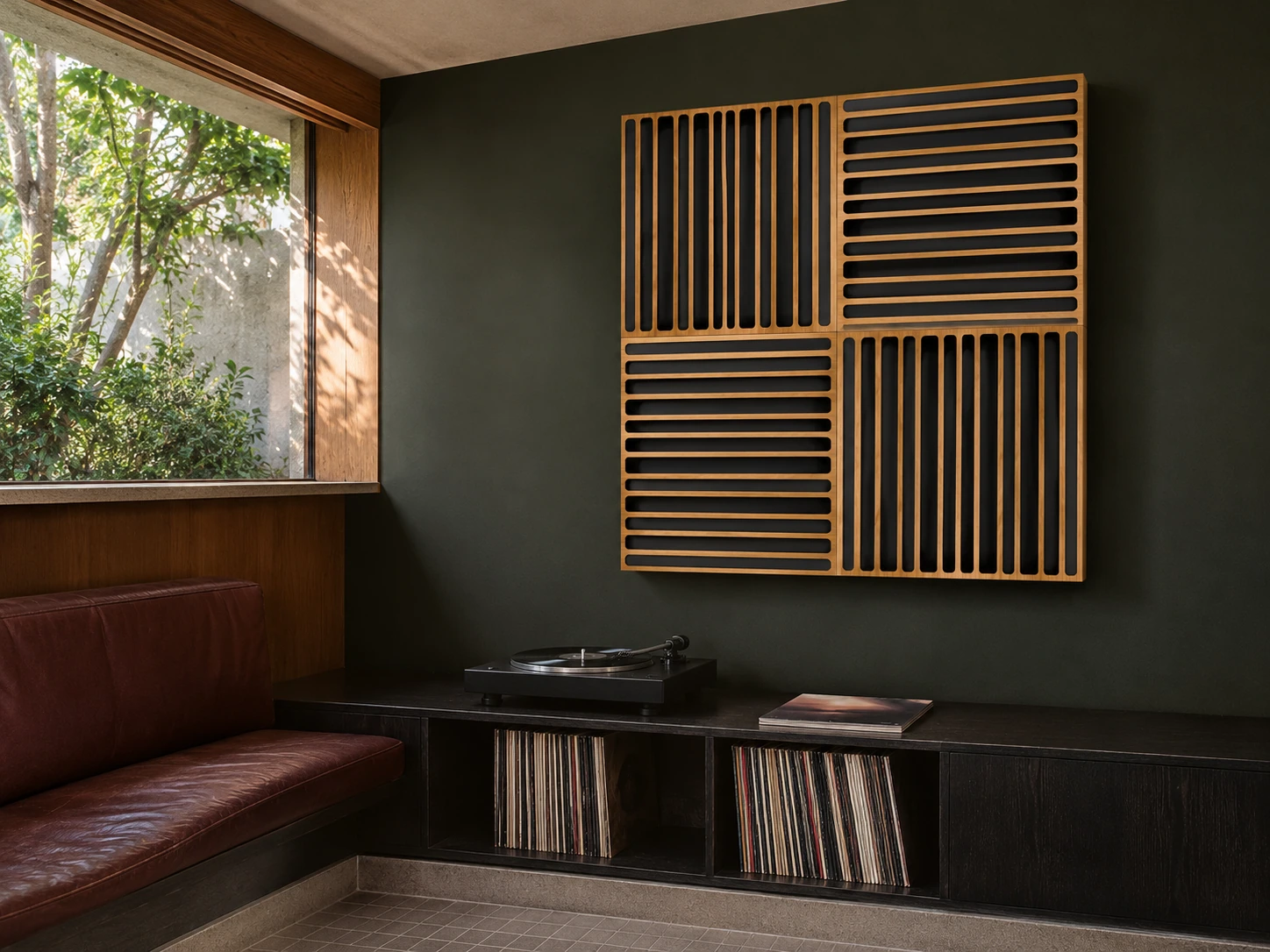
Four squares, two directions
Four Lagos W modules form a square above the record player. Turned a quarter turn, the recessed channels catch the light differently from the modules next to them.
Perforated Wood Acoustic Panels
The openings can read as a fine grain from across the room, then resolve into a pattern as you get closer. In wood and wood-based panels, the scale of the holes changes the character of the whole surface.
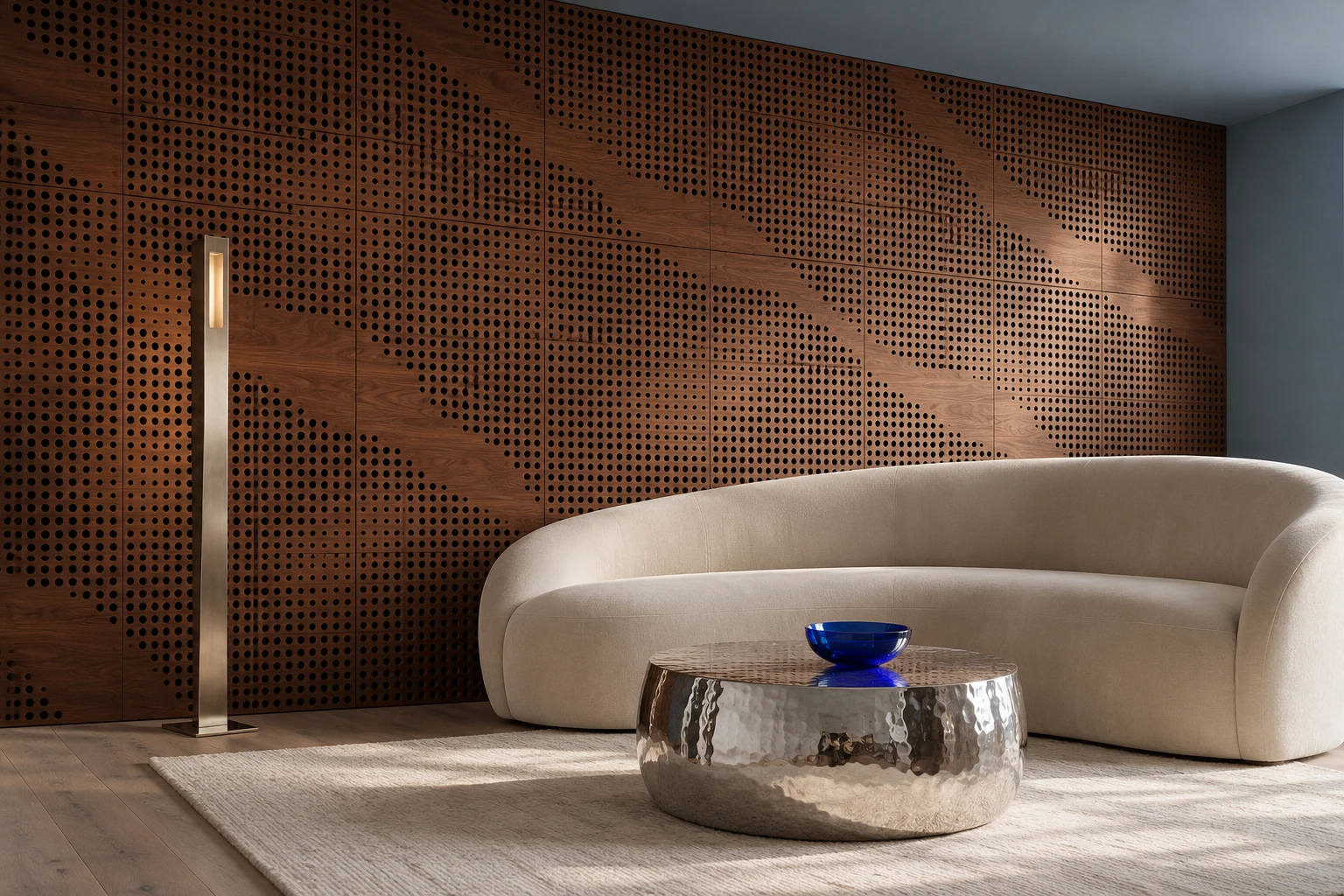
Walnut with a lace-like pattern.
This study of Artnovion Komodo W in Black Walnut Natura pairs a densely perforated wall with a low, curved cream sofa.
View alternative · DECIBEL CIRCULO™ V3 Black
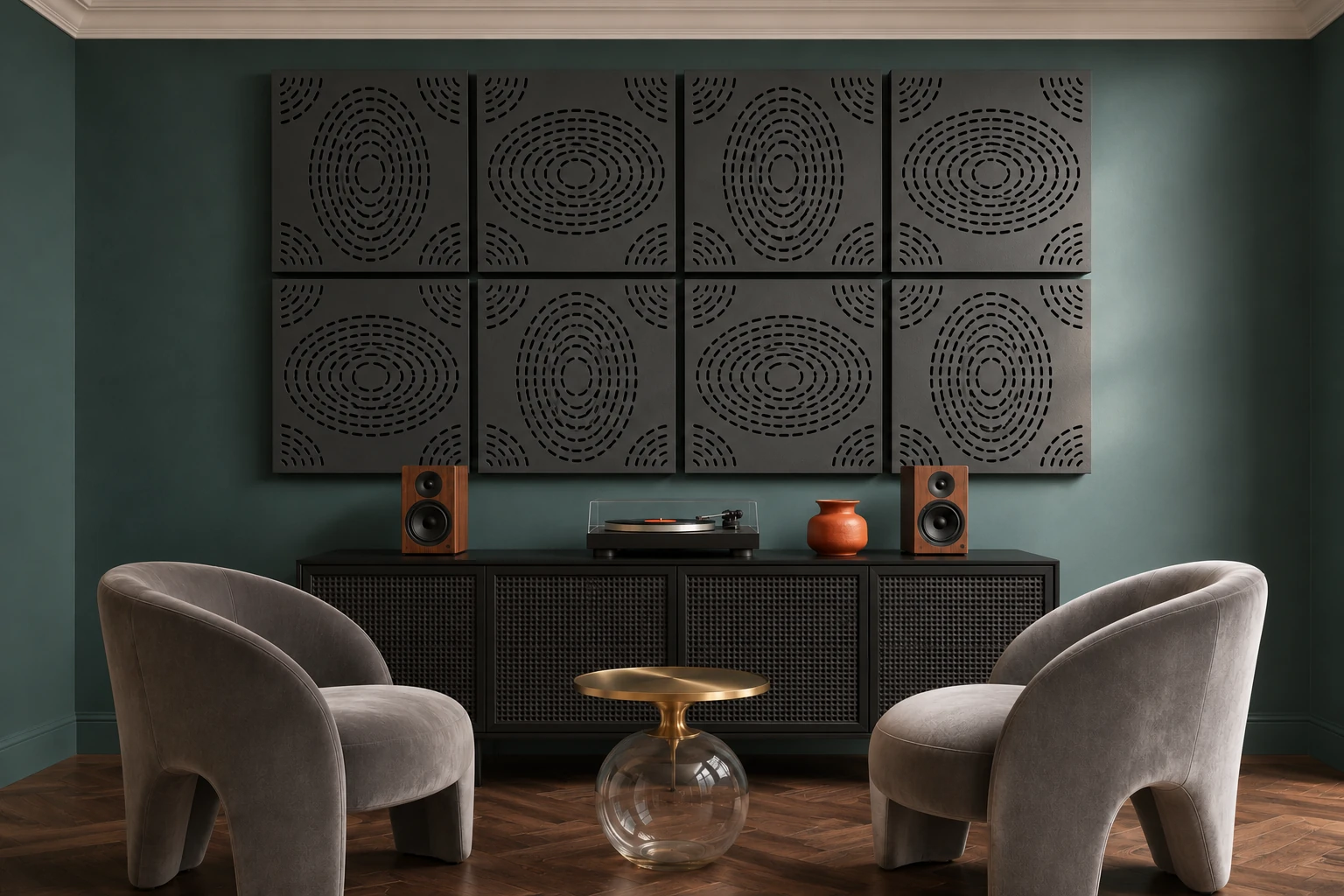
Black circles over a dark sideboard.
An alternative study using DECIBEL CIRCULO™ V3 Black, arranged as a grid of circular motifs.
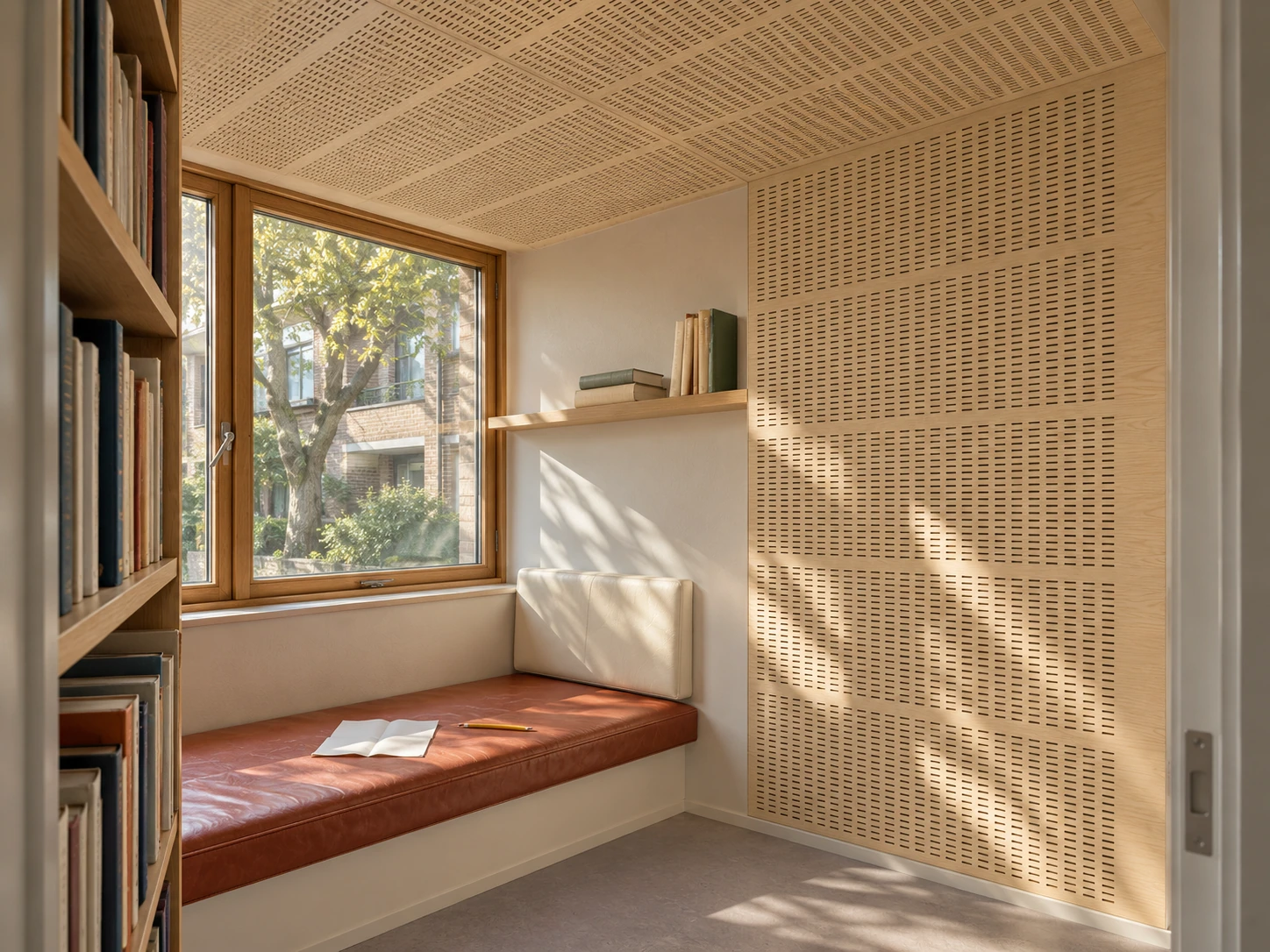
Short slots, long shadows
Pale ash carries the same rows of short slots from the wall onto the ceiling. The uncut margins make the panel layout visible when the light comes across from the window.
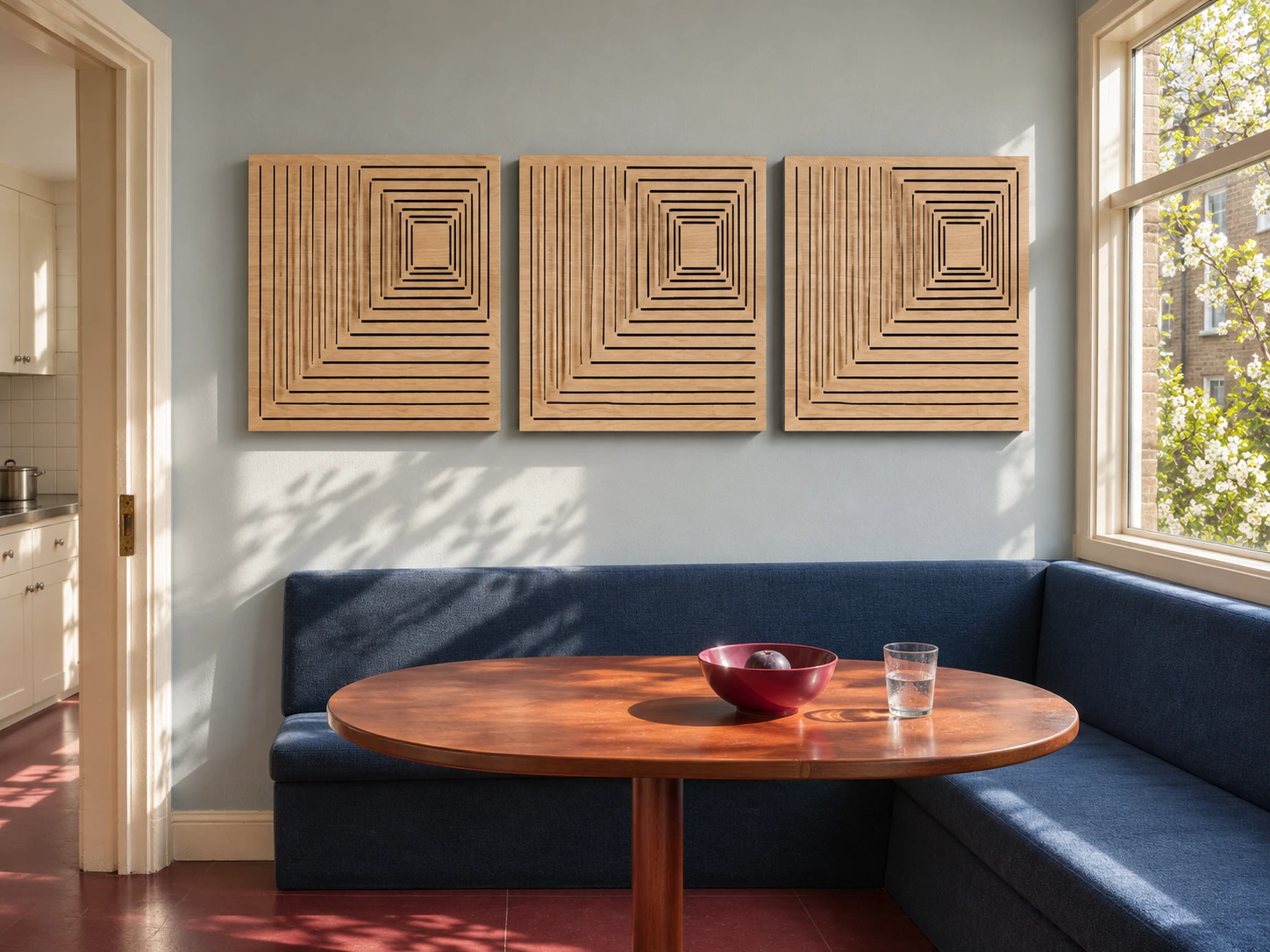
Three squares above the breakfast table
In this interior study based on DECIBEL ACER, the off-centre squares pull the eye across the wall. A little space between them gives each pattern room to read.
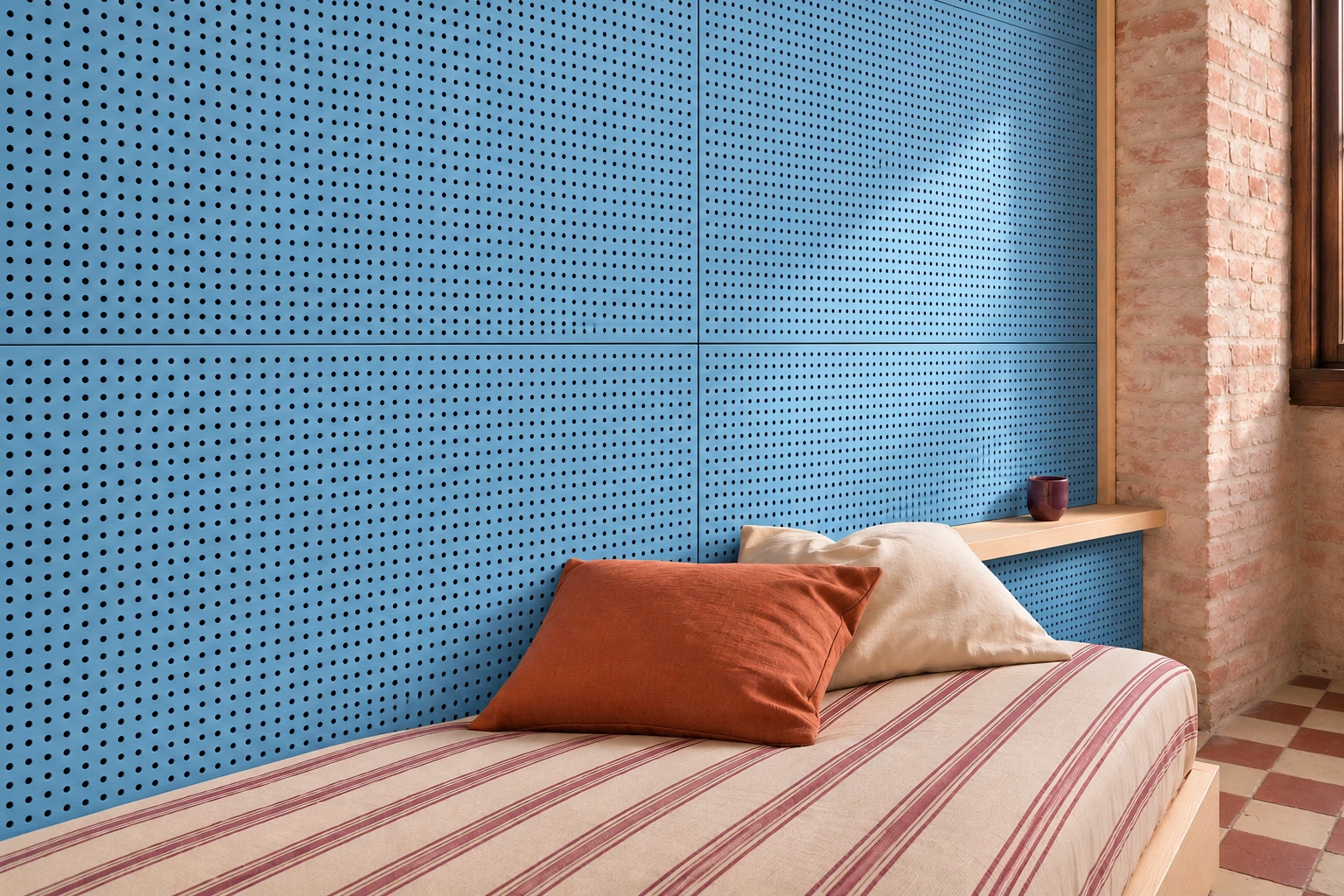
Round perforations in pastel blue
Against pink brick and striped linen, a blue finish makes the small round openings easy to pick out. This bedroom study uses Gustafs PH8 as its reference.
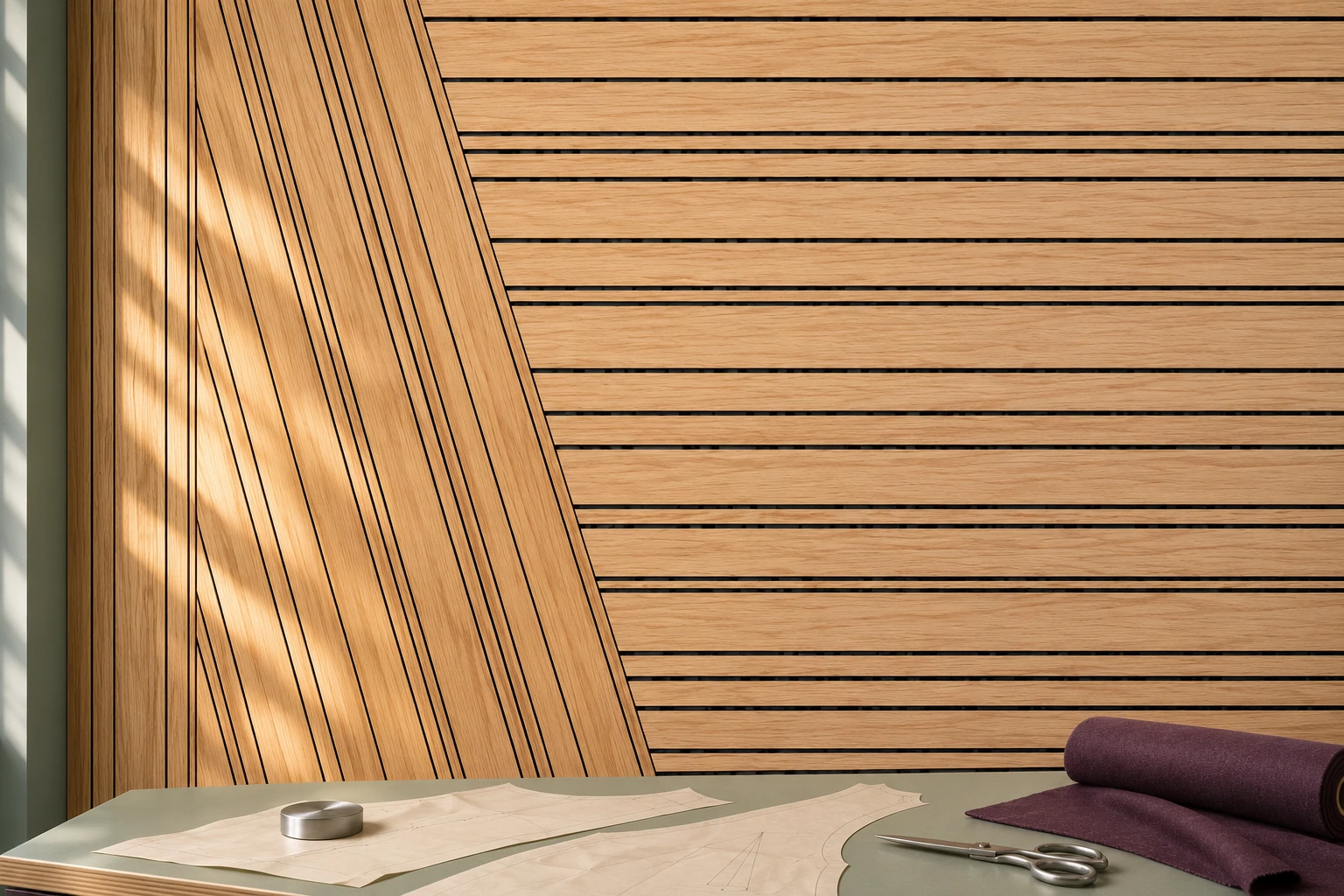
Oak cut on the diagonal
Above the cutting table, a diagonal seam changes the direction of the grooves like the edge of a paper pattern. In Gustafs RP8 Barcode, holes drilled from behind meet the fine grooves on the face.
Cork as an Architectural Finish
Cork is at its most interesting when you can see the granules. In relief it catches light. Taken to the ceiling, it changes how the whole room feels. Acoustic performance depends on the product and how it is installed.
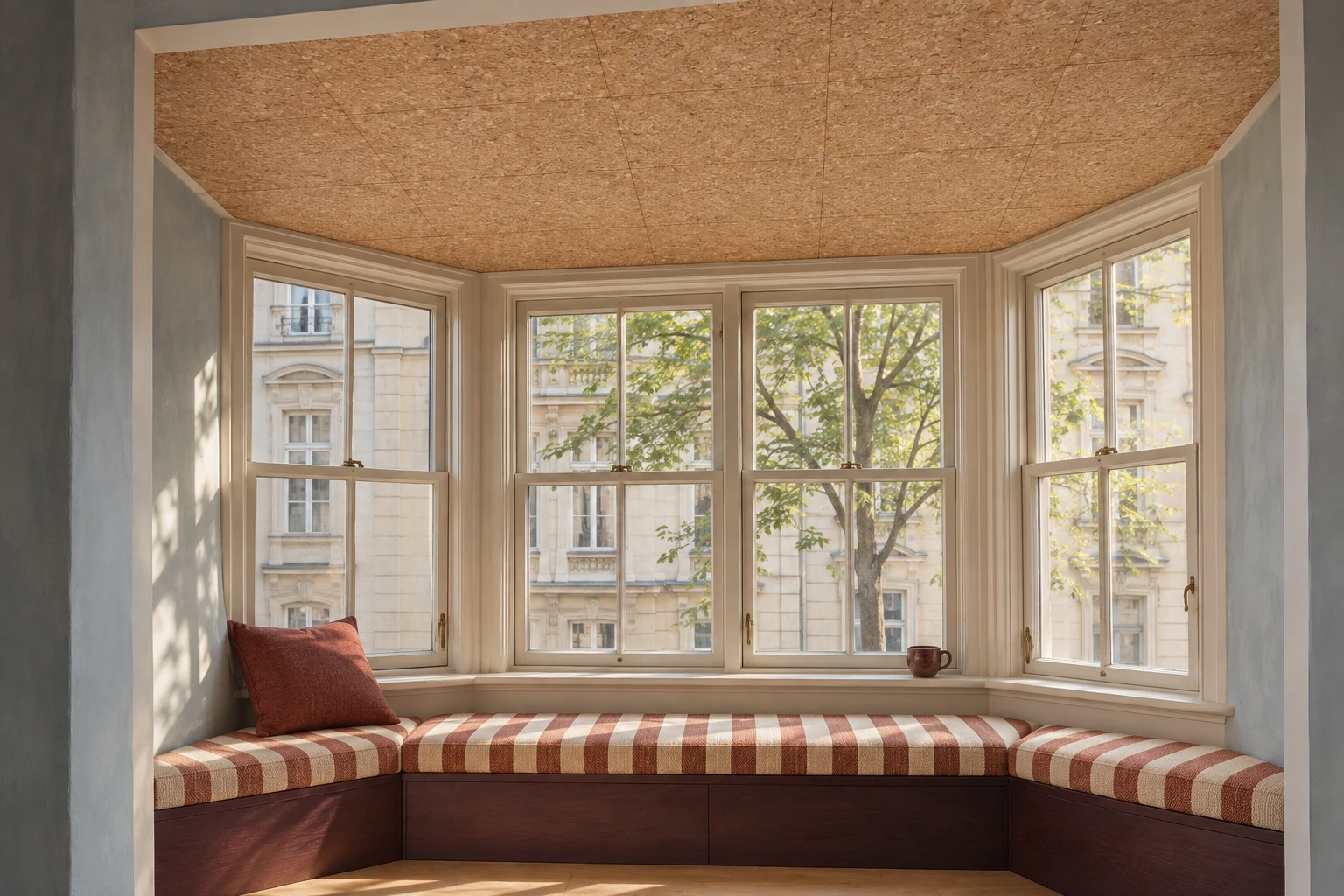
Cork above the window seat
This interior study uses La Sureda’s fine-grained Europa Cork as the reference for the bay ceiling. Light from the tall windows makes the cork granules and the quiet grid of joints visible above the striped seat.
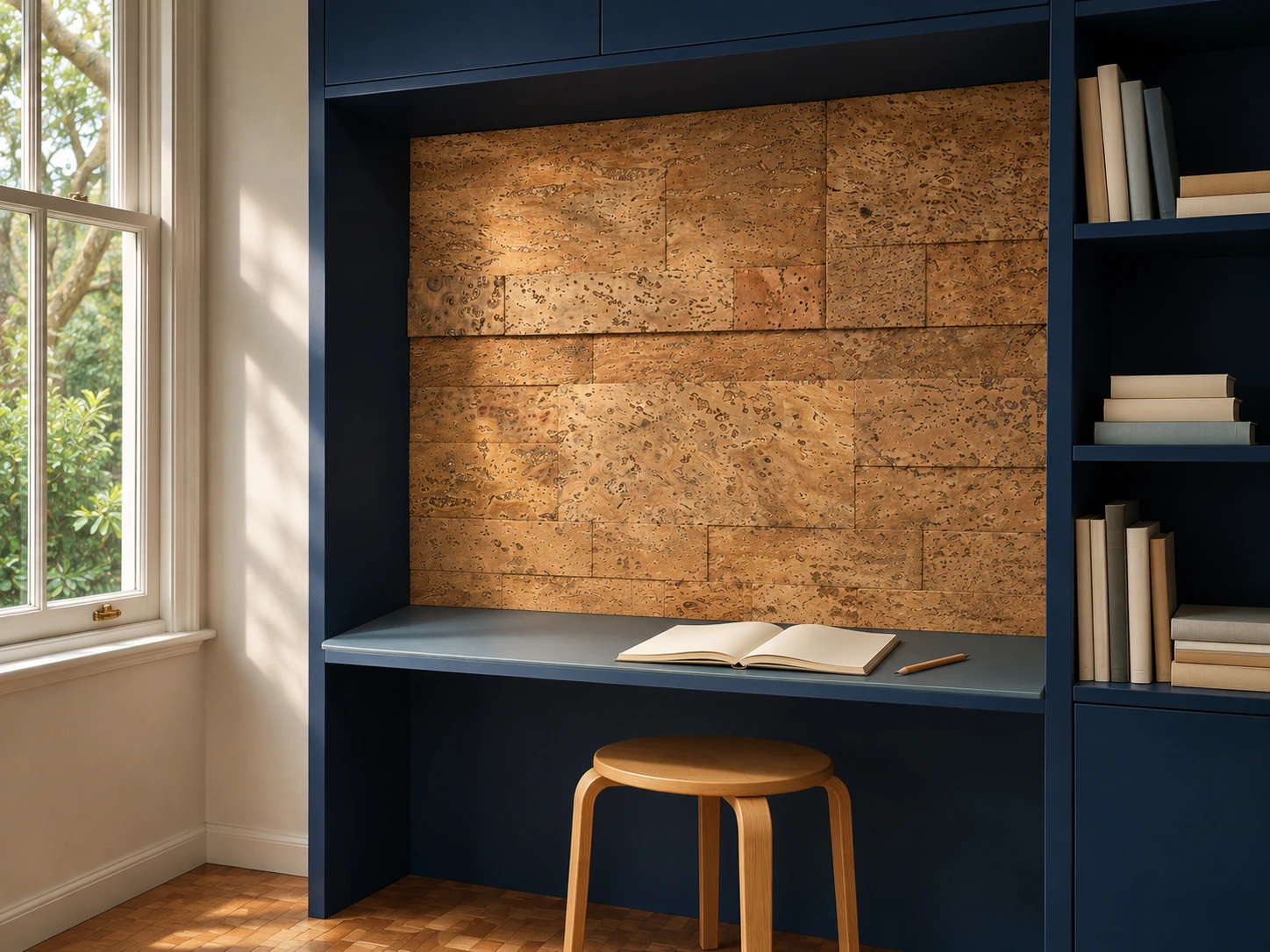
A small room inside a cabinet
Natural cork lines the back of this writing nook. Light from the side window picks out the pores and the shallow relief of the tiles.
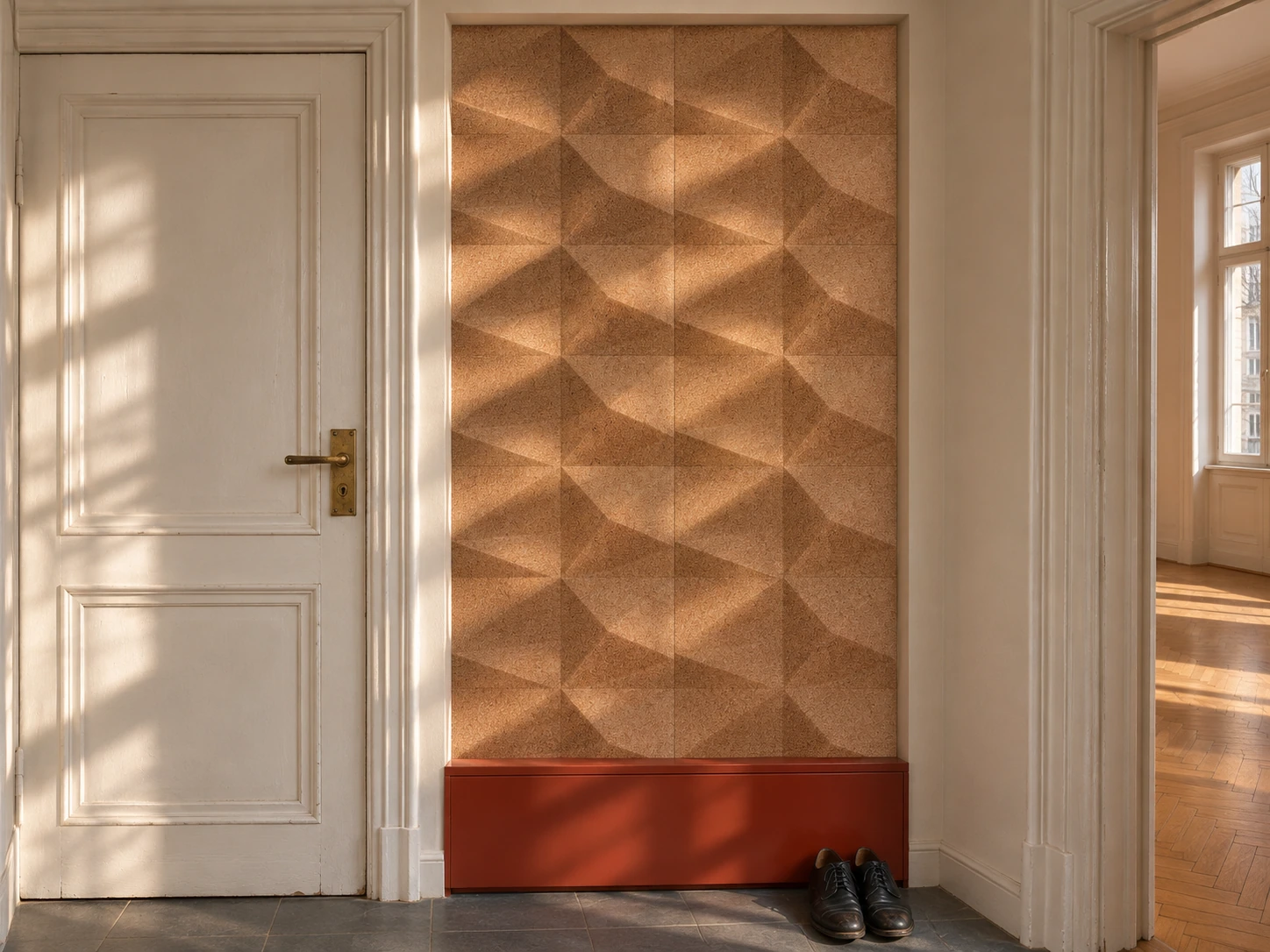
A relief for the hallway
The shallow facets of Muratto’s Peak cork tiles pick up the sunlight above the shoe cabinet. The floor stays clear and the wall carries the texture.
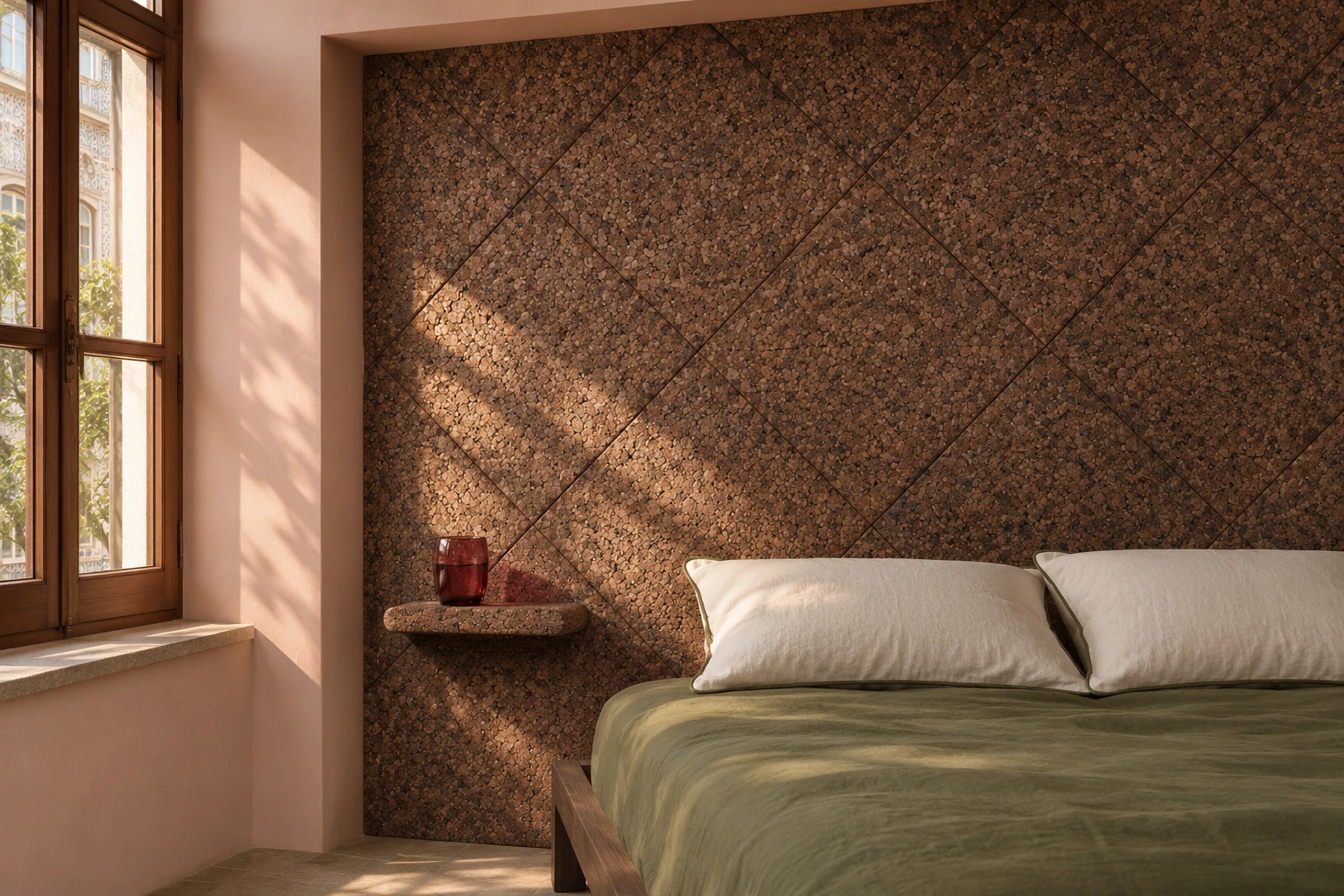
A bedside shelf made of cork
Side light picks out the dark cork granules behind the bed. In this study of GENCORK Corkboard, one of the diagonal tiles extends into a small bedside shelf.
Wood Wool, Unexpected
The coarse fibres are what give wood wool its character. A curved groove or a block of colour can turn those compressed wood fibres into a surface with a surprisingly graphic presence.
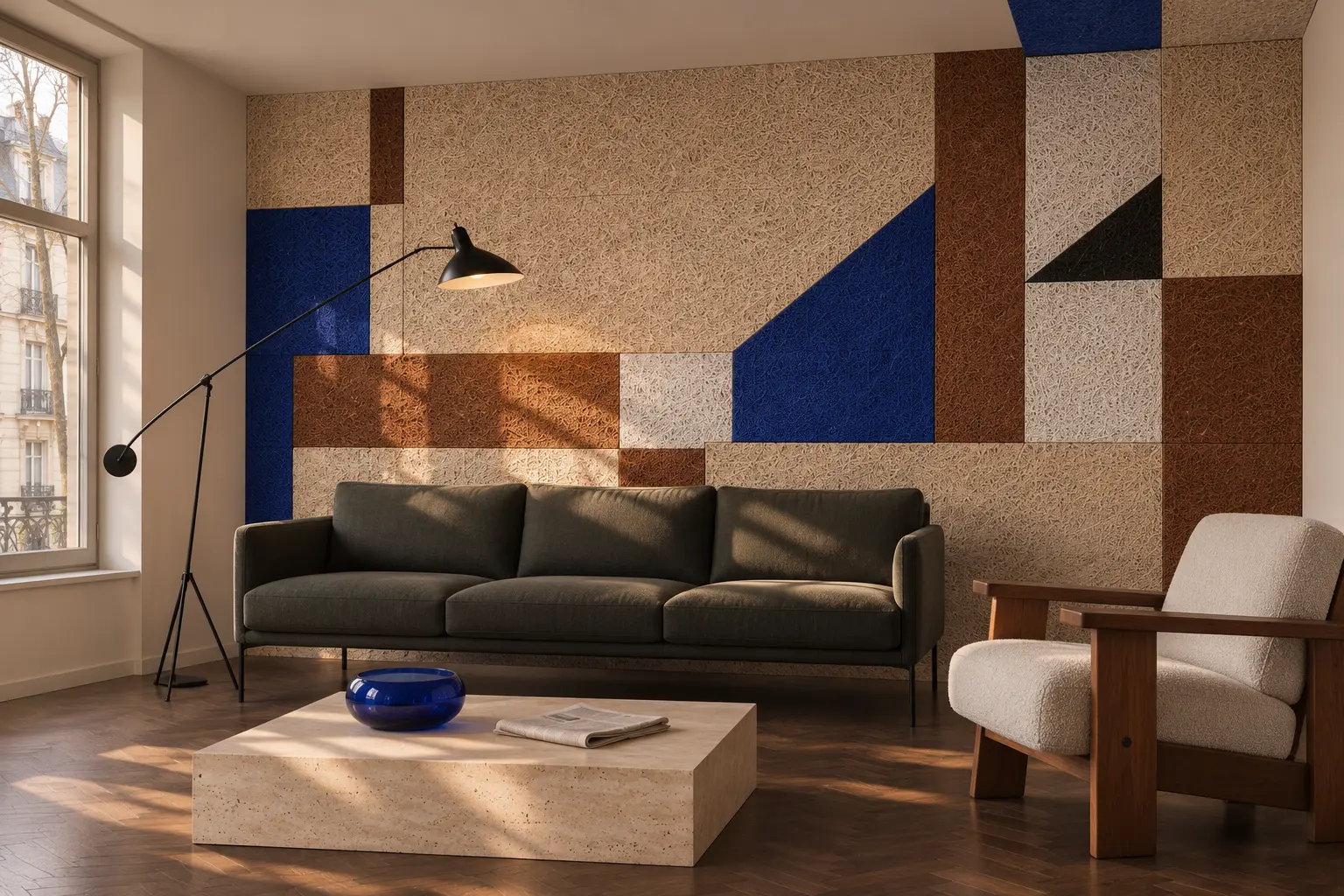
A Bauhaus wall made from fibres.
Geometric colour fields turn modular wood-wool tiles into a room-sized composition.
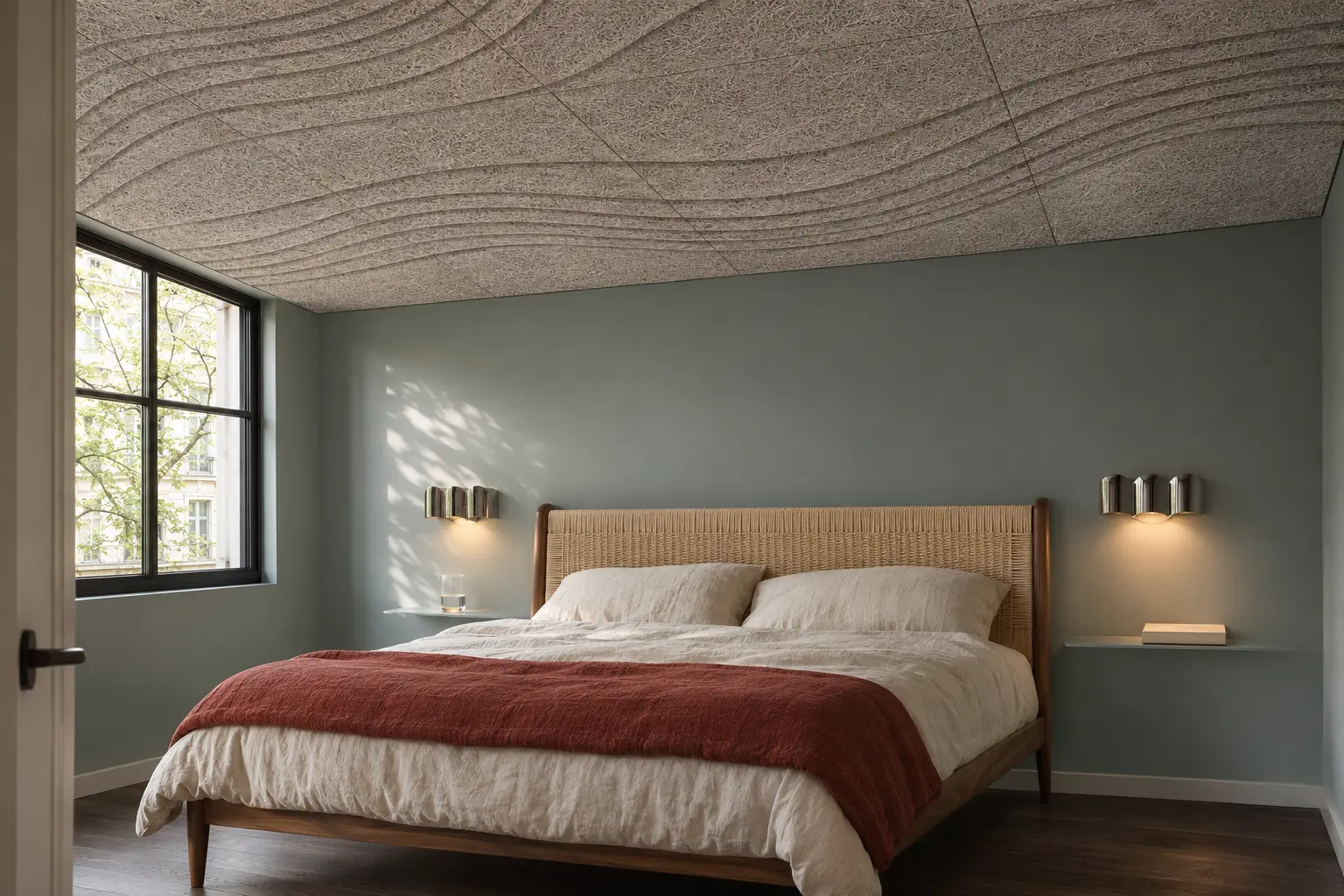
Grooves soften the bedroom.
Wave-cut wood wool creates movement while the fibre texture stays clearly visible.
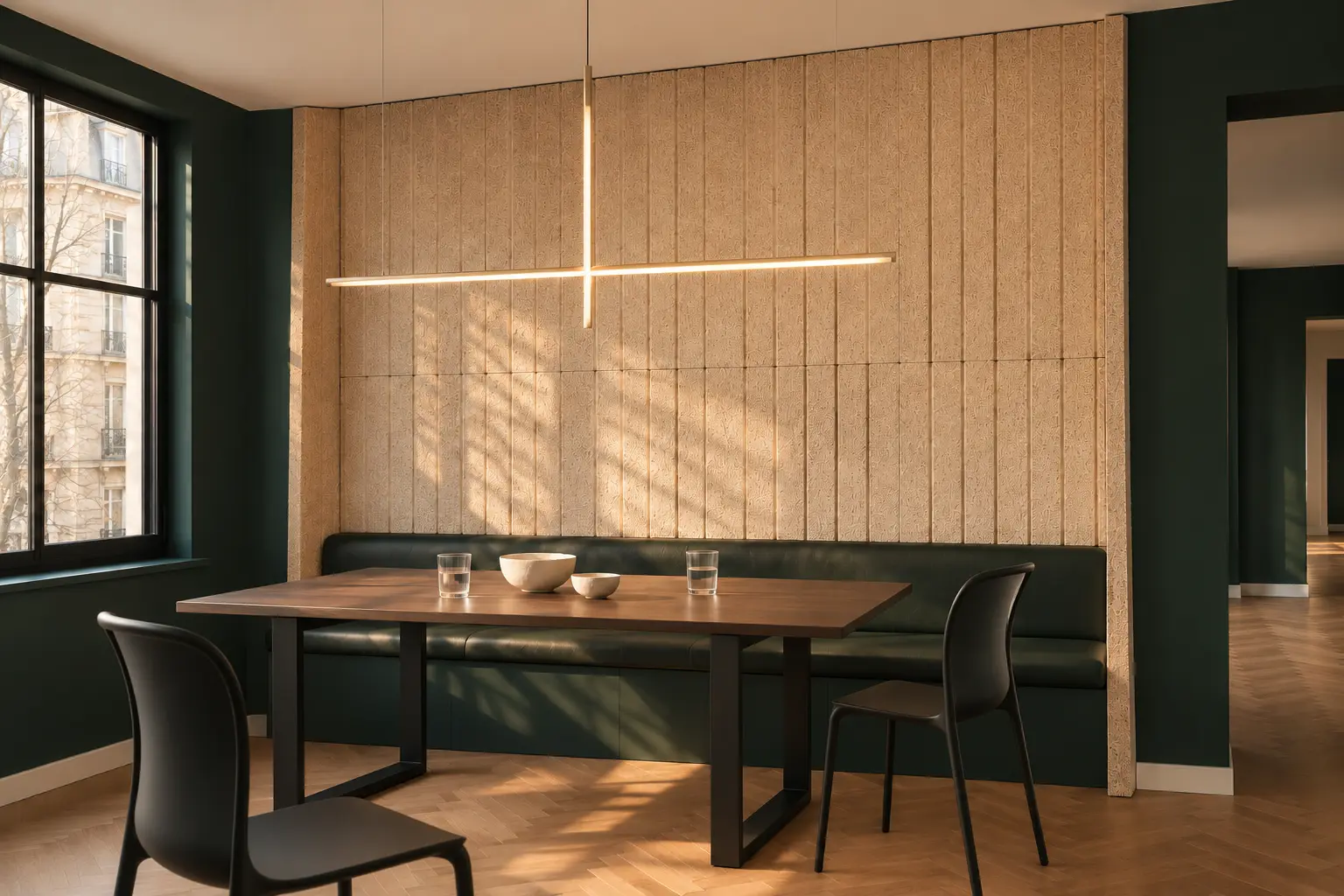
Lines tailor the dining niche.
A controlled ribbed field makes the banquette feel deliberately built into the room.
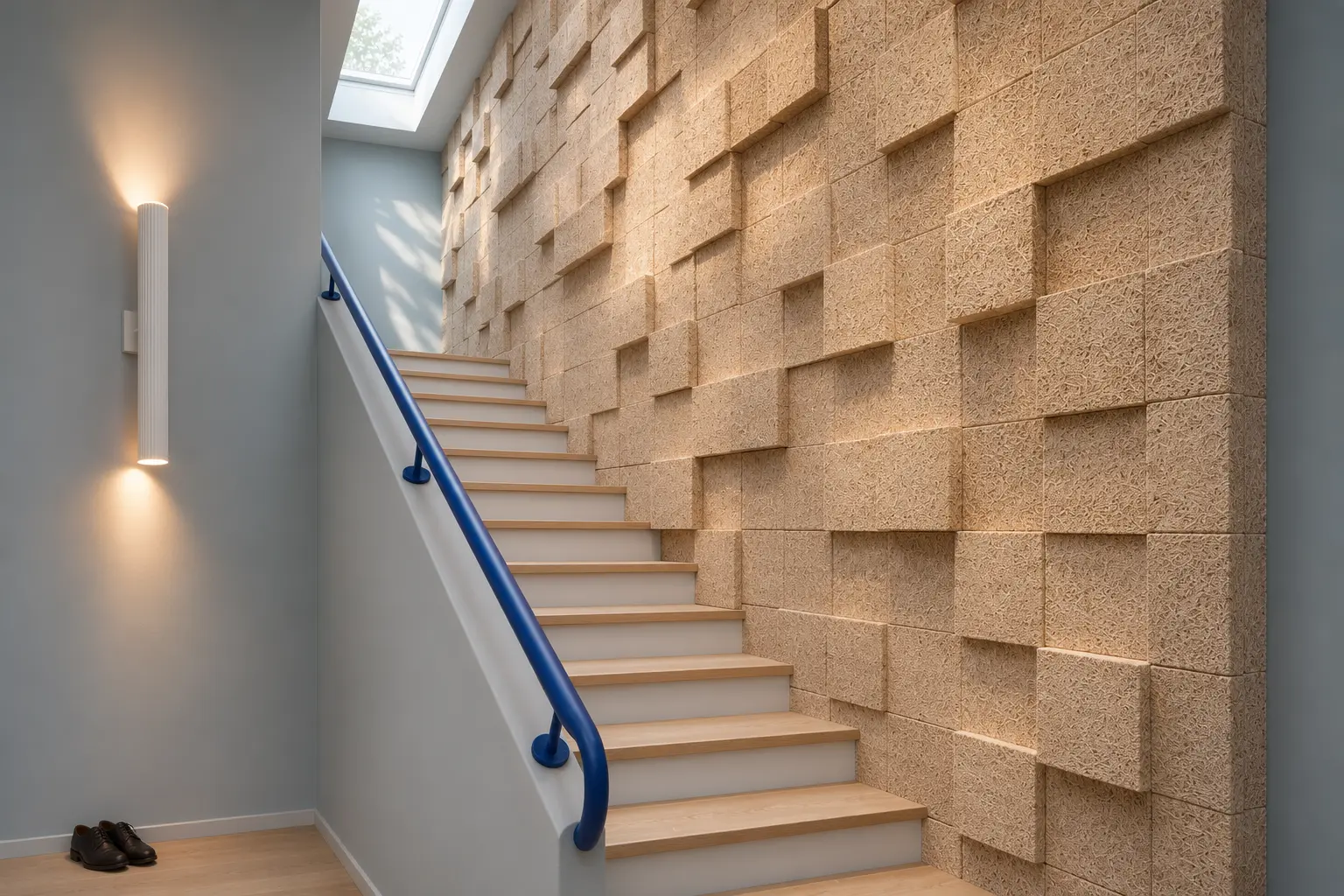
Small blocks catch the light as you go up the stairs
Small three-dimensional modules make a transitional space worth looking at.
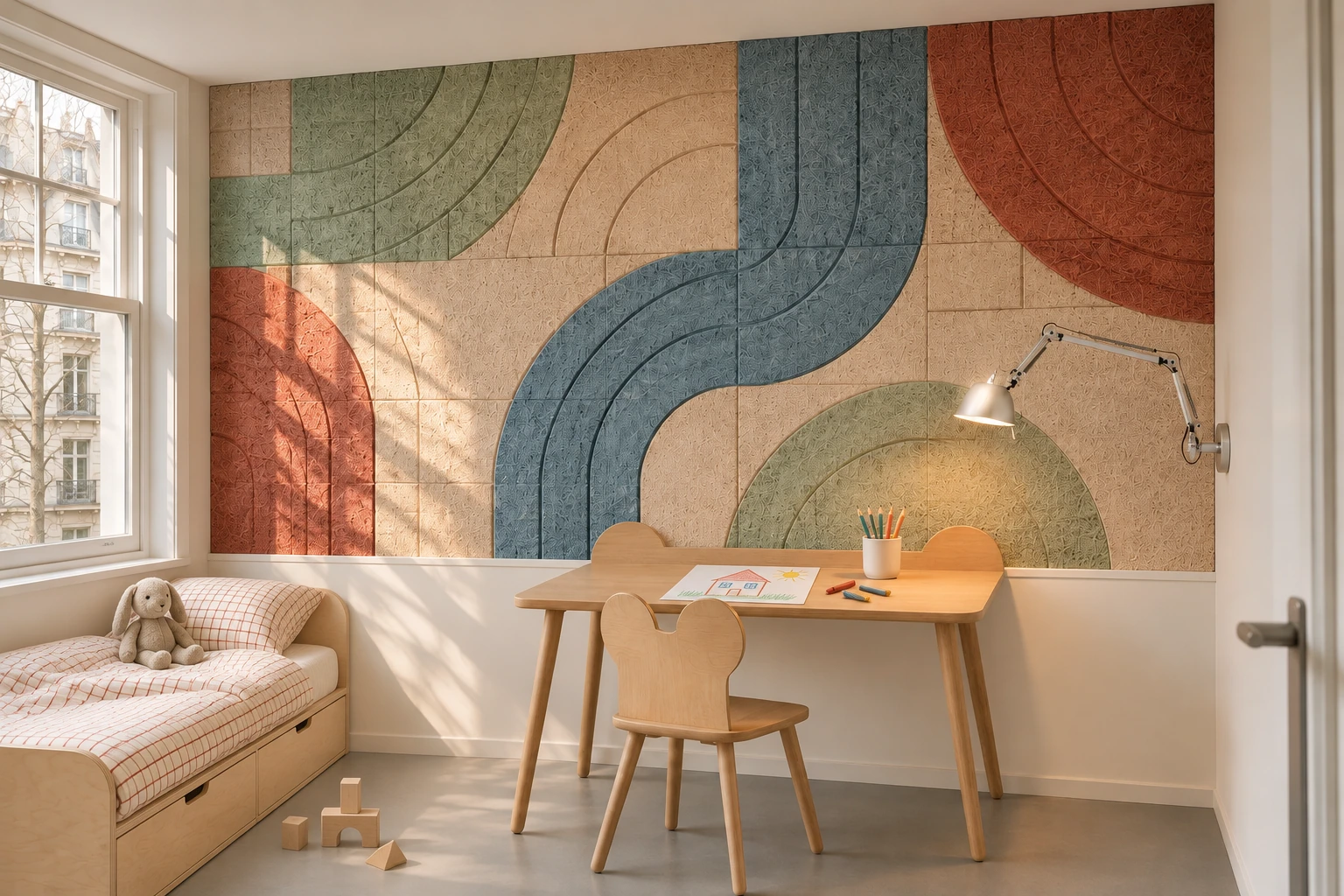
Quarter circles in a child’s room
Blue, green and rust curves run above the drawing desk, with the grain of the wood wool visible in the window light.
Acoustic Textile Art
There’s a difference between looking at a flat surface and being able to follow the path of a thread. Woven wall hangings bring that kind of detail to a room. These decorative textile studies sit alongside a framed wool panel designed to absorb sound.
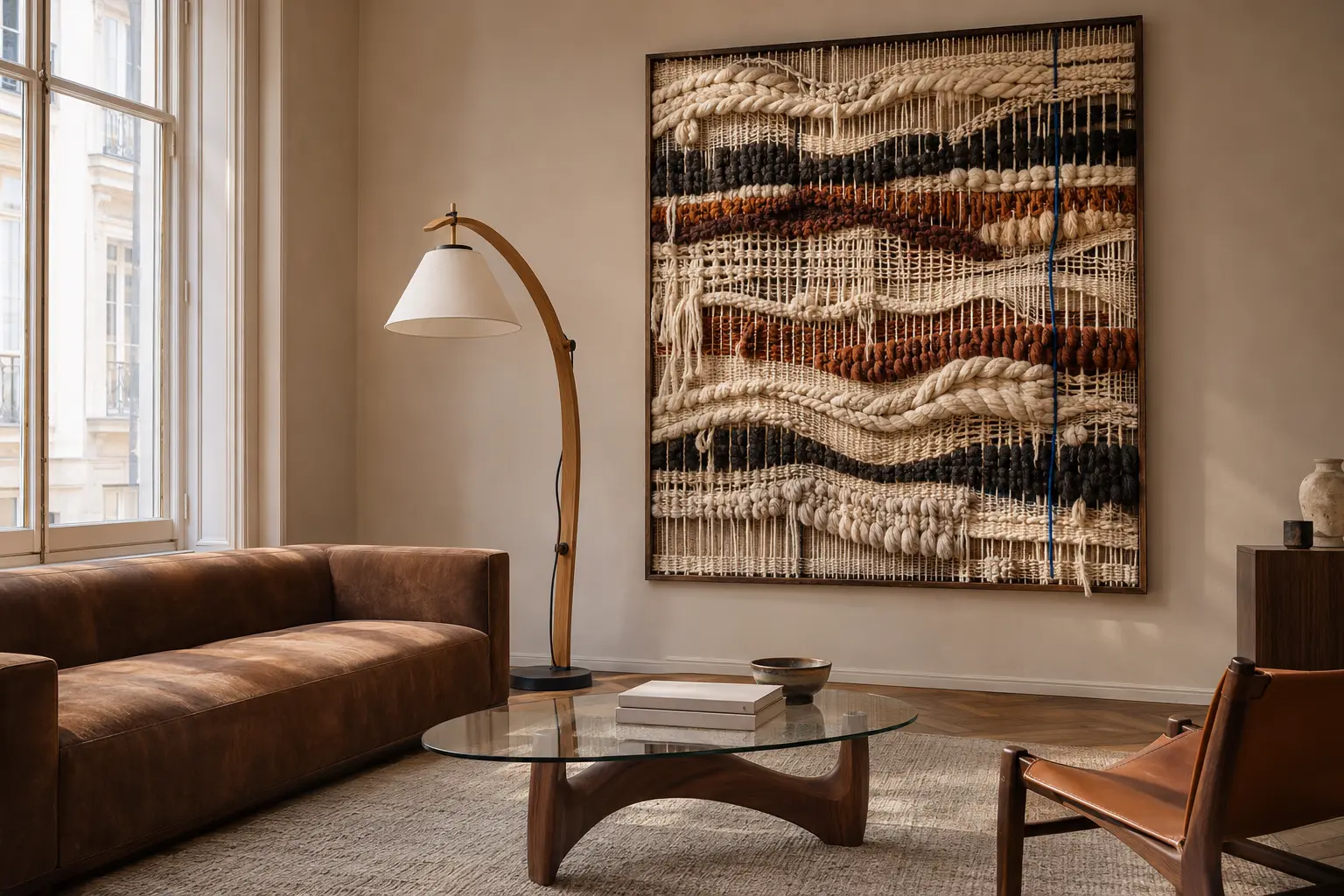
The weave becomes architecture.
A large textile work changes the scale of the wall without becoming a conventional panel.
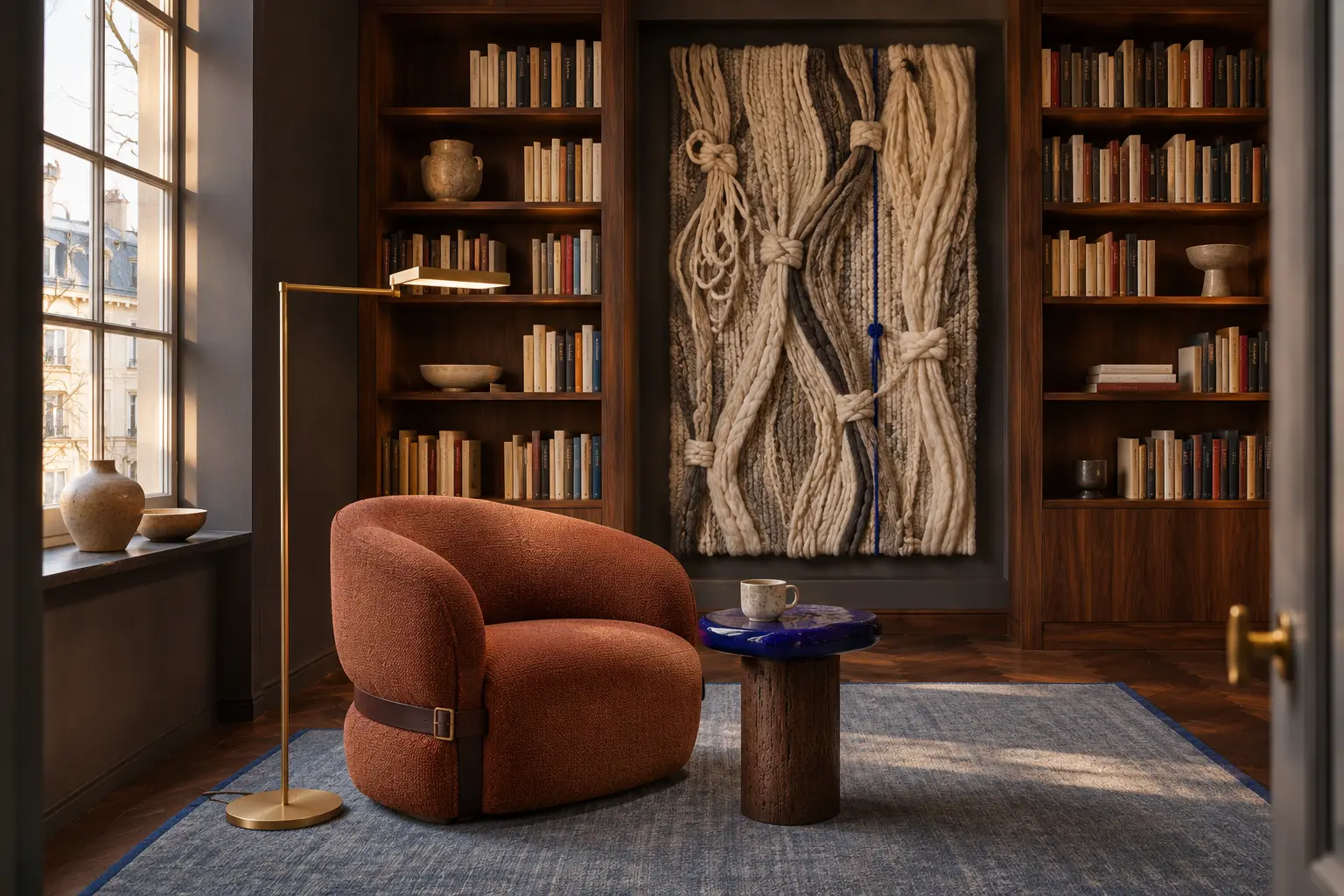
Bookbinding stitches become a wall.
Knotted hand-spun cords turn the library niche into a quiet textile construction.
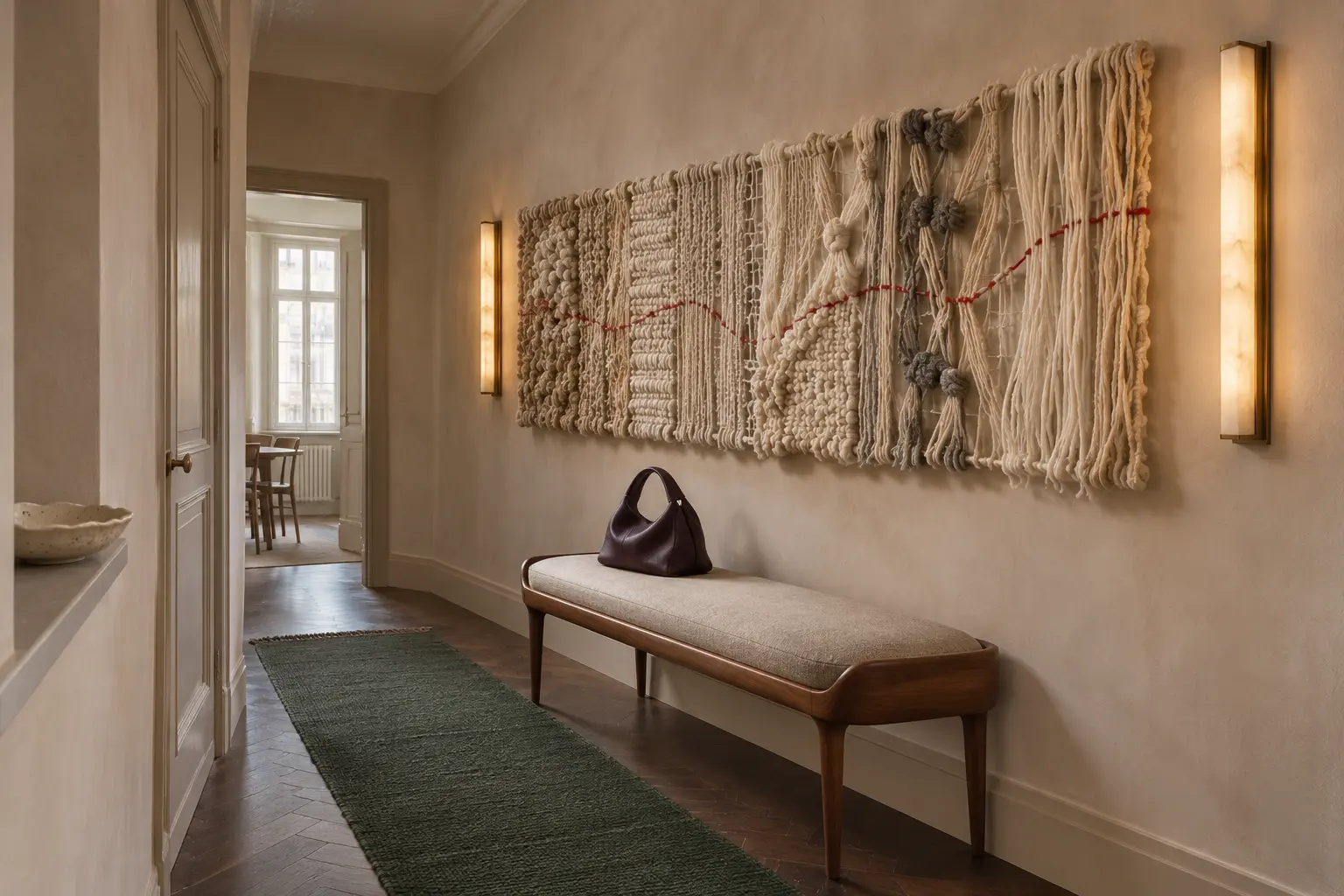
The selvedge line runs through the hall.
A long handwoven work gives an overlooked passage the weight of a proper room.
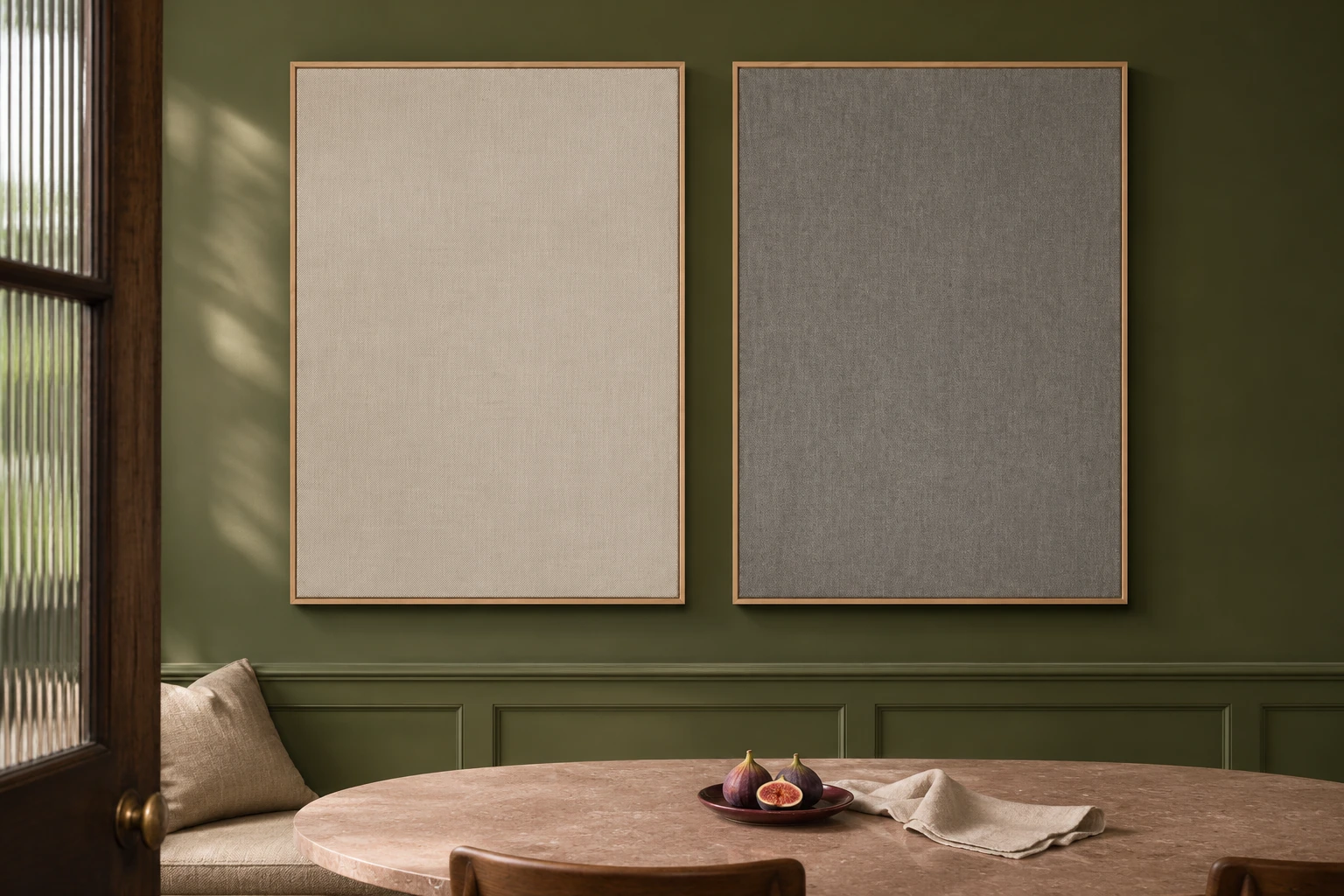
Wool in two frames
Off-white and grey form a quiet diptych. In the Abstracta × Verk panels, woven Swedish wool covers a sound-absorbing core made of textile waste and polyester.
Beyond the Ordinary Slat
Slats still have a place. I like them best when they give something useful a new shape, like a cabinet front, a window surround or a door that slips into the wall.
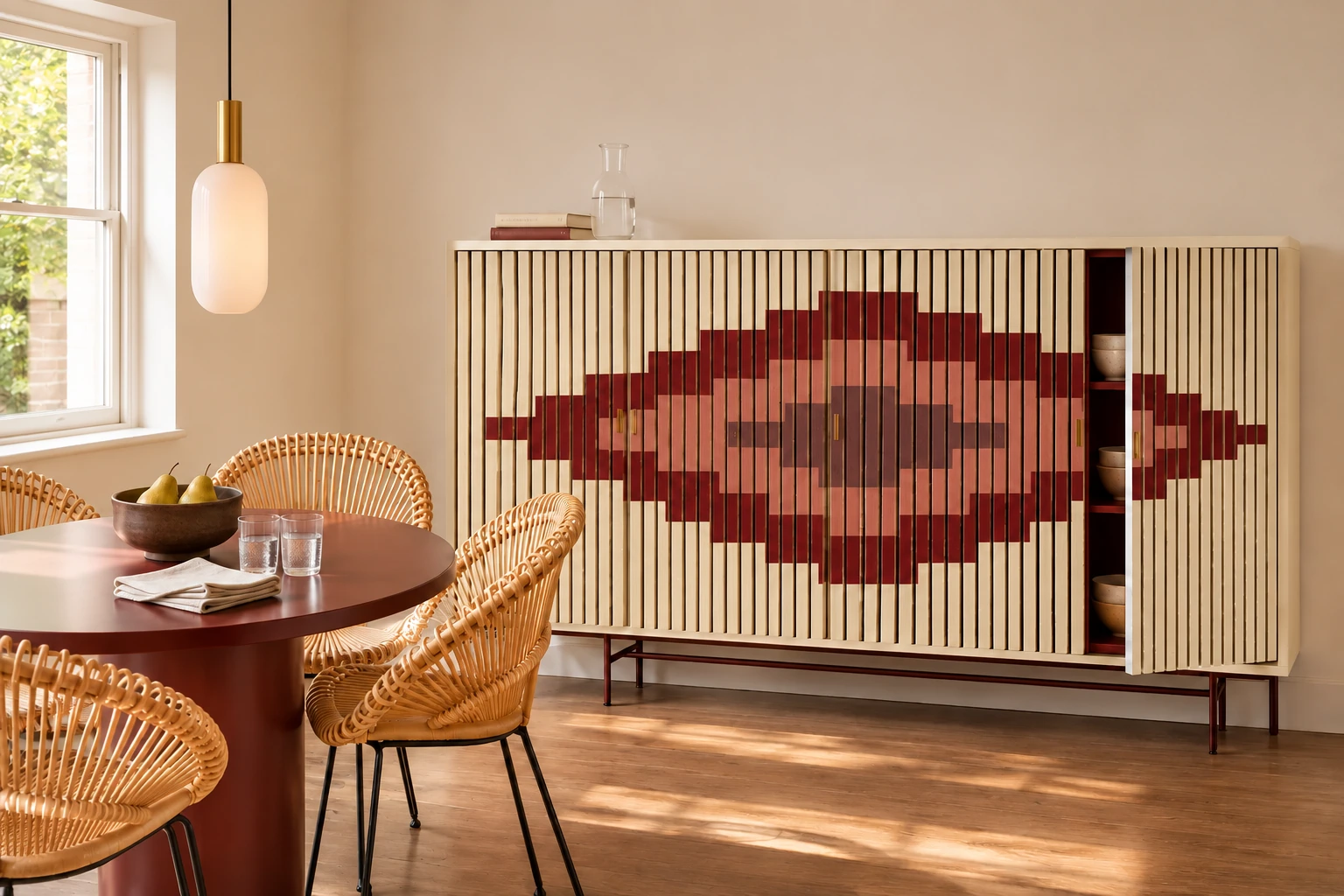
A kilim pattern across the doors
A stepped motif in burgundy and dusty pink crosses the pale timber slats. The cabinet is a bespoke joinery concept, with the pattern aligned across the doors when closed.
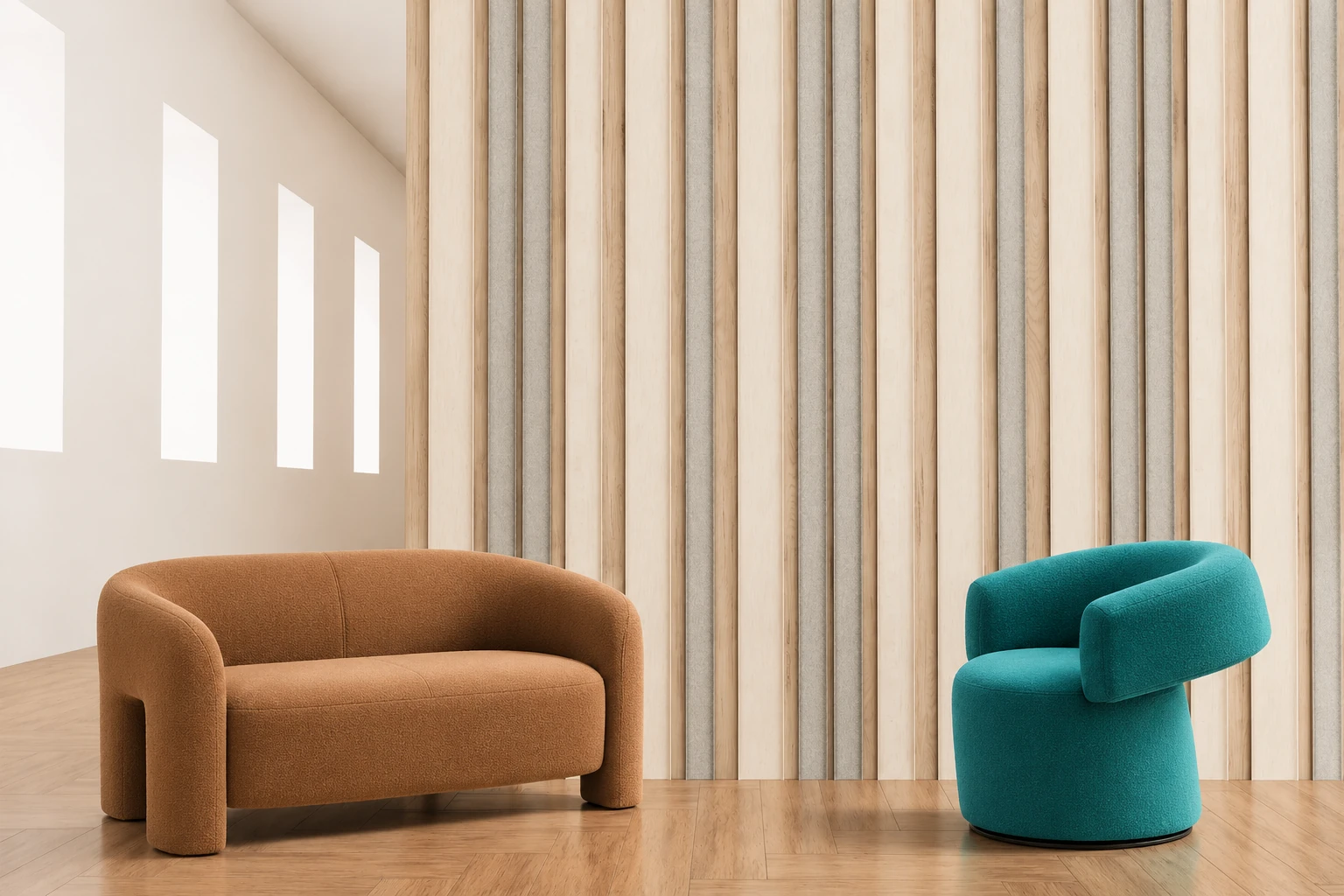
The slats catch the light.
In this interior study of aaline Wave, vertical timber profiles and the felt between them give the wall depth.
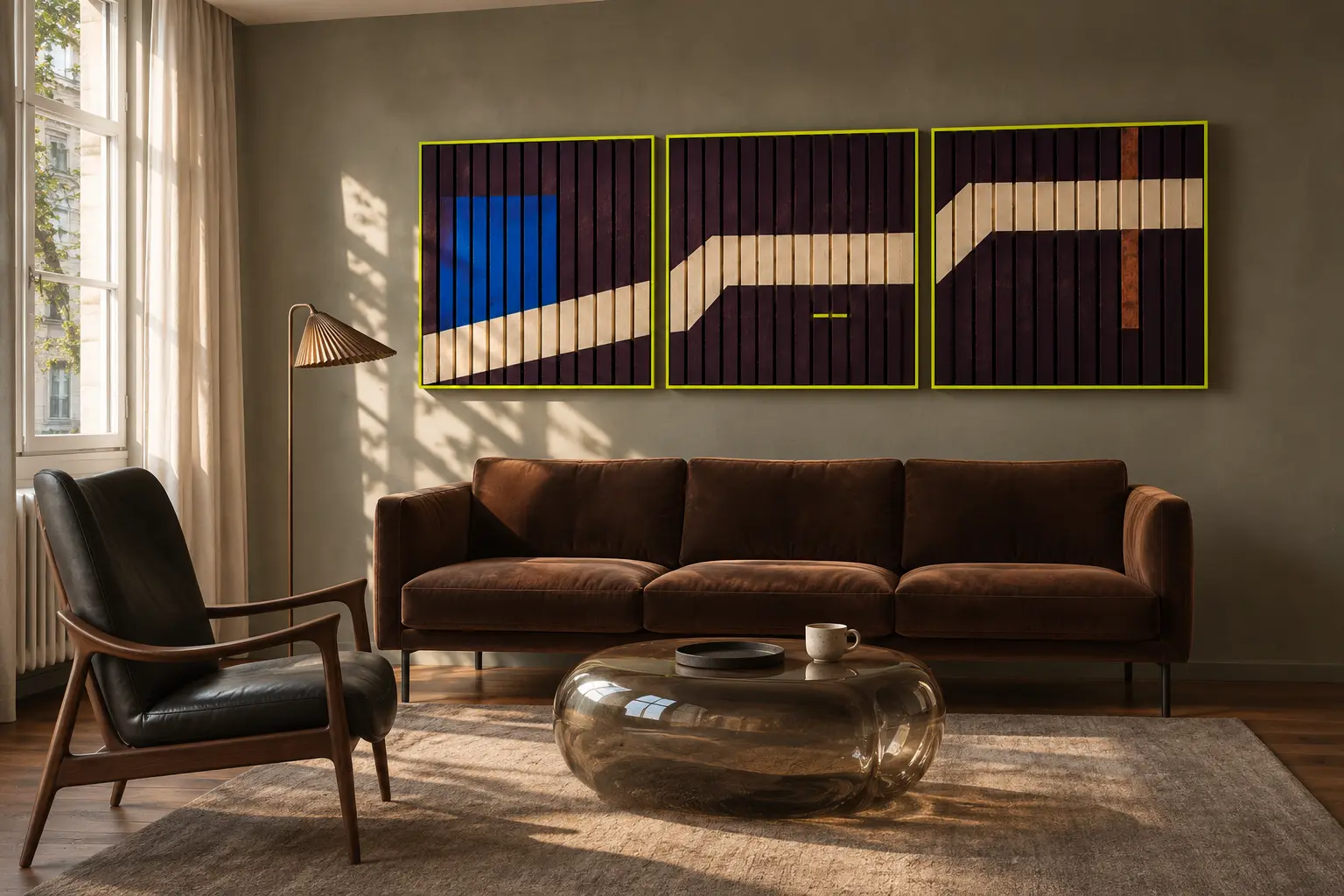
The slats become a triptych.
Cobalt, cream and plum turn three familiar acoustic panels into one graphic artwork.
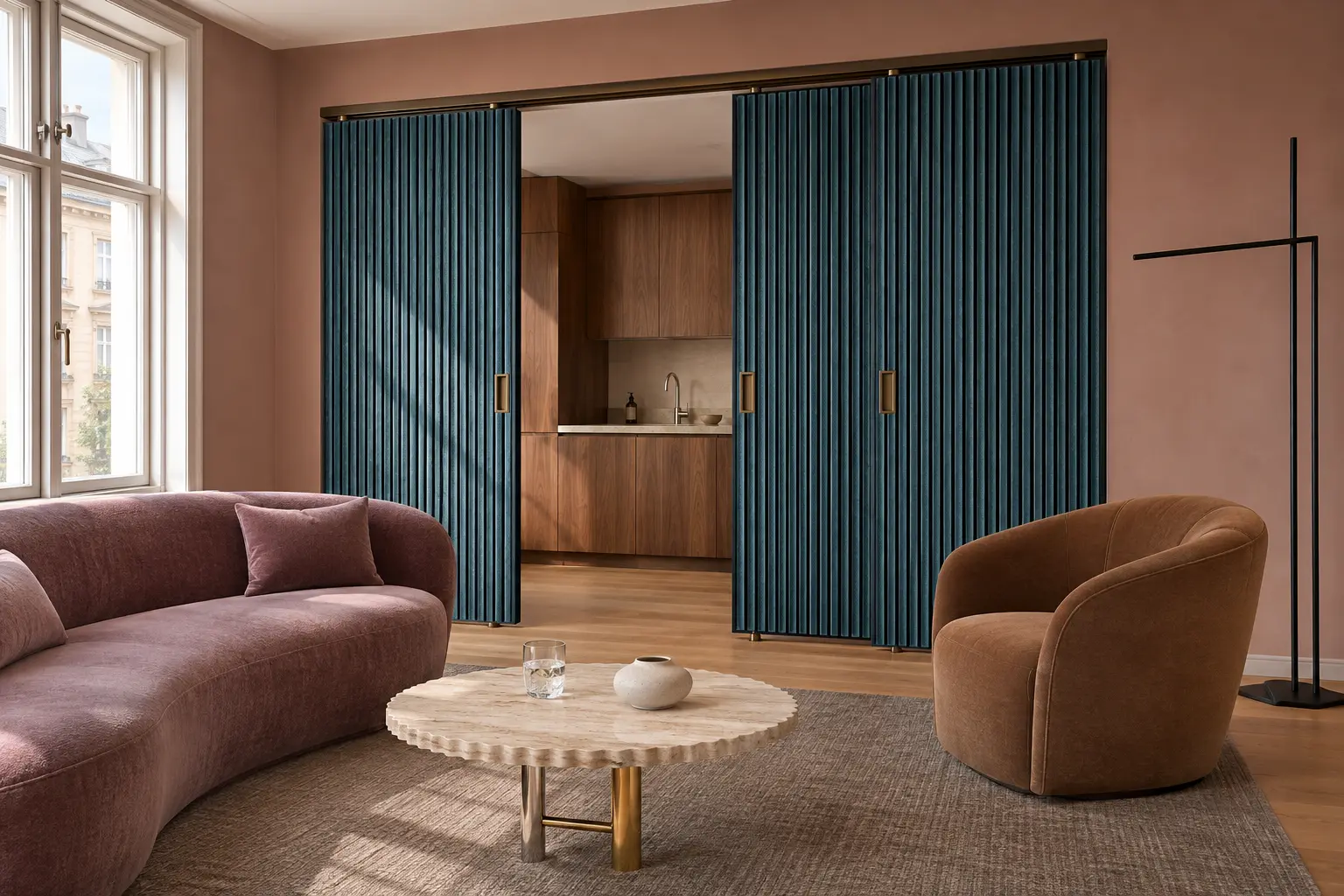
The acoustic wall can move.
Blue slatted doors separate two spaces while remaining the strongest decorative gesture in both.
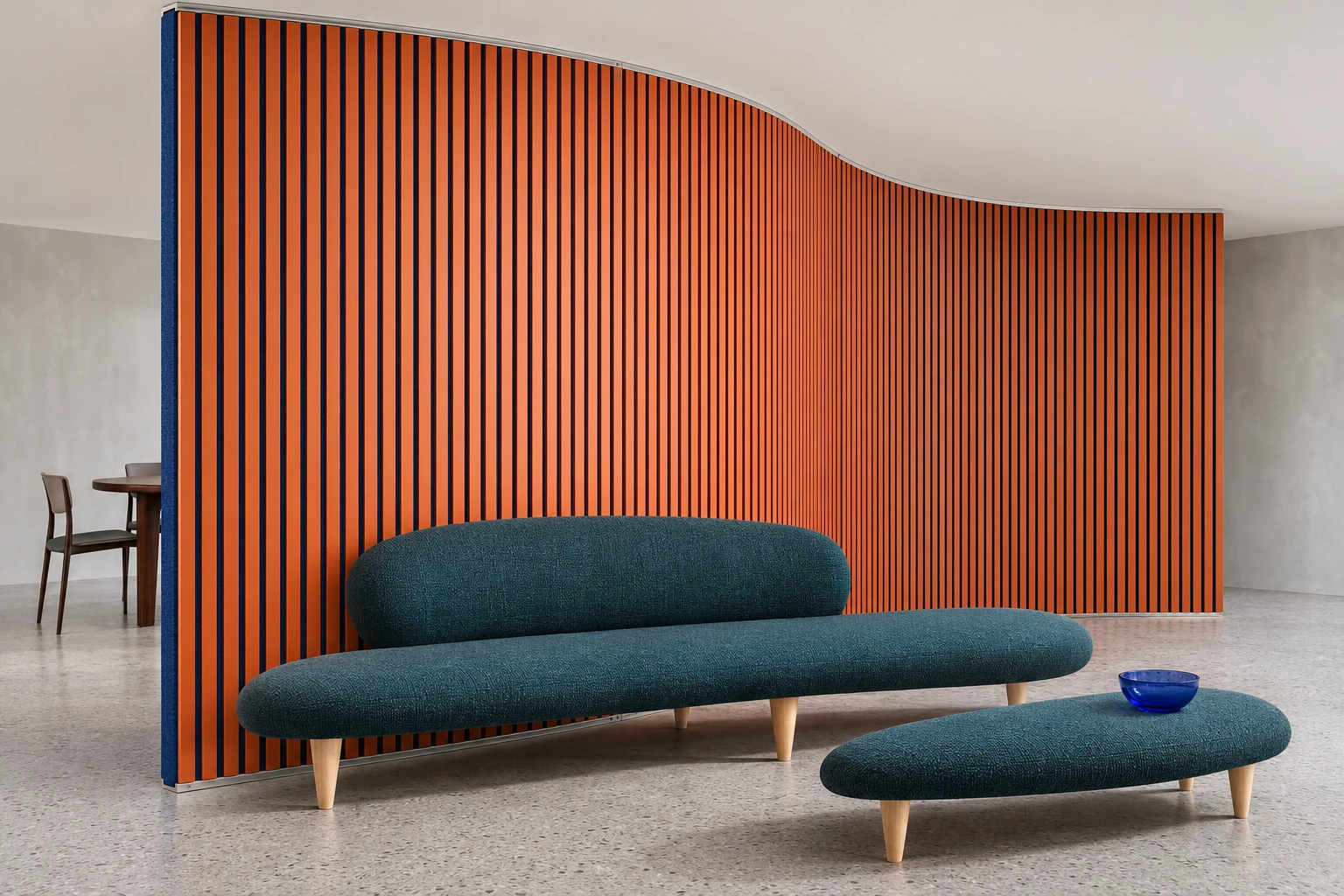
A room within the room
This divider concept takes its cue from ECOcero’s ECOnordik system, which combines PET felt backing with veneered MDF slats. The curve gives the seating area a boundary while keeping the space open.
Perhaps the most interesting thing about acoustic design today is that it no longer has to look acoustic.
It can be a beautiful light, a textured wall, a sculptural ceiling or a piece of textile art. And that, to me, is where things become interesting — when a practical material gives us another reason to love a room.