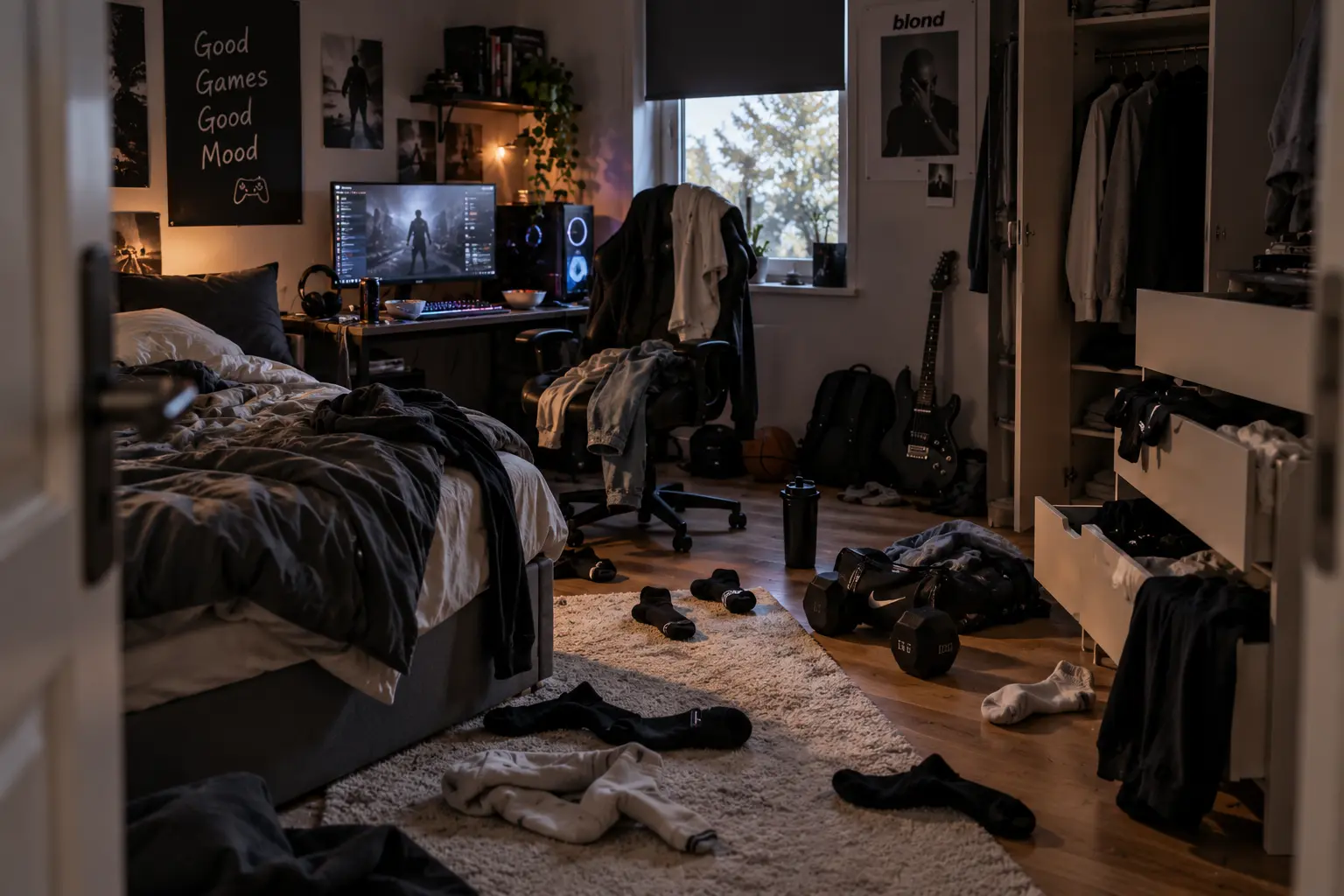
TEENAGERS ARE NOT PEOPLE.
At least not before noon.
There is a very particular stage of motherhood that nobody talks about enough.
Your child isn't little anymore. You don't need to hold their hand. You don't choose their clothes. You don't necessarily know who they're texting, what's bothering them, or why the answer to almost every question you ask is:
“I don't know.”
Or:
“Fine.”
Or my personal favourite:
“Mum…”
Delivered in that very specific tone that roughly translates as: I cannot believe you are the person who gave birth to me.
Welcome to life with a teenager.
It's a strange place.
Glasses migrate to their bedroom and somehow never find their way back. The fridge is full, but there is “nothing to eat.” A perfectly reasonable question like “What time will you be home?” can be received as a serious violation of basic human rights.
And headphones, obviously, are now part of the anatomy.
Sometimes I genuinely think:
Teenagers are not people.
But of course, the truth is almost exactly the opposite.
For the first time, they're becoming people separate from us.
And maybe that's what makes this stage so difficult.
WE USED TO KNOW WHAT TO DO
When children are small, motherhood is exhausting, but at least the rules are relatively clear.
They're hungry — you feed them.
They're ill — you take care of them.
They're scared — you hold them.
There's a problem — you try to fix it.
For years, we get used to being needed.
We get used to someone asking where their socks are, what's for dinner, when we're leaving, where the charger is, how something works and whether Mum can help.
And without really noticing, a huge part of our lives begins to revolve around one question:
What does everyone else need from me?
Then your child turns 14, 15, 16, 17.
And the rules change.
Except nobody gives you the new manual.
YOU CAN'T FIX EVERYTHING ANYMORE
This might be one of the hardest things to accept as a parent.
You can teach.
You can talk.
You can warn them.
You can set boundaries.
You can show them, through your own life, what you believe is right.
But eventually there comes a point when you cannot make their decisions for them.
They will choose friends you might not like.
They will make mistakes you could see coming from a mile away.
They will ignore advice you've given a hundred times.
They will keep things from you.
They will fail.
They may fall in love with entirely the wrong person.
They will make choices you would have made very differently.
And that doesn't automatically mean we failed somewhere as mothers.
It means there is another person standing in front of us now.
Someone we can influence, but no longer completely control.
Maybe we need to start understanding the difference.
Because if we continue to believe that every choice they make is a reflection of our parenting, we will carry guilt for things that were never entirely ours to control.
AND MEANWHILE… WHERE ARE WE?
It's a question I've been asking myself a lot lately.
I'm at a point in my life where I'm trying to start again professionally.
I'm learning.
Looking for a new direction.
Applying for things.
Preparing for interviews.
Trying things without knowing whether they'll work.
I have ideas.
I have fears.
I have ambitions.
And at the same time, there is a home, shopping, dinner, laundry, things that need doing — and a teenager who, at one moment, absolutely does not need me and five minutes later cannot find something that is literally in front of him.
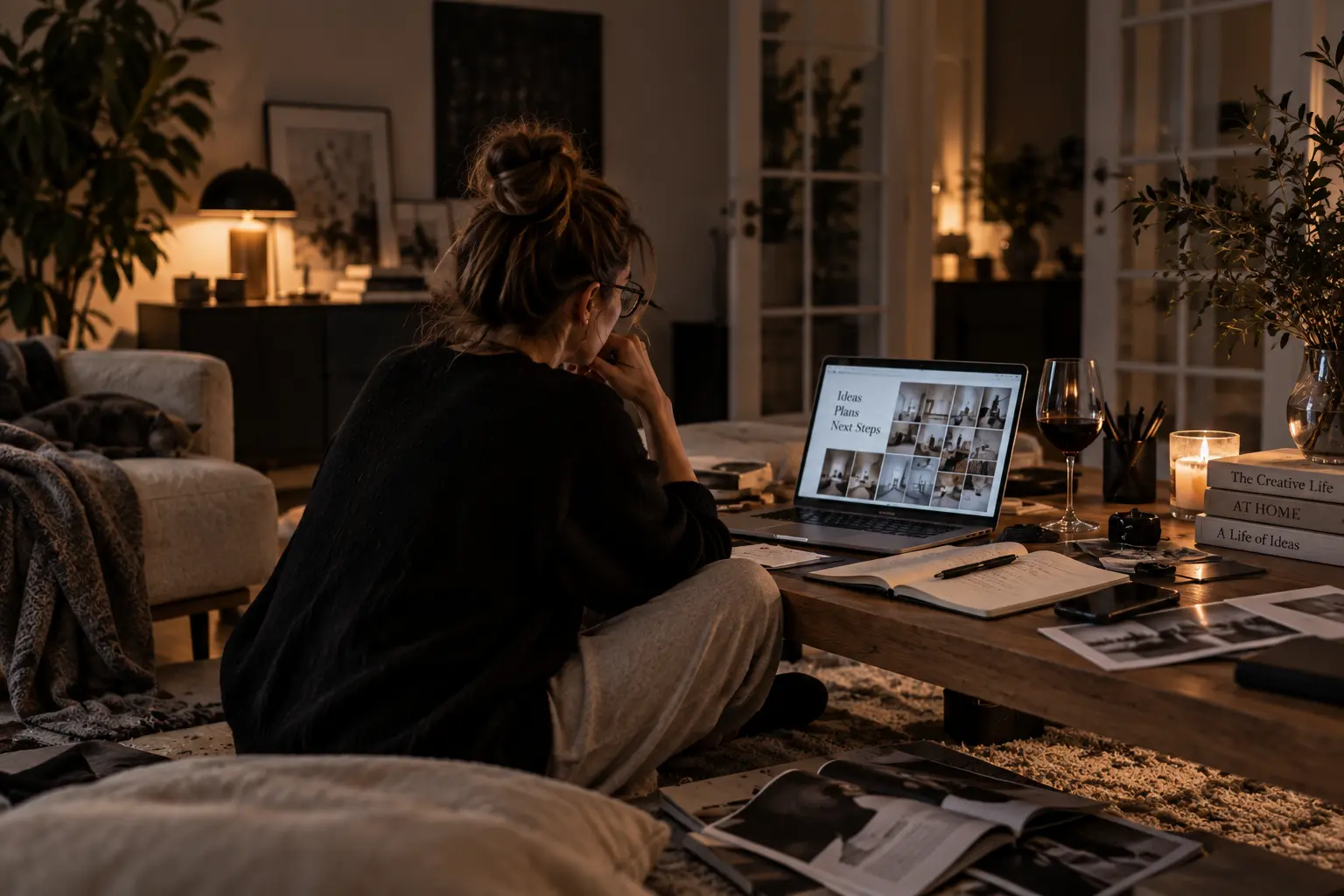
And sometimes I sit down to do something for myself.
I open my laptop.
I have two free hours.
And instead of simply starting, that very familiar list appears in my head:
Should I make dinner first?
Should I spend some time with him?
Why has he been in his room all day?
Is everything okay?
Do we talk enough?
Shouldn't I…?
And there it is.
The guilt.
WHAT IF, JUST FOR A WHILE,
I CHOOSE MYSELF?
WHAT IF, JUST FOR A WHILE, I CHOOSE MYSELF?
Even saying it still sounds slightly forbidden.
Especially for mothers.
Because we're used to the idea that a “good mother” is the woman who can always give a little more.
One more task.
One more load of laundry.
One more trip to the supermarket.
One more conversation.
One more sacrifice.
One more postponement of whatever she wanted to do for herself.
I'm just not convinced anymore that this is the lesson we should be teaching.
My child isn't five.
I've been there for years.
I've cared.
I've taught.
I've made mistakes.
I've tried to correct them.
I've loved.
I've worried.
And I will continue to be his mother.
But that doesn't mean I have to be responsible for everything.
And it certainly doesn't mean my own life has to remain on pause until my child finally decides he doesn't need me anymore.
Because that day may never come.
MAYBE THEY DON'T NEED MORE OF US
Maybe they need to see more of us.
Not just Mum.
The woman behind her.
The woman who has interests of her own.
Who learns something new in her forties.
Who doesn't know everything.
Who gets rejected and tries again.
Who gets nervous before an interview.
Who has a job she wants.
A project that excites her.
Friends.
Plans.
Dreams that have absolutely nothing to do with what's for dinner.
Maybe it's good for my son to see that.
Because what am I actually teaching him if, throughout his childhood, love looks like a woman who always puts herself last?
I don't want that to be the lesson.
I want him to know that you can love someone without disappearing into their life.
Maybe they don't need more of us.
Maybe they need to see more of us.
“I CAN'T RIGHT NOW” IS A PERFECTLY VALID ANSWER
I think mothers should allow themselves to say those words more often.
I can't right now.
Not because I don't love you.
Not because my work matters more than you.
Not because I no longer care.
But because I'm doing something important too.
You can make yourself something to eat.
You can look for the charger one more time.
You can wait twenty minutes.
Sometimes, you can even solve your own problem.
Isn't that what we've been trying to achieve all these years anyway?
To raise a person who, one day, won't need us for everything.
So why do we feel guilty when it finally starts happening?
NOT EVERYTHING THAT HAPPENS TO THEM IS OUR RESPONSIBILITY
This might be the hardest sentence in this entire piece.
Because we will always worry.
Probably when they're 30.
Probably when they're 40.
But worry and responsibility are not the same thing.
We can give them a foundation.
Values.
Security.
Love.
A place they know they can return to.
And then, gradually, we have to give them something else too:
the right to carry the consequences of their own lives.
Not every mistake they make means we made one.
Not every difficult period means we should have done something differently.
Not every bad decision could have been prevented by a sufficiently good mother.
And perhaps letting go of that idea doesn't make us less caring.
Maybe it simply makes us a little freer.
AND THE FREEDOM GOES BOTH WAYS
I think that's the strange deal we make during the teenage years.
They begin to move away.
They close the door.
Put on their headphones.
Stop telling us everything.
They build a world in which we are no longer the main character.
And sometimes that hurts.
But maybe, instead of standing outside that closed door wondering how to make ourselves necessary again, we can turn around and see what's behind us.
Our own life.
Not the one we had before children.
We can't — and shouldn't — go backwards.
The next one.
With the new things we want.
The profession we might not have found yet.
The places we want to go.
The projects.
The clothes we love.
The friends.
The ridiculous ideas.
The big ideas.
Everything we've been postponing with the words:
One day.
Maybe one day has started.
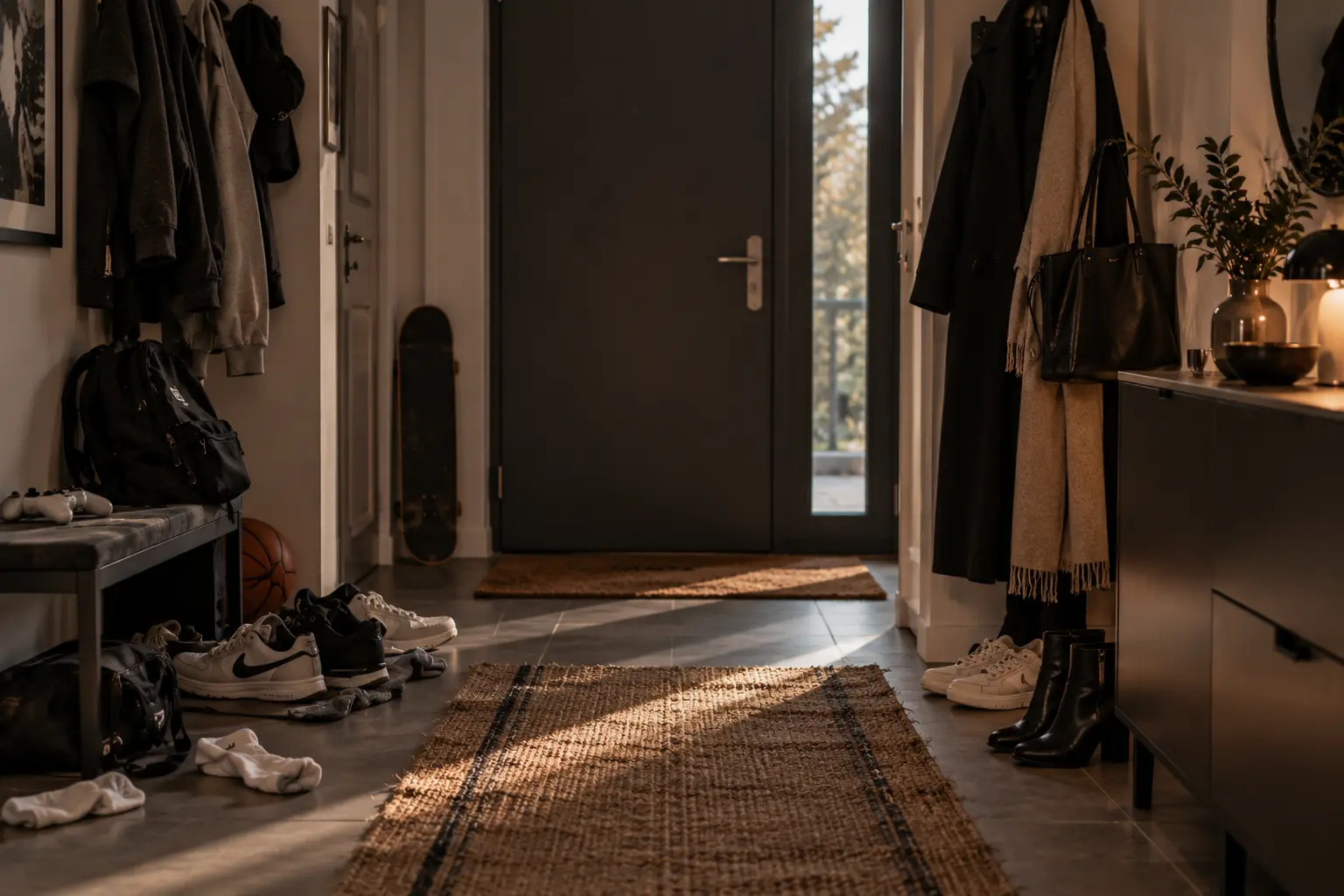
Teenagers are not people.
Okay.
They are.
They're just people under construction — loud, silent, wonderful, impossible, wildly confident and terribly insecure, often all at the same time.
And our job is no longer to walk ahead of them and clear everything out of their path.
We need to stay close enough that they can find us.
And far enough away that they can learn to walk on their own.
And while they're doing that, maybe we need to start walking again too.
WE RAISED THEM
TO HAVE LIVES
OF THEIR OWN. Maybe we were supposed
to keep one too.
And if, for a few hours today, you choose yourself,
it doesn't mean you're choosing your child any less.
It simply means you're still a person too.