INTERIORS
THE OFFCUTS ARE THE BEST PART.
The pieces left after an acoustic-panel project may be too small for another wall, but they are often exactly the right size for something more interesting.
INTRO
Acoustic panels are usually bought for one large, practical gesture: a full wall, a media zone, a quieter room. Then the installation ends and the awkward pieces remain.
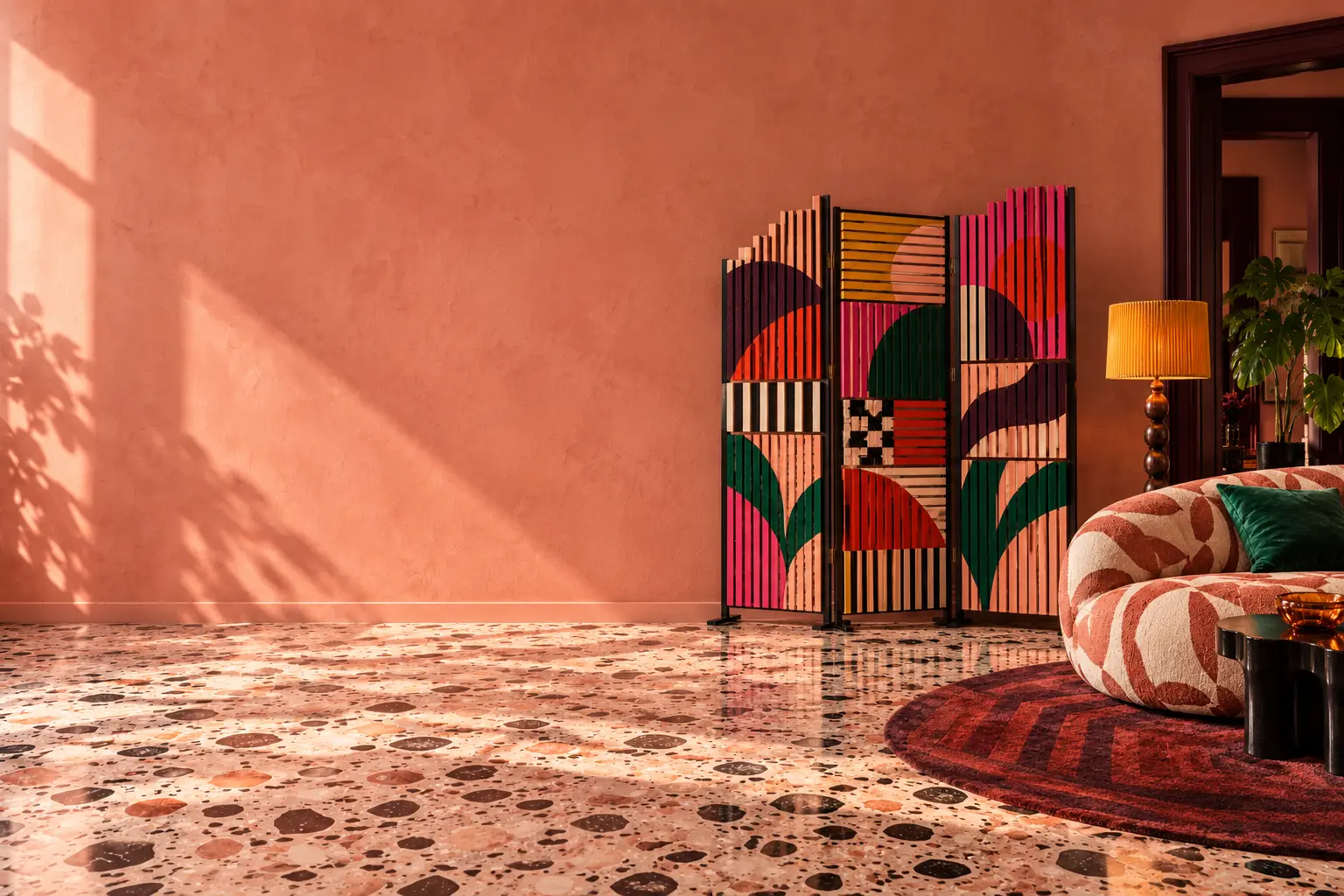
Do not treat them as waste. Their slatted surface already has rhythm, depth and shadow — the qualities designers often add to a room later. A medium offcut can change a piece of furniture; a narrow strip can define a small zone; the tiniest fragments can become art or a sharp flash of colour.
The strongest results do not all look alike. Some keep the original timber visible. Some are painted in one saturated shade. Only one object needs a graphic pattern. The material creates continuity; the changing application keeps the room from becoming a theme.
01
START WITH COLOUR, NOT WITH LEFTOVERS
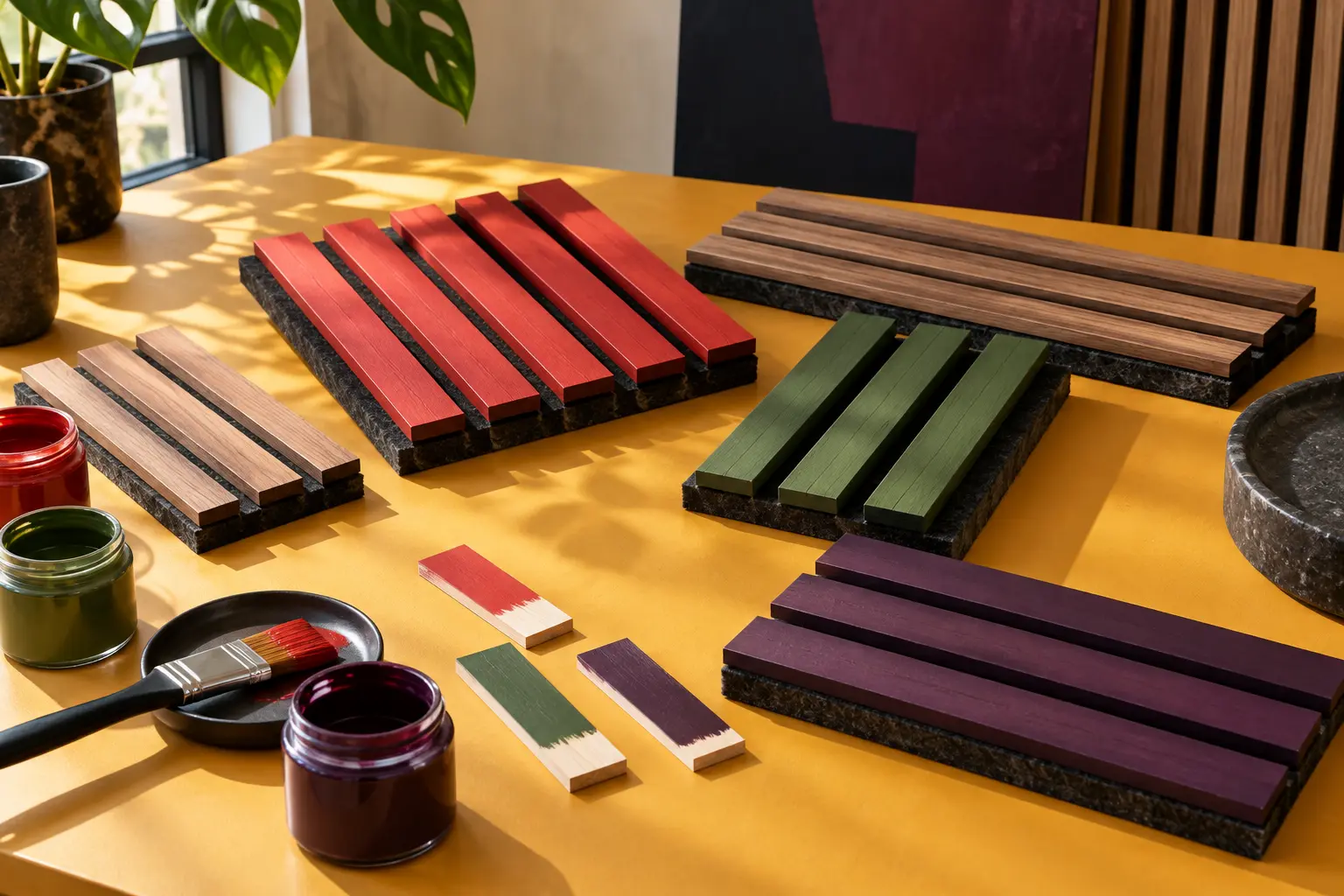
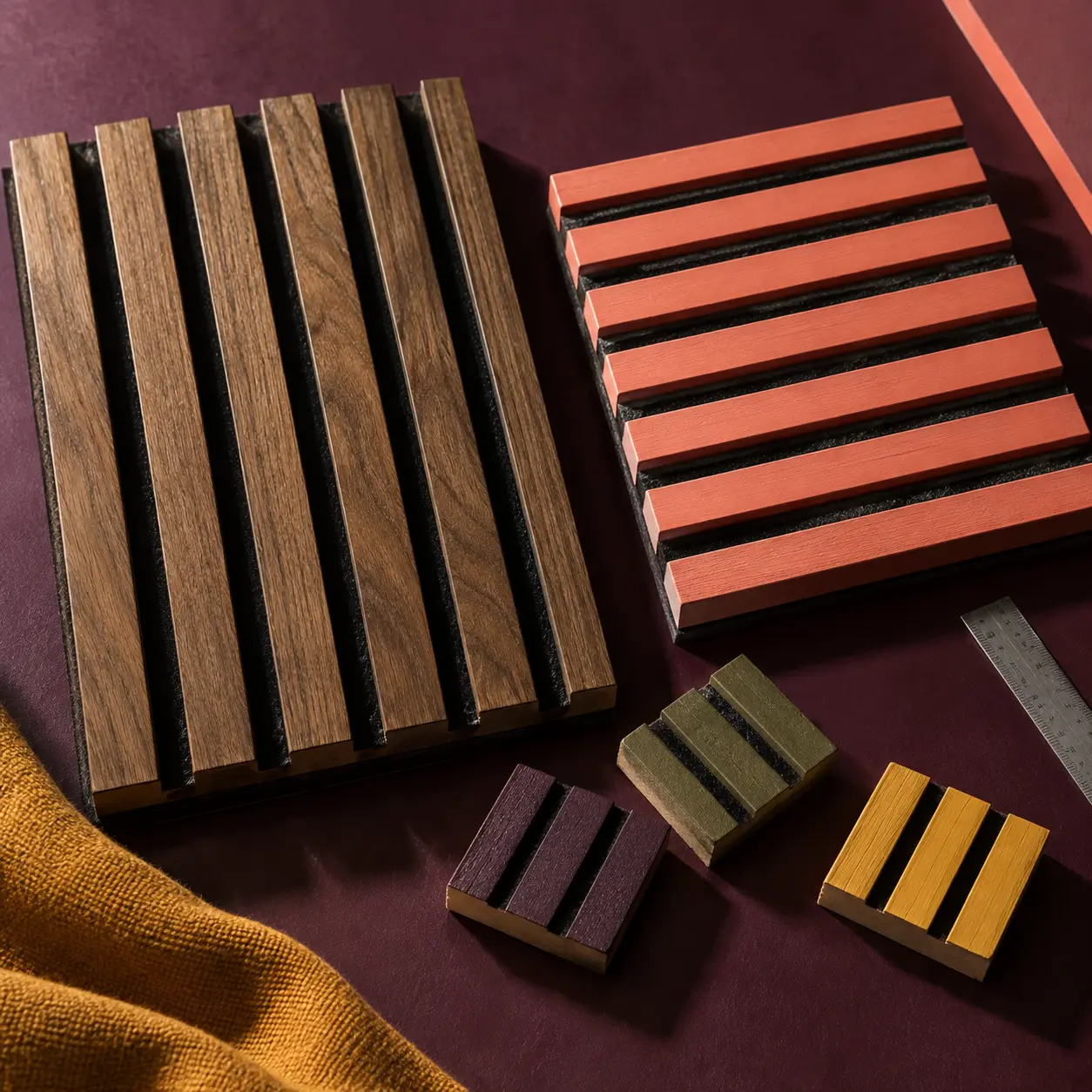
Before deciding what to make, place every piece together and treat the pile as a material palette. Separate long strips, medium rectangles and the smallest fragments. Then test colour directly on the surface.
A single finish can make mismatched remnants feel intentional. Aubergine, tomato red, saffron and moss all work well in a maximalist room. If you want a graphic pattern, reserve it for one statement object rather than repeating it across every panel.
Rotate a few pieces before cutting again. The same slats feel architectural when vertical, calmer when horizontal and more sculptural when several directions meet.

02
CHANGE THE FURNITURE, NOT THE ROOM
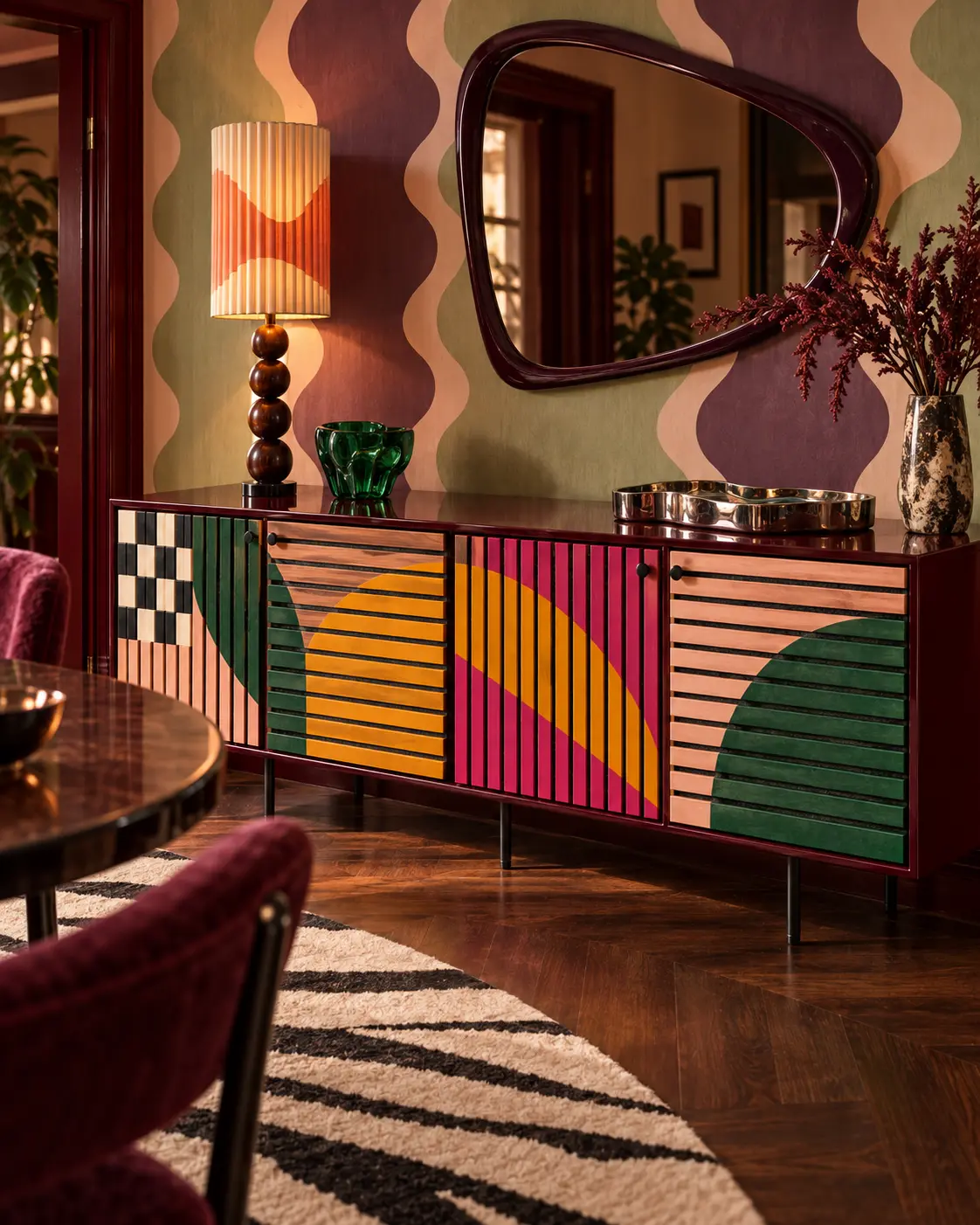
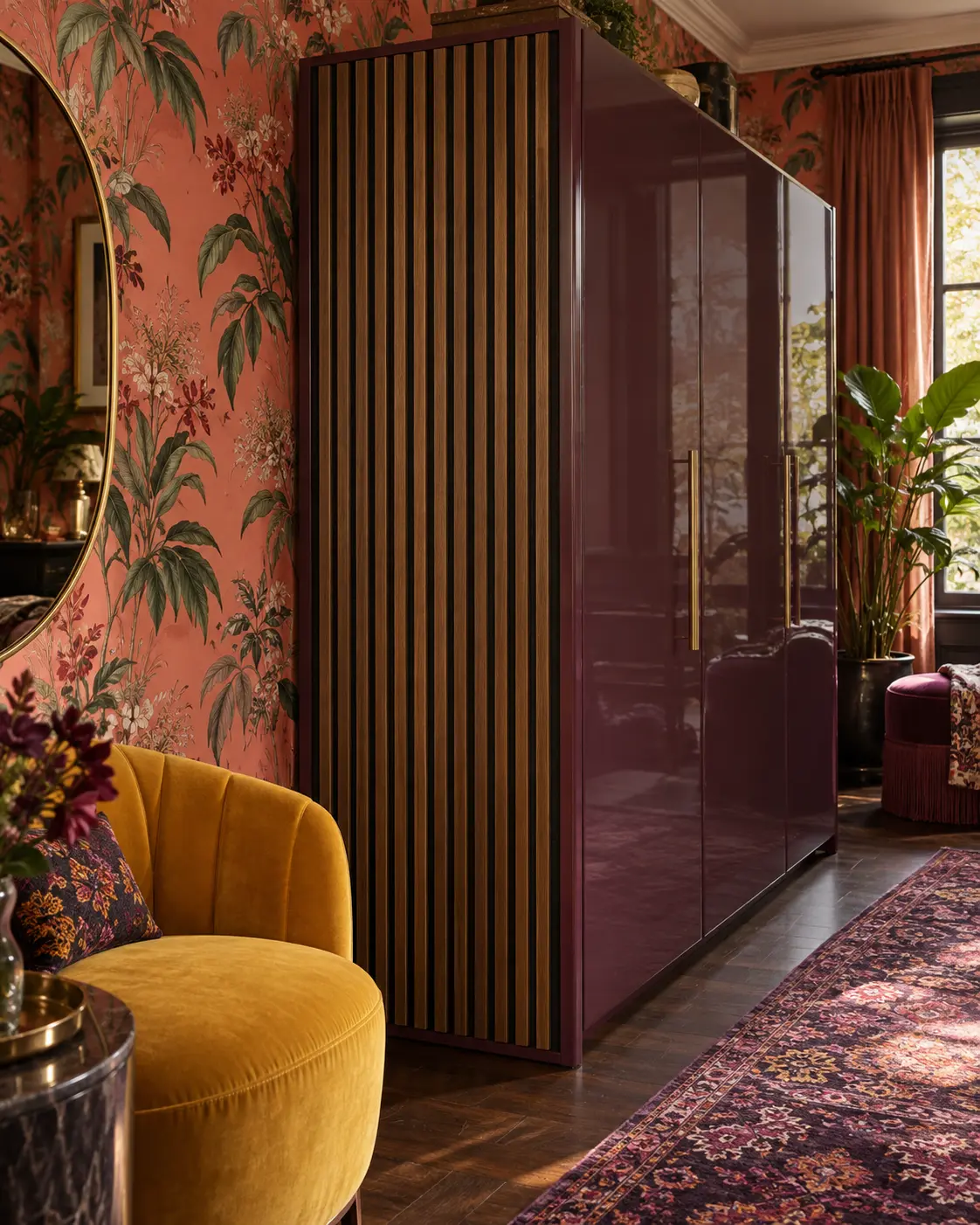
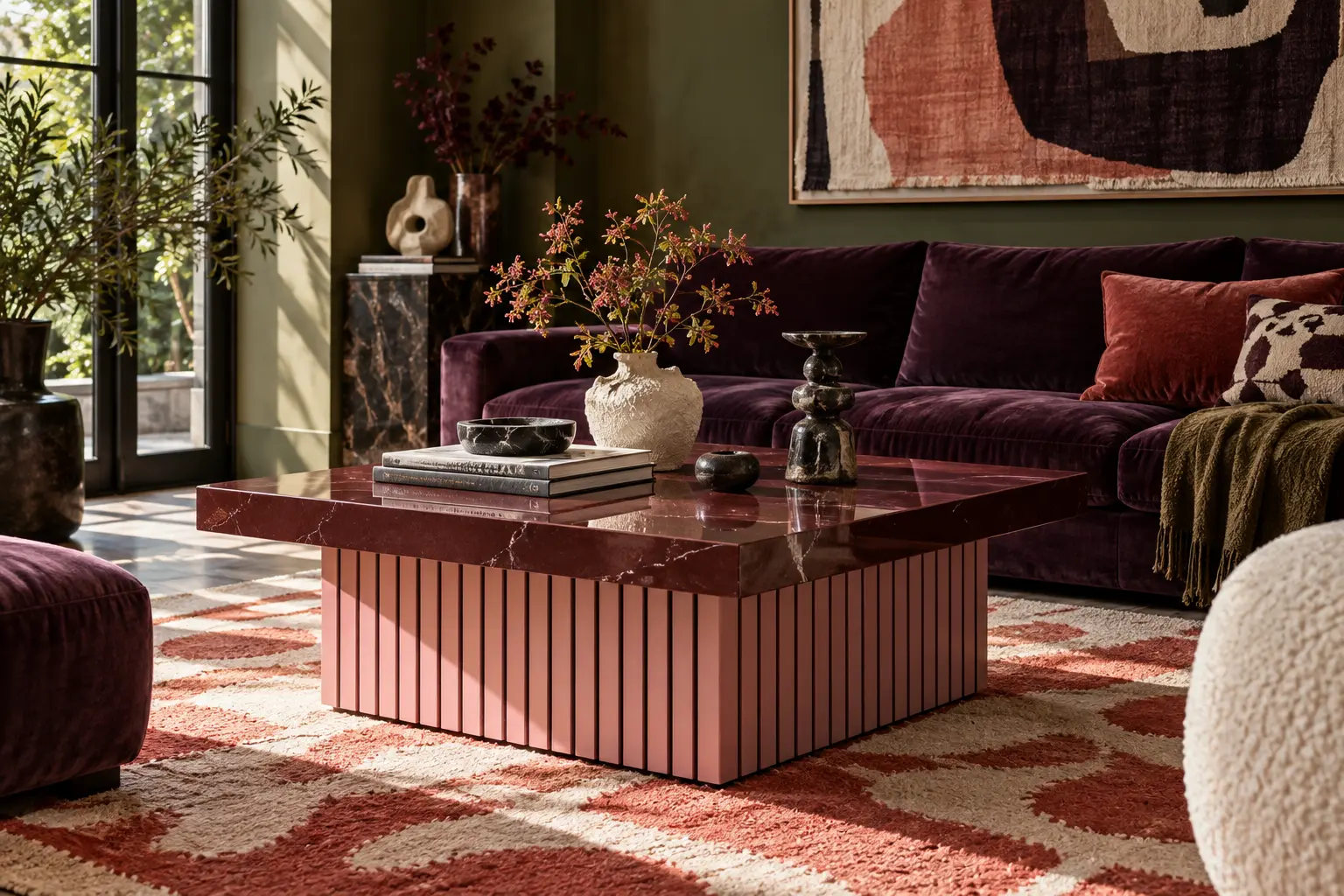
Offcuts can change furniture without making every piece look like the same project. On a sideboard, the slats become a decorative front. On a wardrobe, they can turn an exposed side into the most considered view. Around the base of a coffee table, they add weight and shadow without touching the top.
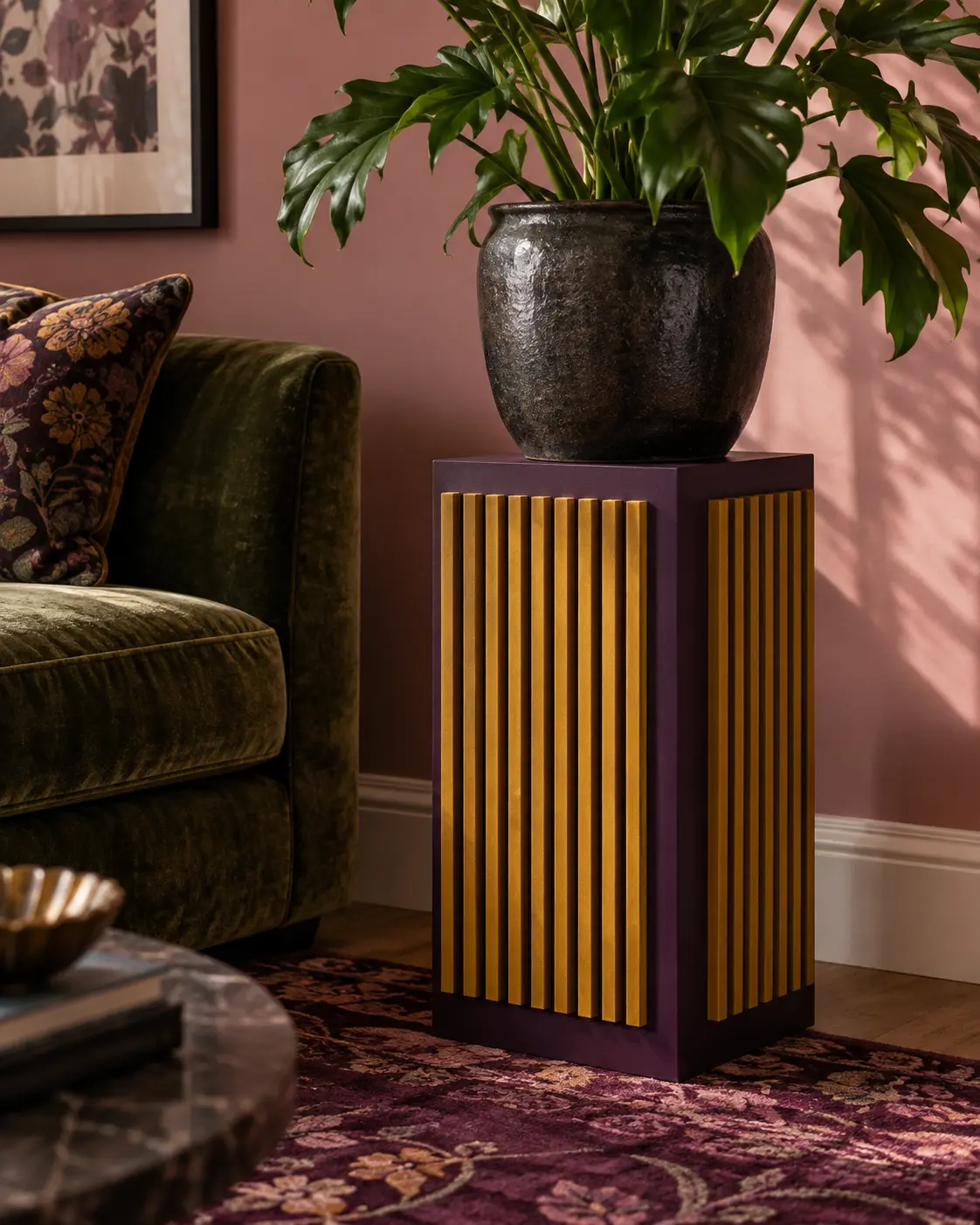
Vary the treatment with the object. A sideboard can carry the article’s only graphic pattern. A wardrobe side is stronger in natural walnut. A simple pedestal can be painted one dusty colour so its texture appears only when light moves across it.
Always check added thickness, door clearance and hinge capacity before fixing panels to moving parts. Finish every outer edge carefully; the result should read as furniture, not material attached at the end.
03
LET ONE DETAIL CHANGE THE BEDROOM
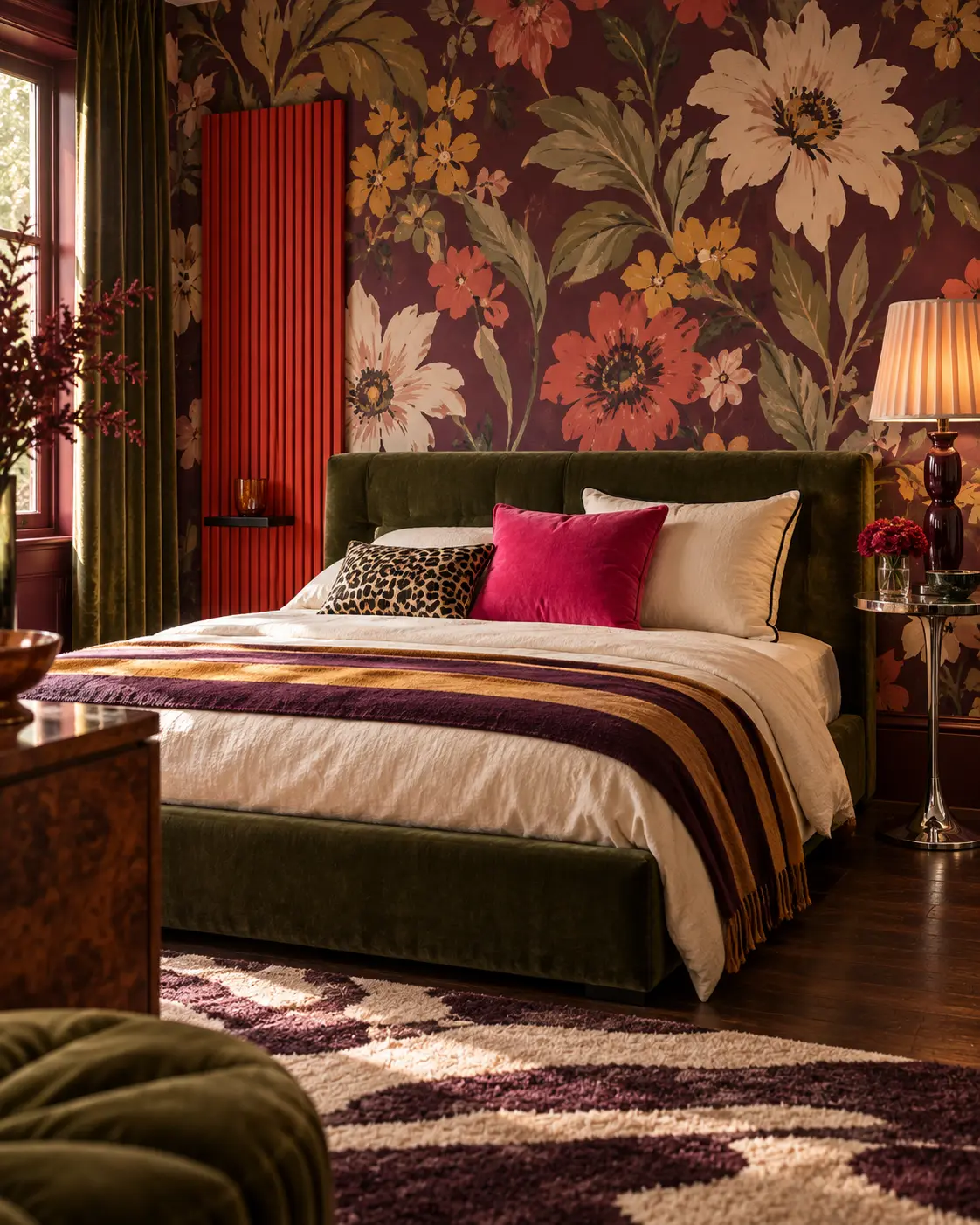
Maximalism does not require every surface to compete. In a bedroom already filled with pattern and layered textiles, the panel works best when it changes one precise element.
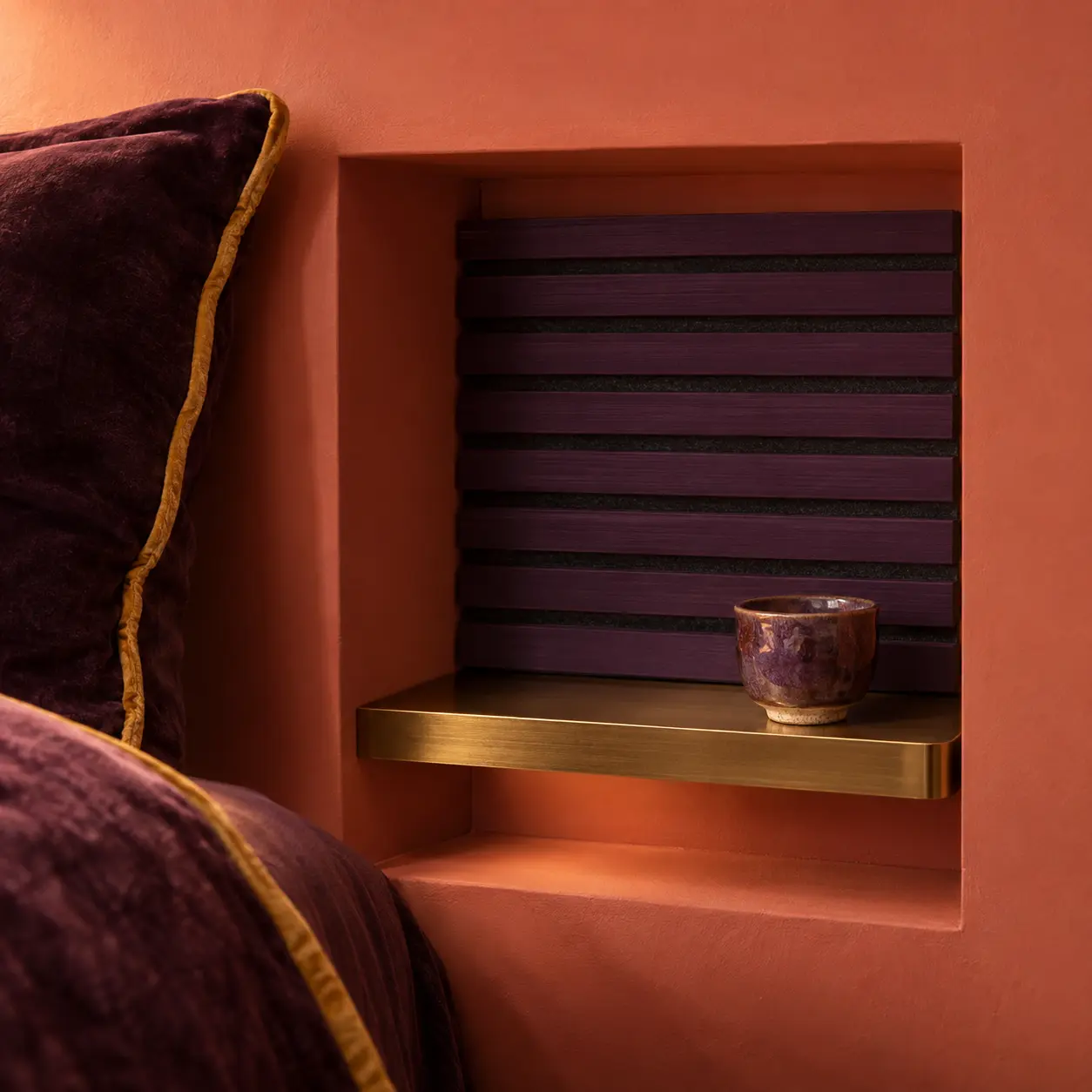
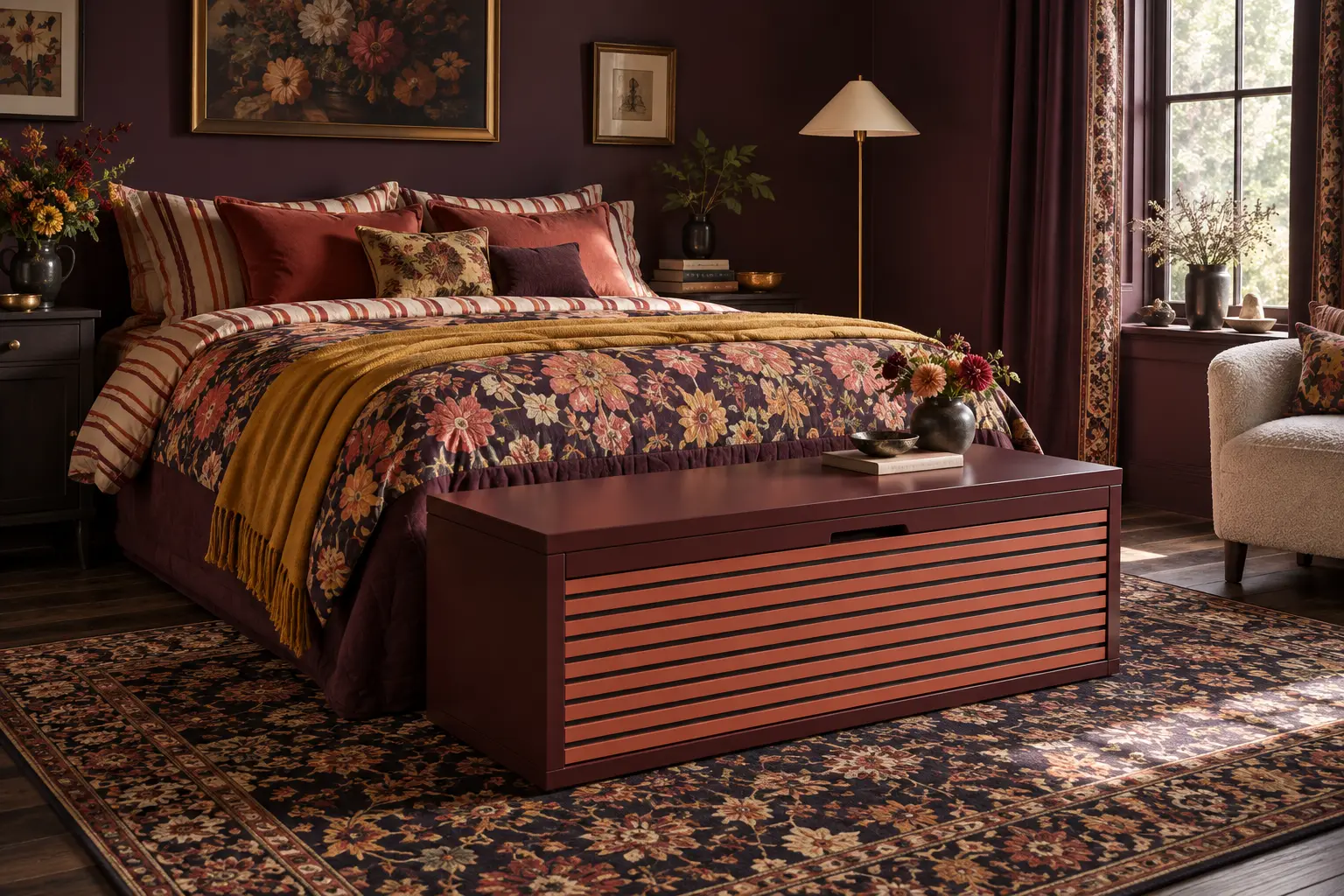
A narrow vertical strip can replace a conventional full-width headboard. A tiny offcut can give a bedside niche depth. Shorter pieces can update the front of a storage chest at the foot of the bed. Each solution uses a different scale, but all keep the room connected through the rhythm of the slats.
Choose a panel colour that picks up one minor note in the bedding instead of matching the whole room. That single connection is enough.
04
TAKE THE MATERIAL INTO THE KITCHEN
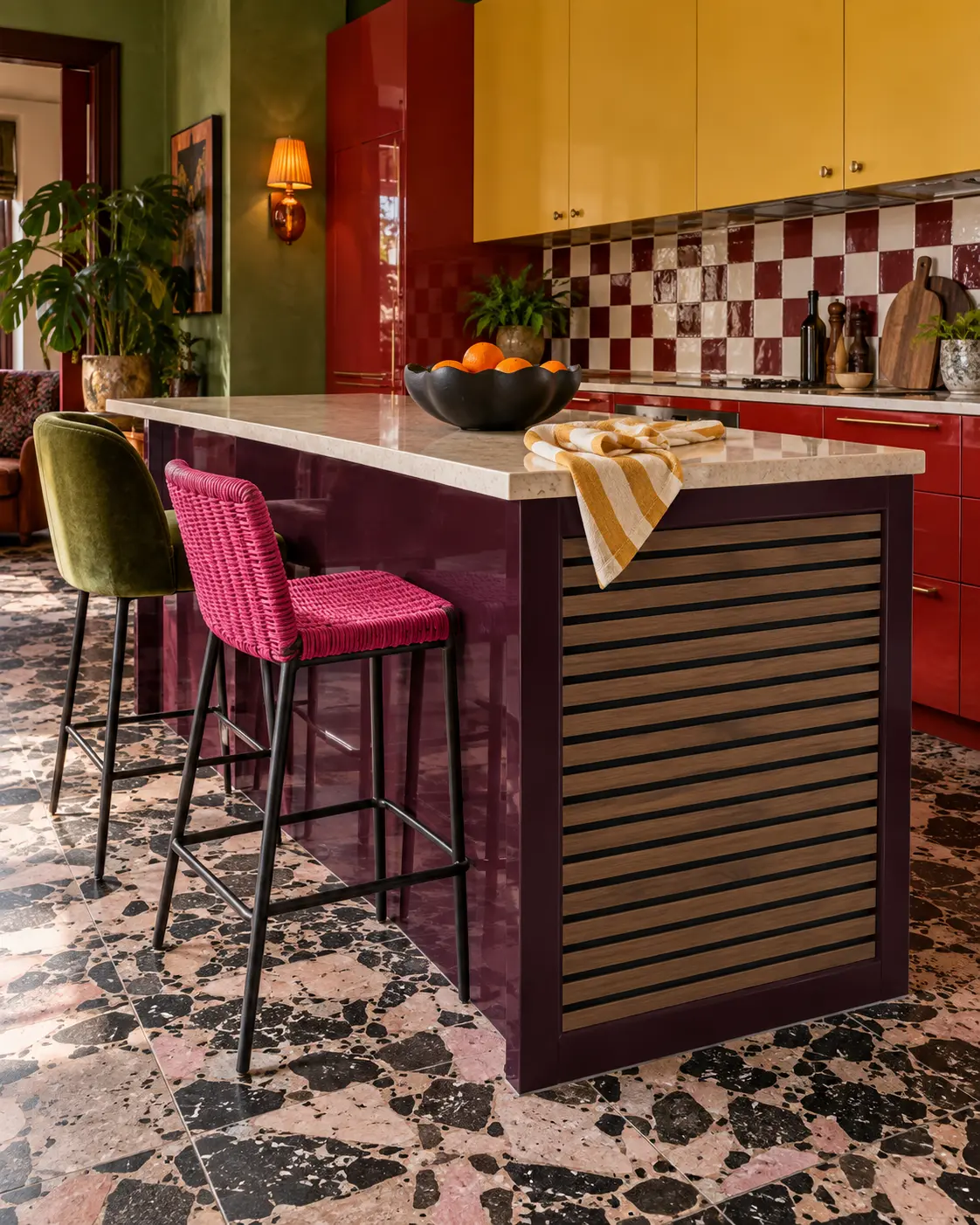
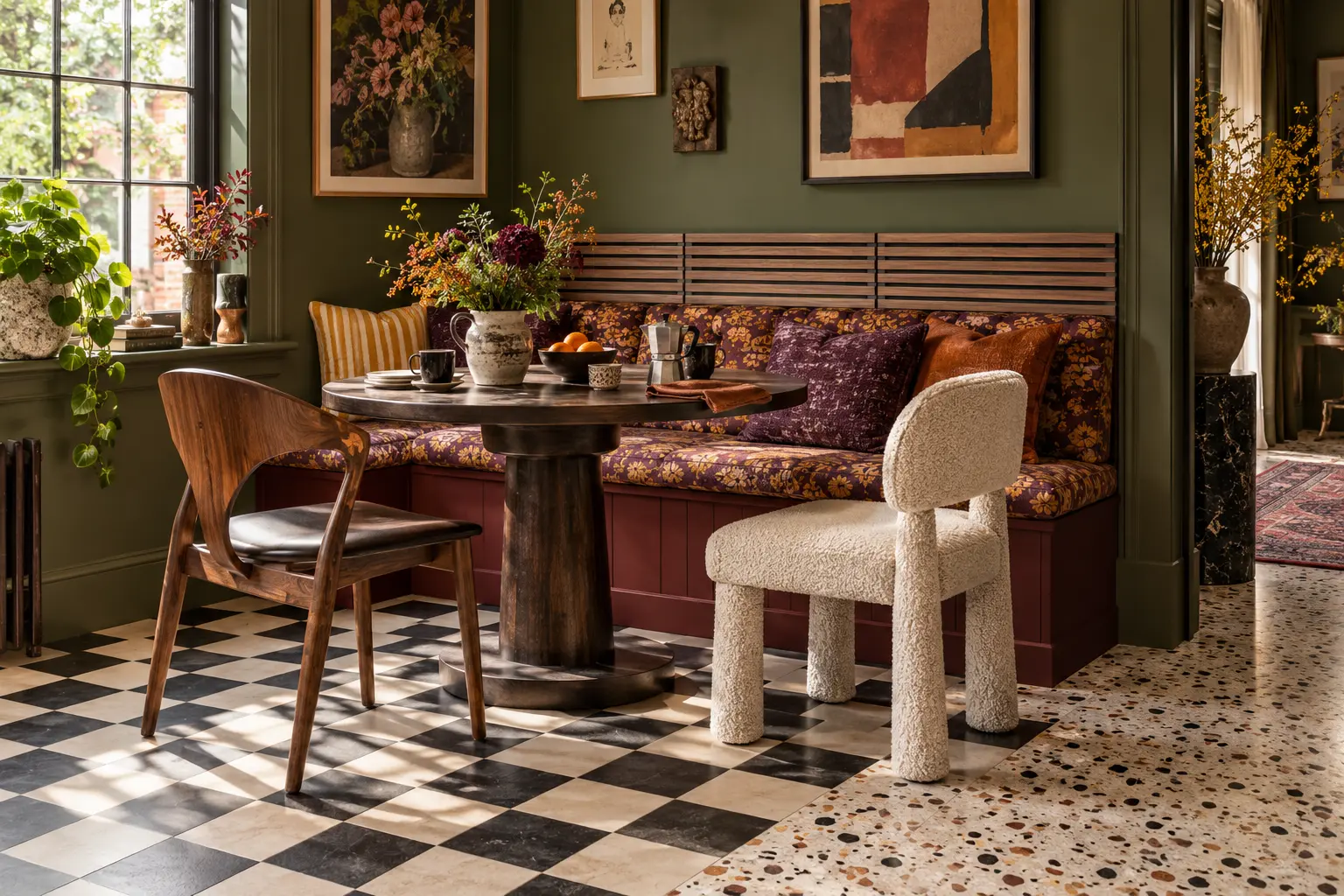
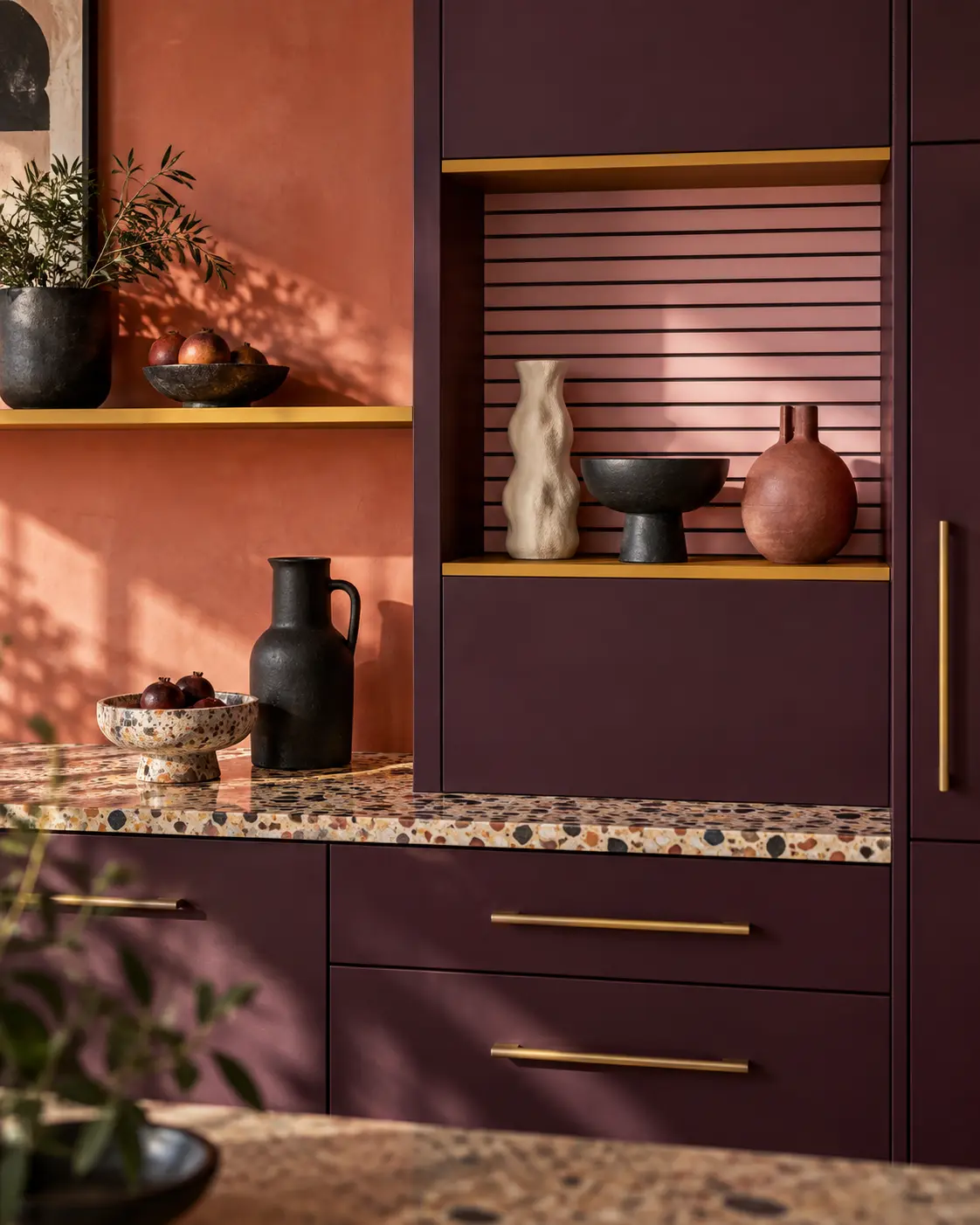
Kitchen offcuts should stay on dry, low-risk surfaces. The end of an island is one option, but not the only one. The material can also define a built-in breakfast bench or create a textured back inside an open display niche.
Natural walnut gives a colourful kitchen somewhere to rest. A single painted panel inside a niche can do the opposite: it turns a small recess into a deliberate colour moment. The point is to use the slats once in each zone, not across every cabinet.
Keep acoustic panels away from persistent moisture, splashing and high heat unless the manufacturer specifically approves that use.
05
MAKE ART, THEN CHANGE THE FORMAT
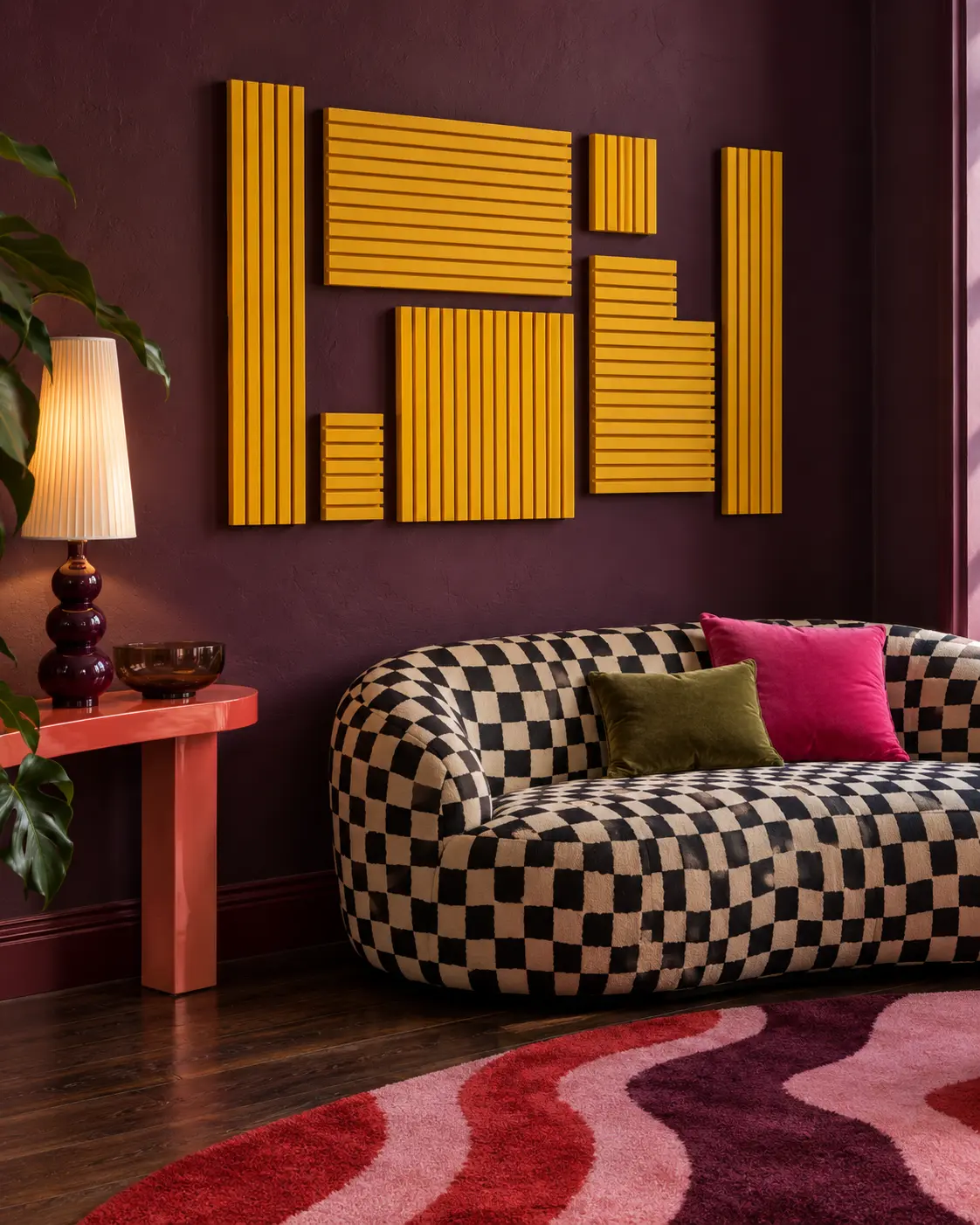
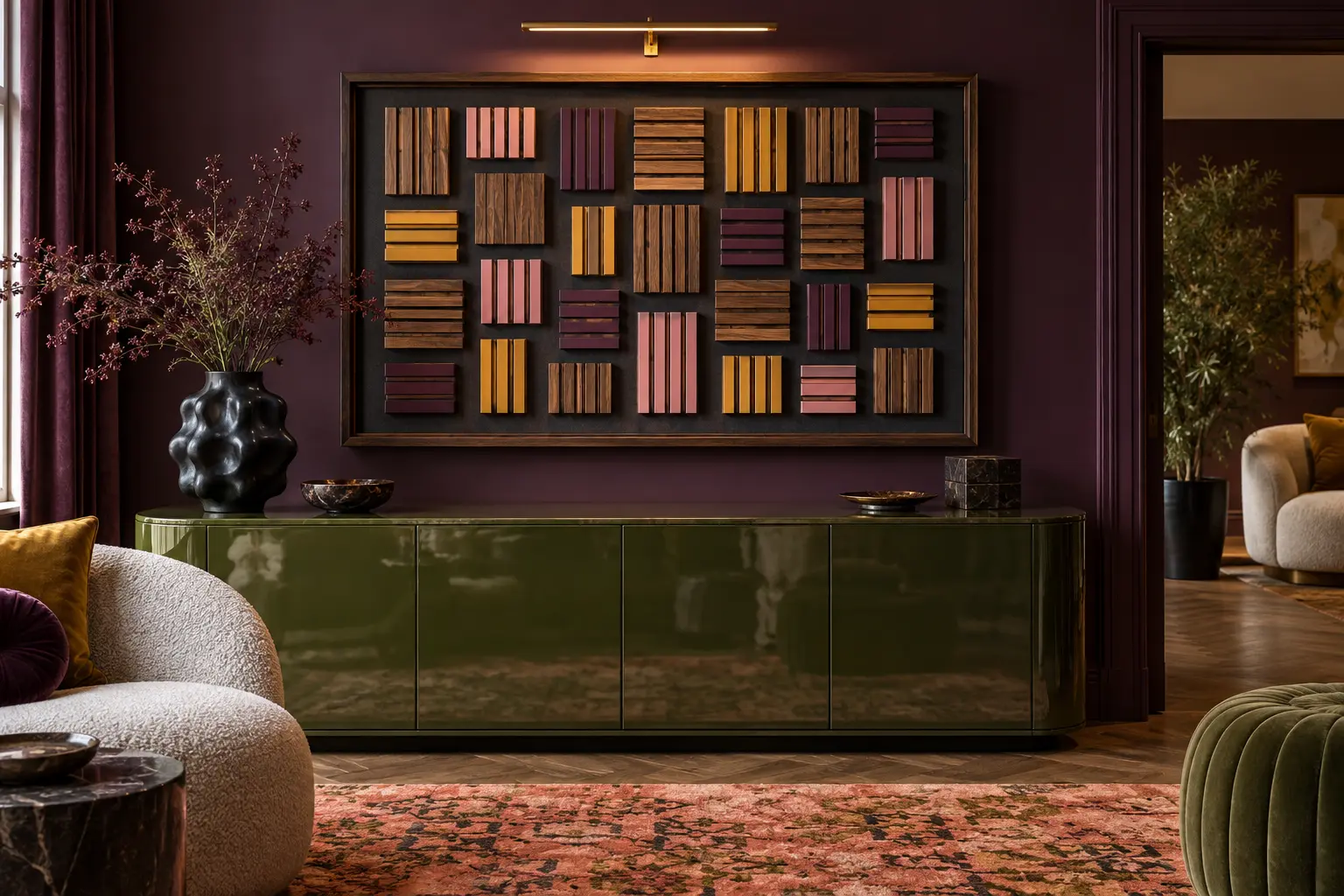
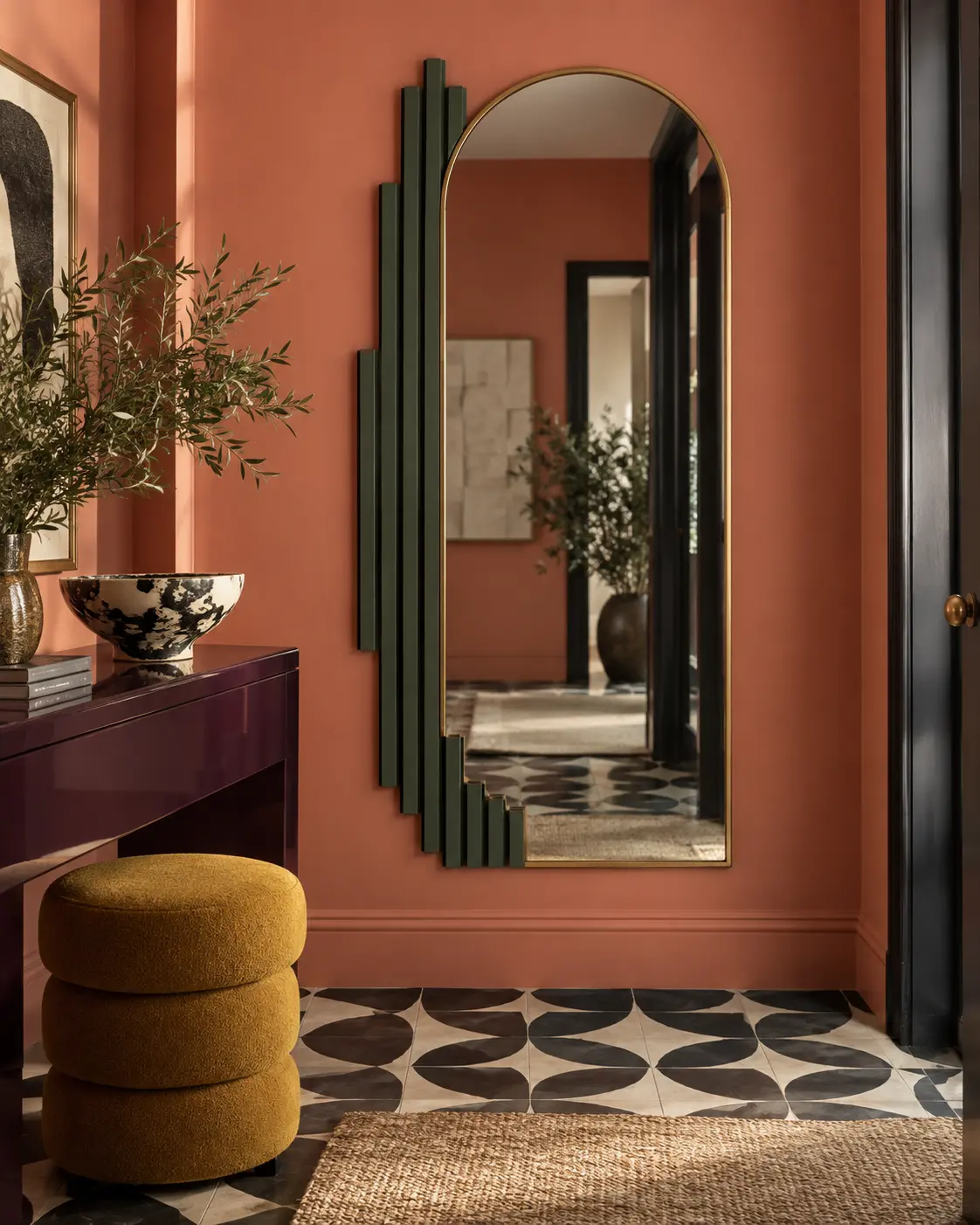
Irregular remnants become more convincing when they are treated as a composition rather than forced into one rectangle. But wall art does not have to mean the same relief three times.
Large pieces can float directly on the wall as a monochrome sculpture. Tiny fragments can sit inside a deep shadow-box frame like a material archive. Narrow strips can become an asymmetrical surround that changes the silhouette of a mirror.
The application changes, but the rule stays the same: edit the palette and leave enough negative space for the slatted rhythm to be visible.
06
LET THE SMALLEST PIECES DO SMALL JOBS
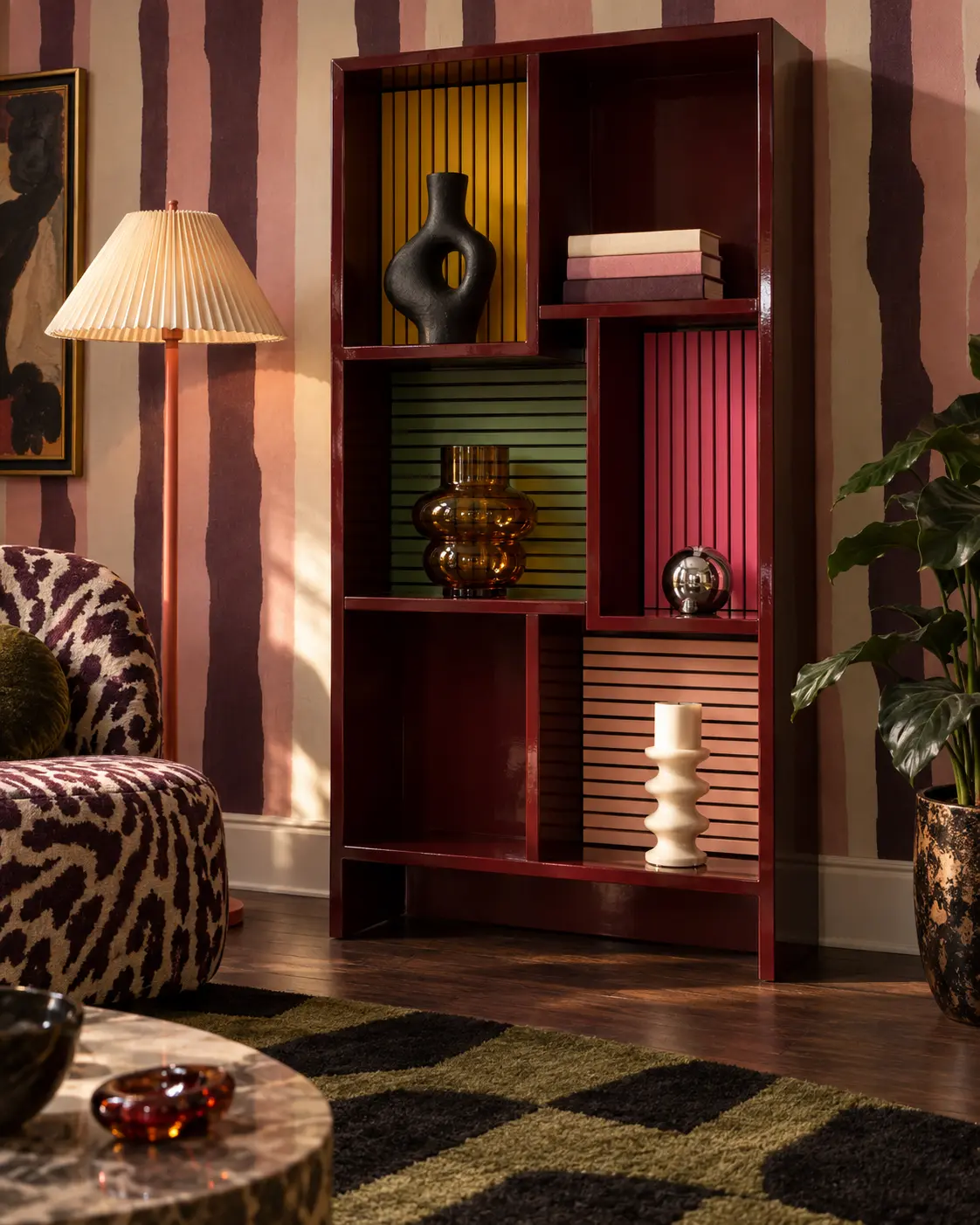
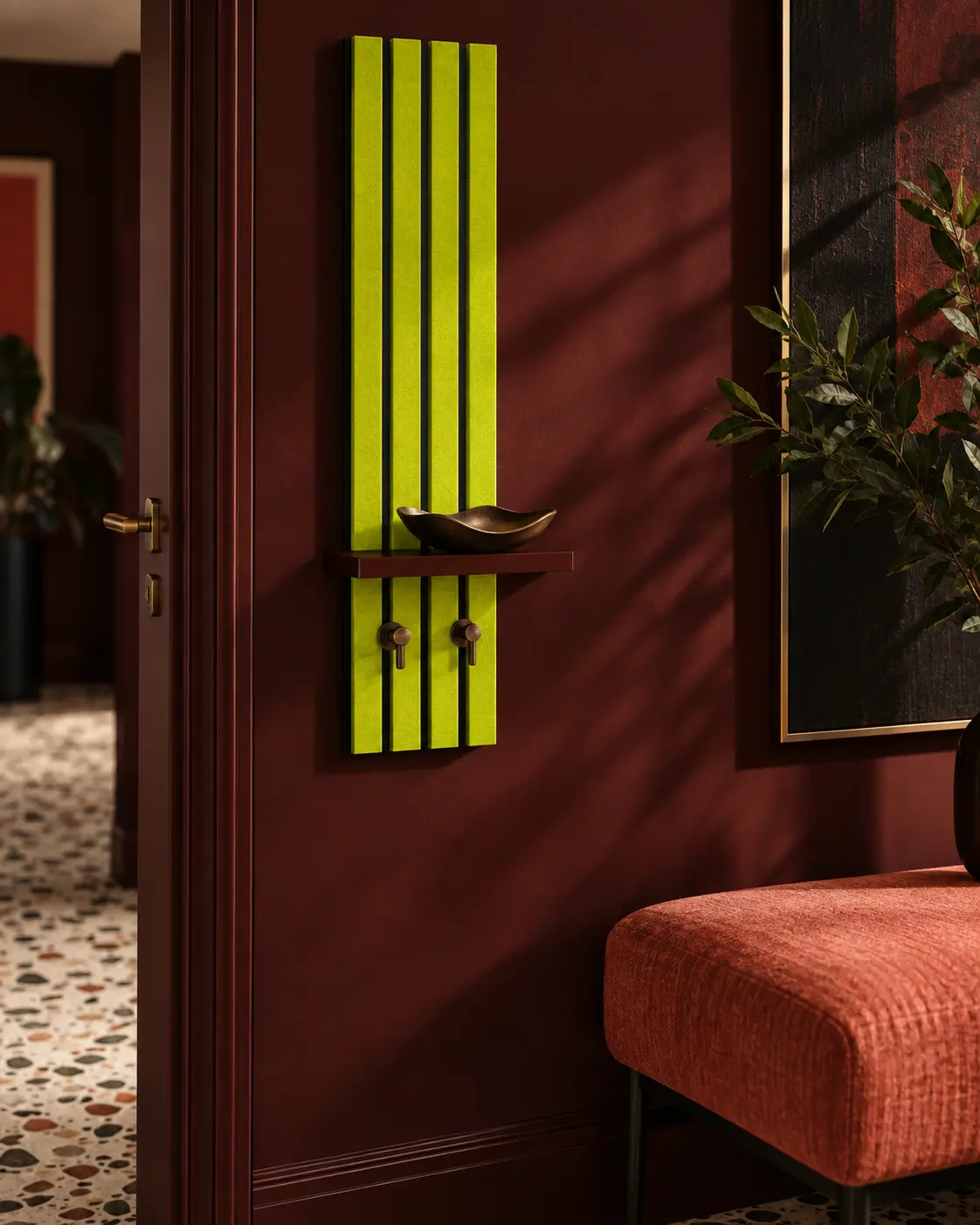
The final narrow strips are often the easiest to use because they do not need to pretend to be a feature wall. They can mark a cubby, hold a tiny hallway shelf or give a plain plant plinth more presence.
This is also the right place for one surprising colour. A single neon-lime strip against Bordeaux feels intentional precisely because it is not repeated anywhere else in the article.
Keep every object simple. The small scale and slatted texture already provide enough detail.
07
RETURN TO THE ORIGINAL FUNCTION
Not every reuse has to disguise what the material was designed to do. Offcuts can still help soften reflected sound when they are placed close to the activity that creates it.
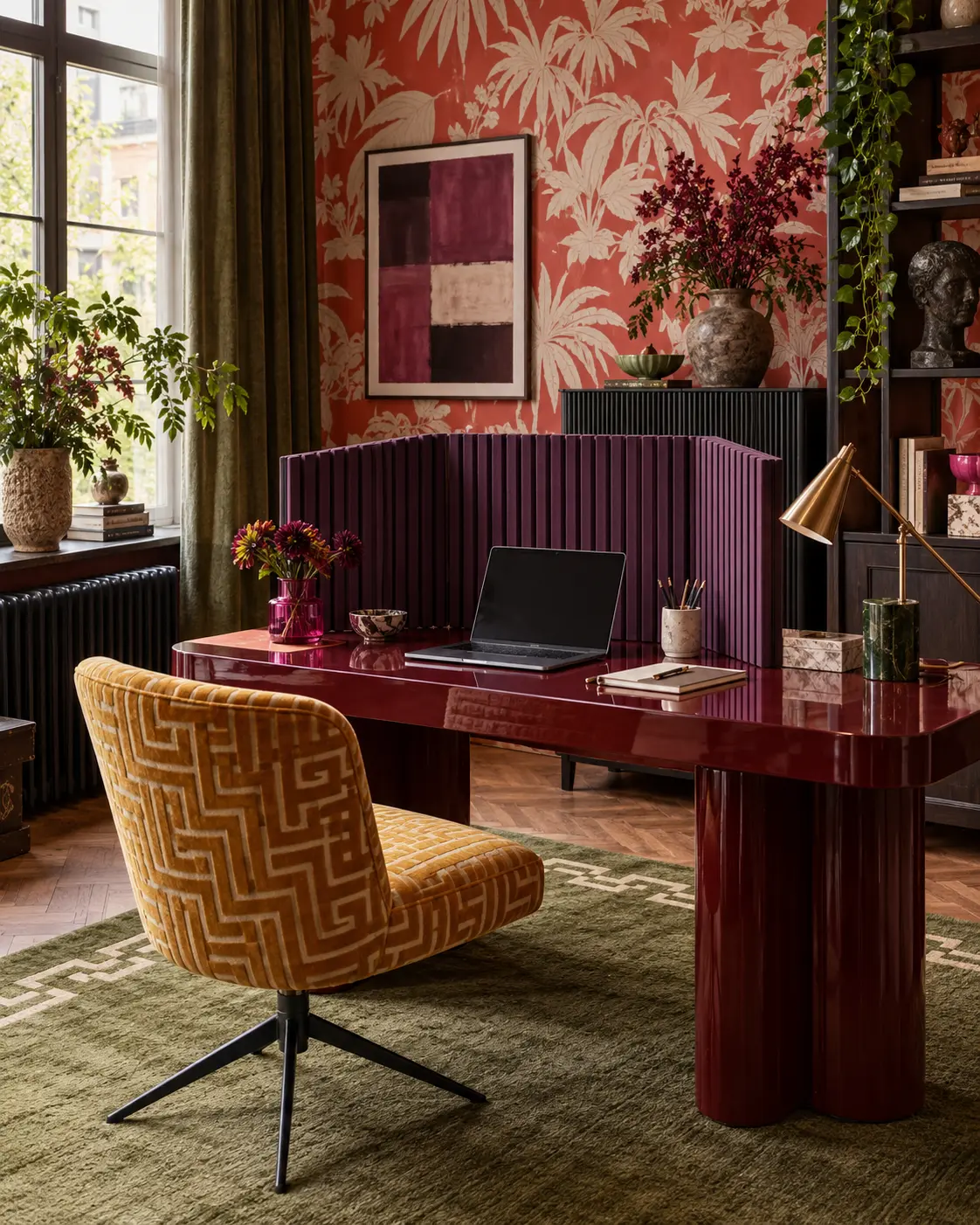
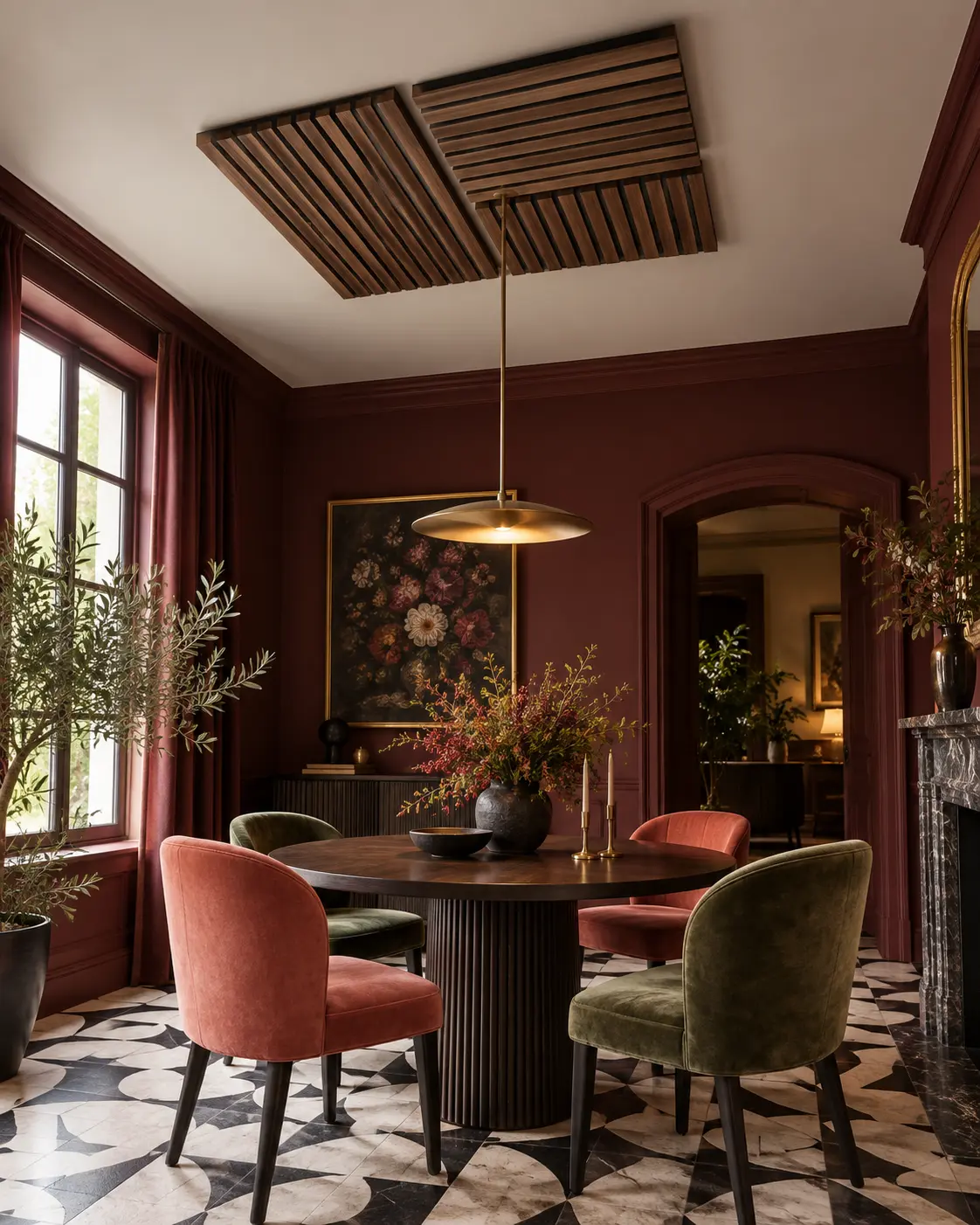
A desktop screen creates a more focused work zone. Small panels behind speakers define a listening area. Three larger remnants can form a compact ceiling cloud above a dining table, provided they are mounted with hardware suitable for the material, weight and ceiling construction.
These are local acoustic additions, not substitutes for a professionally planned full-room treatment. Their effect depends on the panel construction, size, air gap and placement.

BEFORE YOU START
- Sort all pieces by size before choosing a project.
- Check the panel construction; many slatted products combine veneer or laminate, MDF and acoustic felt.
- Follow the manufacturer’s cutting guidance. A fine-toothed saw is commonly used for the slats and a sharp knife for the felt.
- Sand, seal or paint every visible cut edge.
- Test primer, paint, oil or stain on a small leftover section first.
- If sound absorption still matters, avoid filling the gaps or sealing the felt with a heavy coating.
- Check furniture hinges and clearances before adding weight to doors.
- Use fixings appropriate for the object, substrate and final location; overhead installations require particular care.
MY EDIT
NATURAL. SATURATED. ONE GRAPHIC GESTURE.
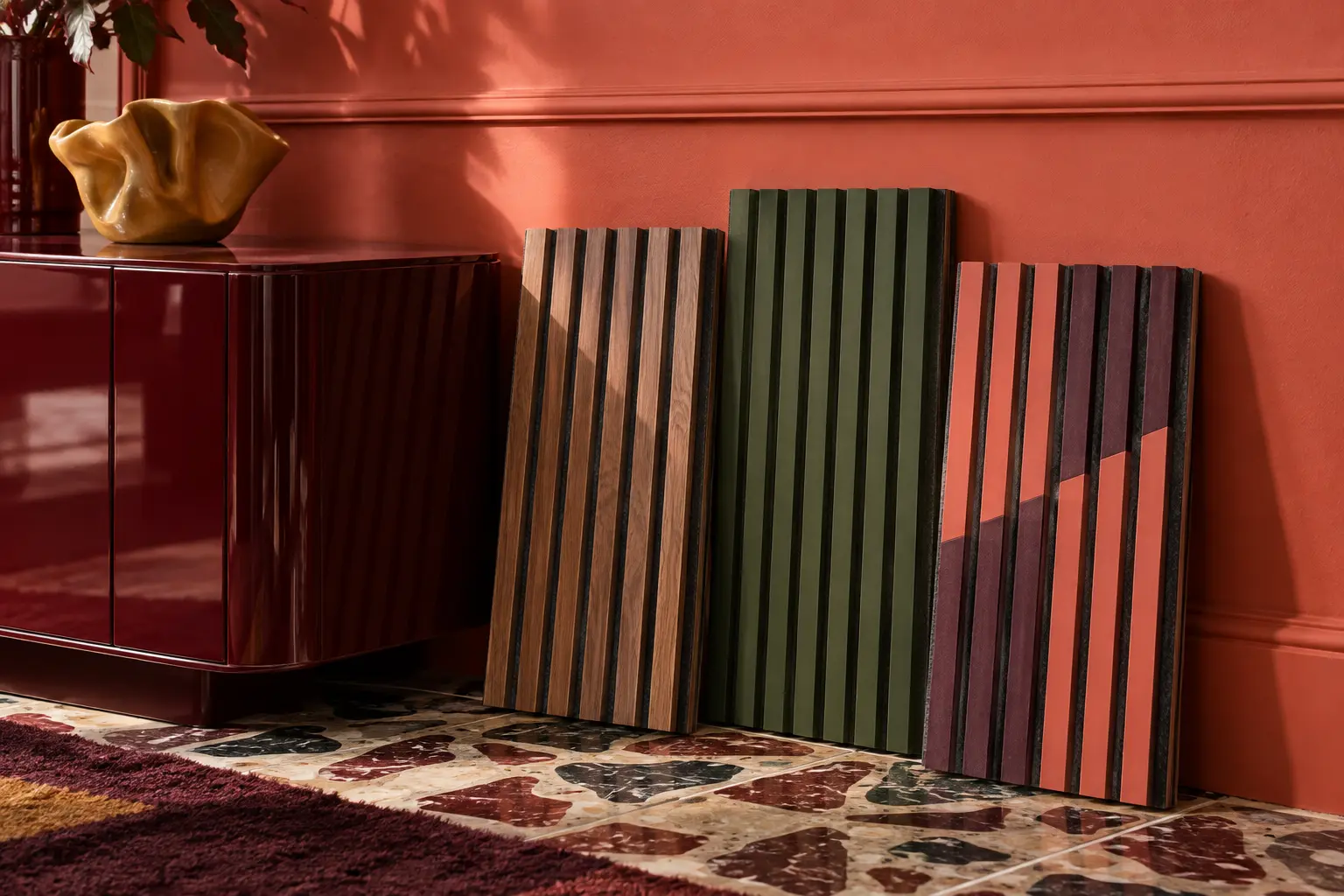
The most modern approach is not to choose between natural timber and colour. Use both — but in different places.
Keep one architectural detail in wood, paint a smaller object in a single saturated shade and allow only one piece in the room to carry a graphic pattern.
That balance is what makes the result feel collected rather than themed.
THE TAKEAWAY
LEFTOVER DOES NOT HAVE TO LOOK LEFT OVER.
The aim is not to use every last piece in the same way. It is to recognise what each size can do: a large remnant becomes an acoustic cloud, a medium section changes furniture and the smallest strip creates one unforgettable detail.
Keep the slatted rhythm. Change the scale, location or finish. Then stop before the material becomes a theme.
SOURCE NOTES